What-pathway
The temporal “what” pathway in vision is specialized for the processing of complex visual information related to object recognition and identification. This pathway is crucial for our ability to understand and interact with the visual world around us. Here are the key aspects of the temporal “what” pathway highlighted in bullet points:
-
Object Recognition and Visual Memory: The temporal pathway plays a pivotal role in recognizing and identifying objects. This includes the ability to distinguish between different objects, recognize familiar objects, and remember visual details about objects we have seen before.
-
Visual Recognition of Faces (Prosopagnosy): One of the specialized functions of the temporal pathway is the recognition of faces. This is a complex process that involves integrating various visual cues such as shape, color, and spatial relationships to identify individual faces. Damage to this area can lead to prosopagnosy, a condition where patients are unable to recognize familiar faces, even though they can recognize people by other cues such as their voice.
-
Specialization for Detailed Visual Processing: The temporal pathway is involved in the detailed analysis of the visual scene, focusing on the characteristics that define what objects are, such as their shape, color, and texture.
-
Integration with Memory Systems: The pathway has connections with memory systems in the brain, allowing for the storage and retrieval of visual information. This is essential for recognizing previously encountered objects and for learning new visual information.
-
Contribution to Visual Perception: By processing detailed information about objects, the temporal “what” pathway contributes to our overall perception of the visual world, enabling us to understand and interact with our environment effectively.
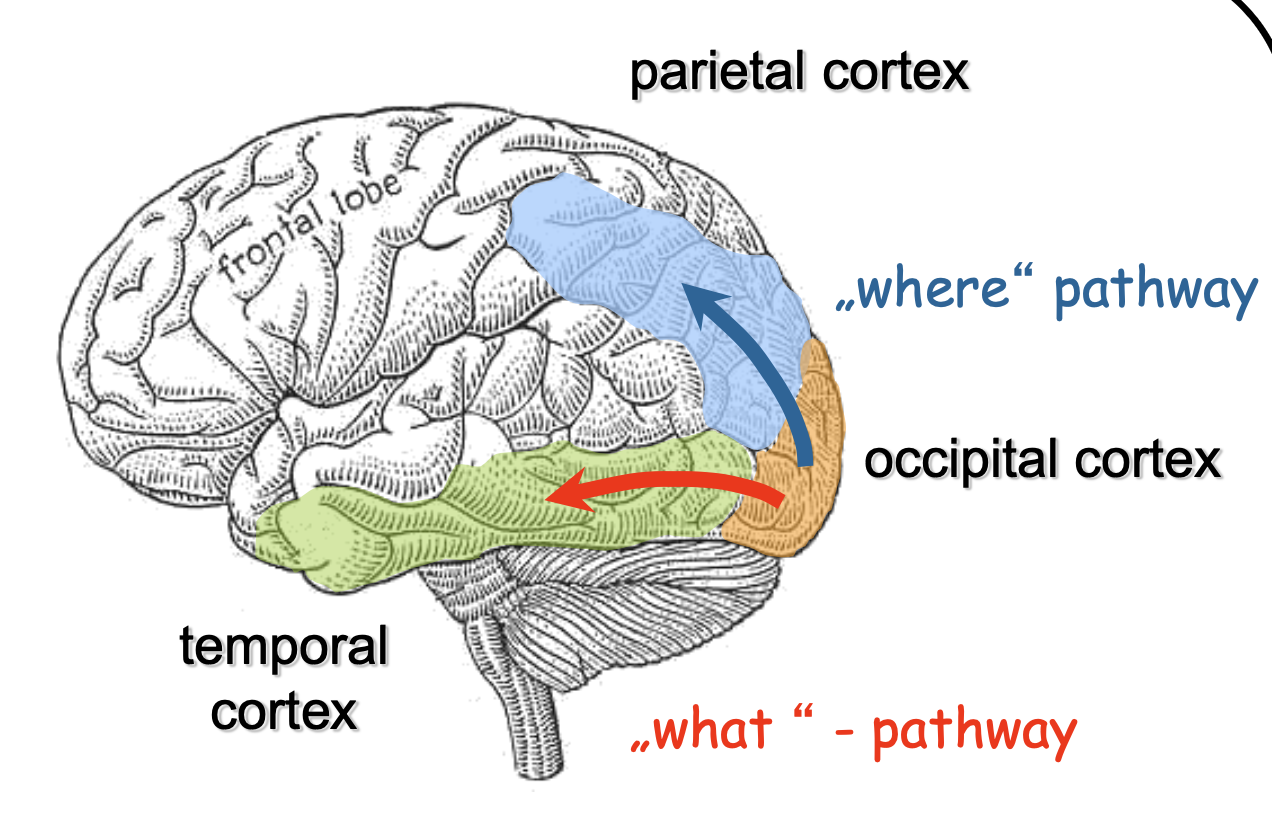
In summary, the temporal “what” pathway is essential for recognizing, identifying, and remembering objects, including faces, in our visual environment. It processes detailed visual information and integrates this with memory systems to support our understanding and interaction with the world around us.
see also
Tags: neuroscience science
Superlink: 050 🧠Neuroscience
Source
Created: 24-10-24 09:36