olfactory system
Olfactory Systems
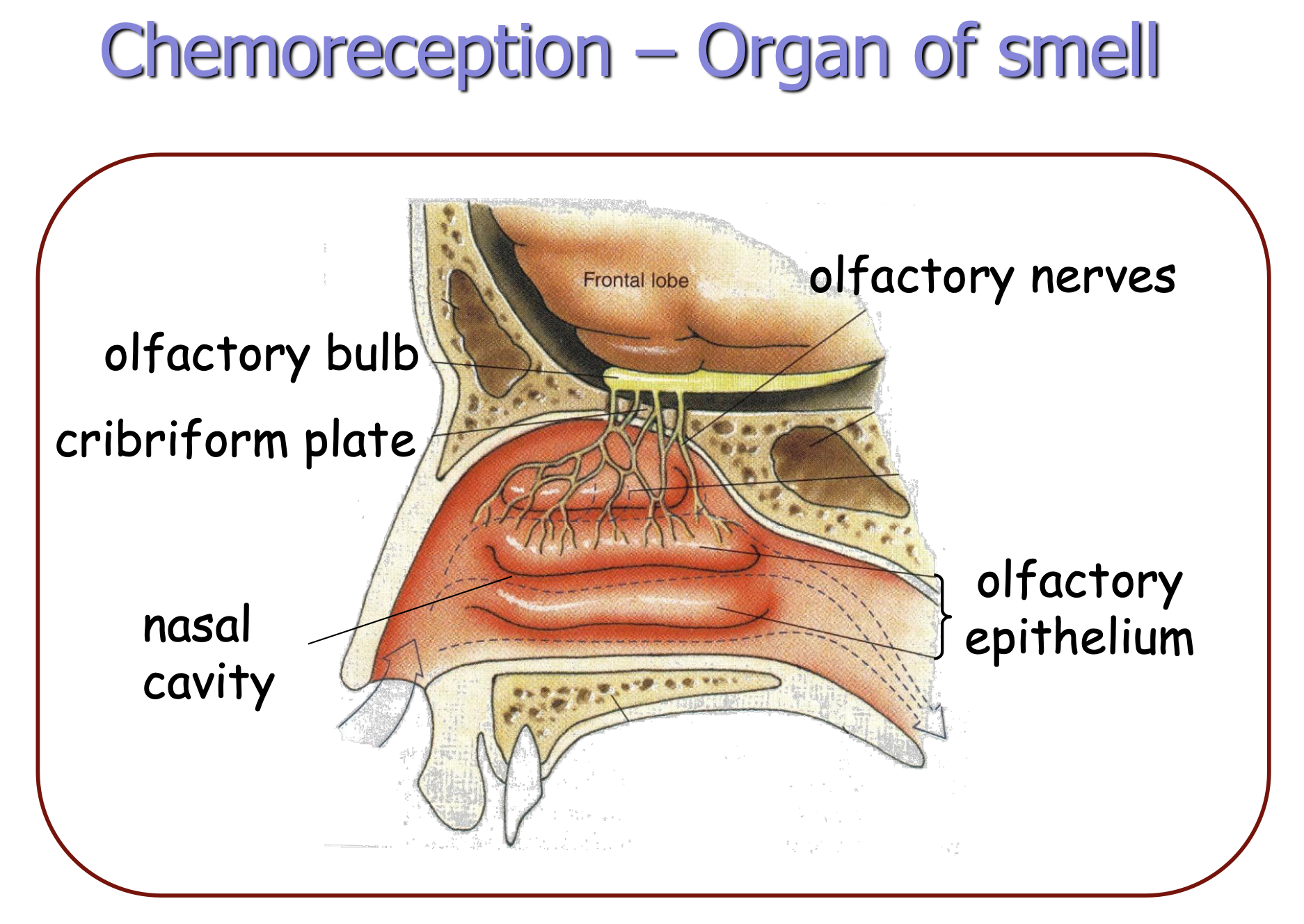
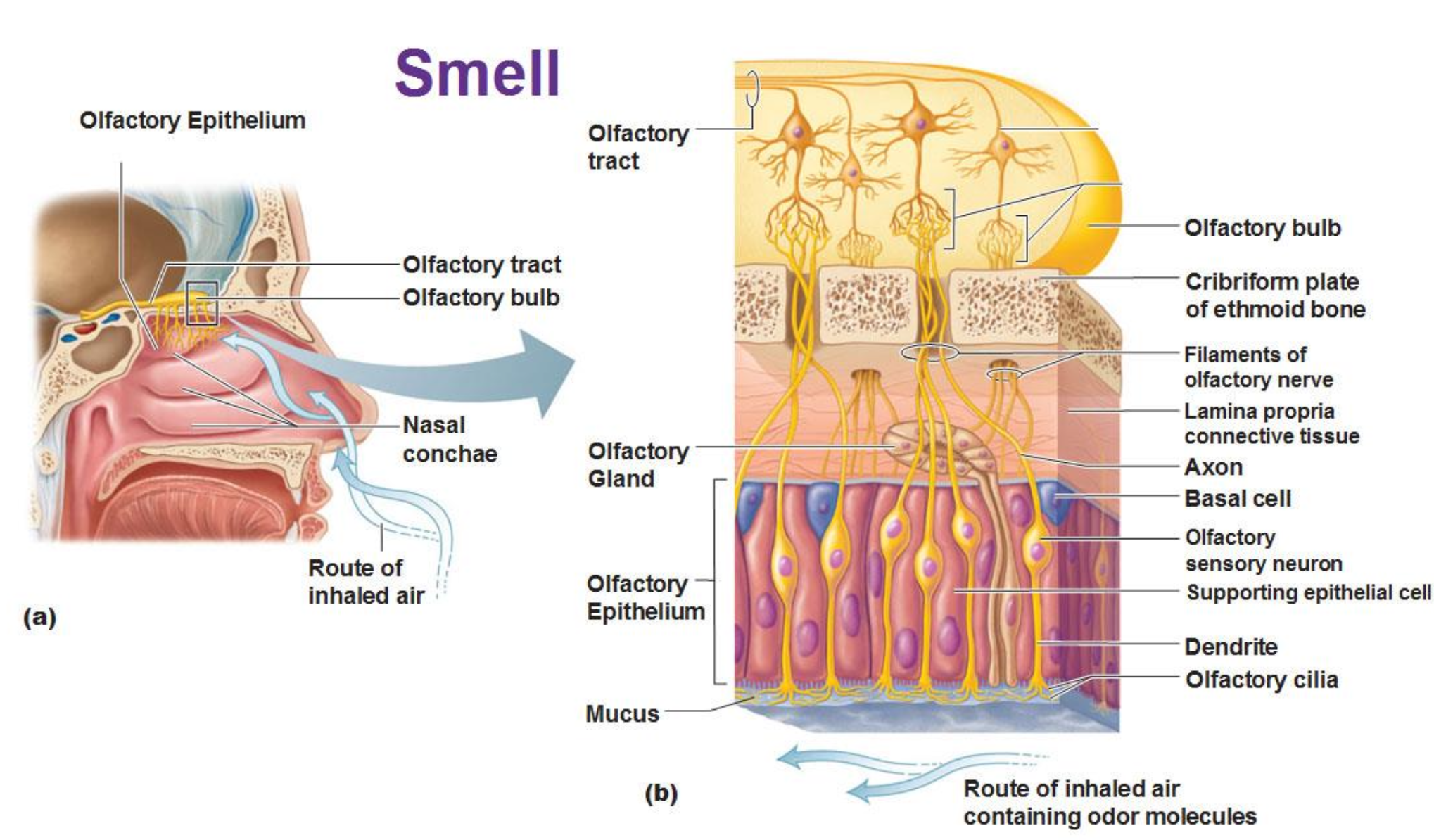
Olfactory Bulb
- Receives sensory input from olfactory receptor cells
- Processes and filters olfactory information before it proceeds to higher brain regions
- Organizes olfactory input into a coherent representation of odorous compounds
- Acts as the first level of synaptic processing for the sense of smell
- Determines the olfactory code that represents specific smells
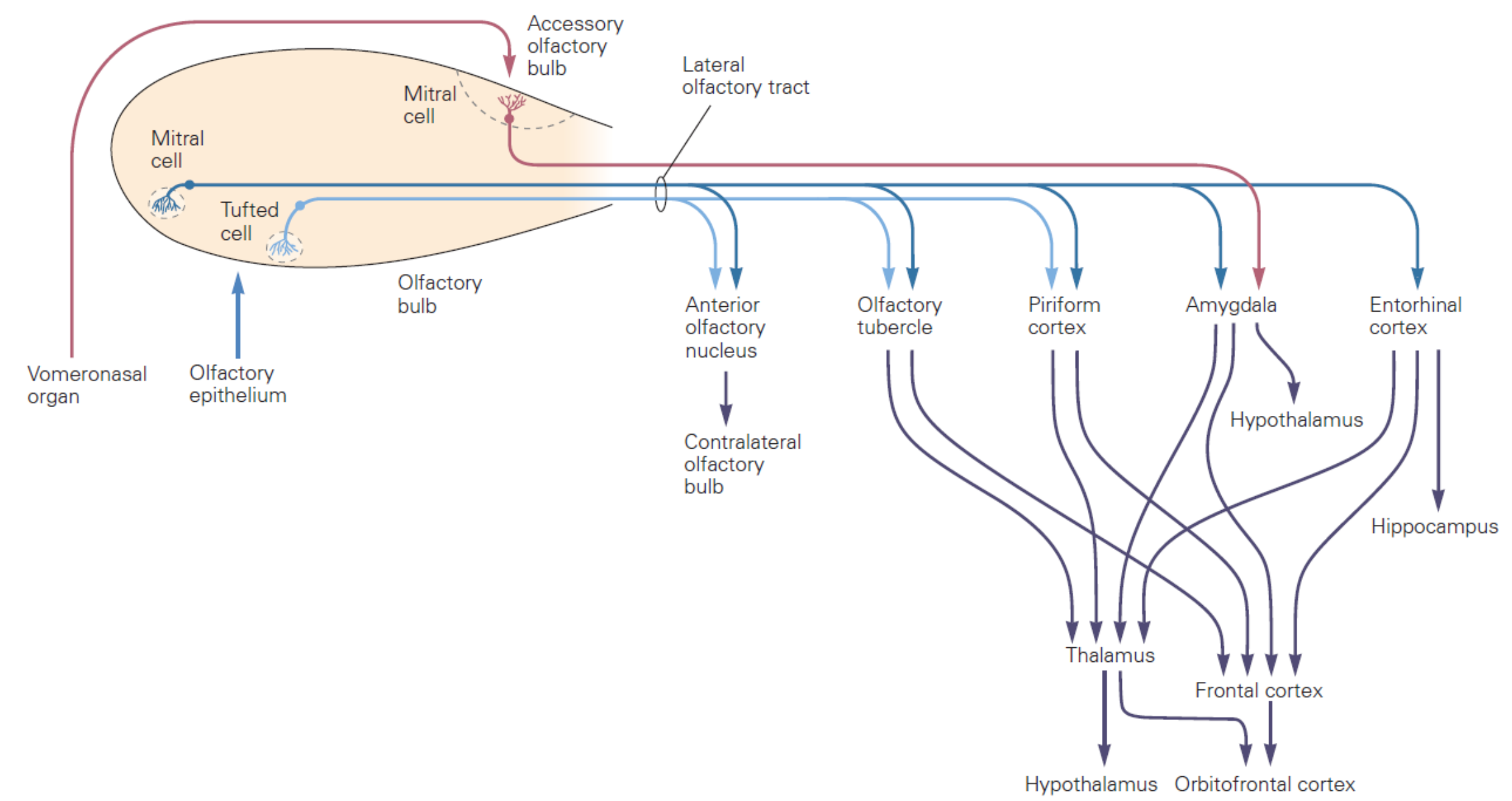
- Sends processed information to the olfactory cortex, thalamus, amygdala, and hypothalamus for further integration and response
- Plays a crucial role in odor discrimination and identification
olfactory transduction
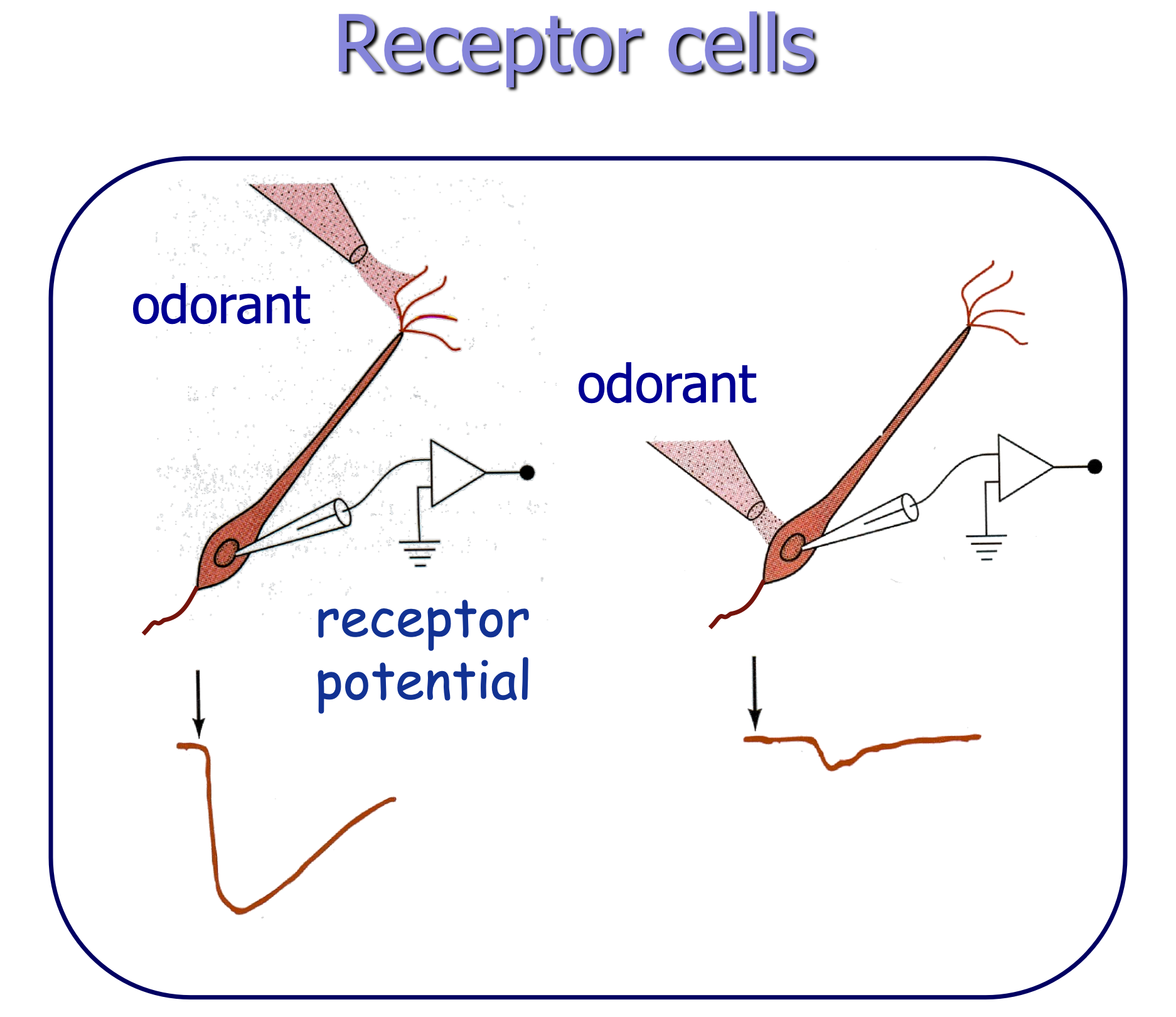
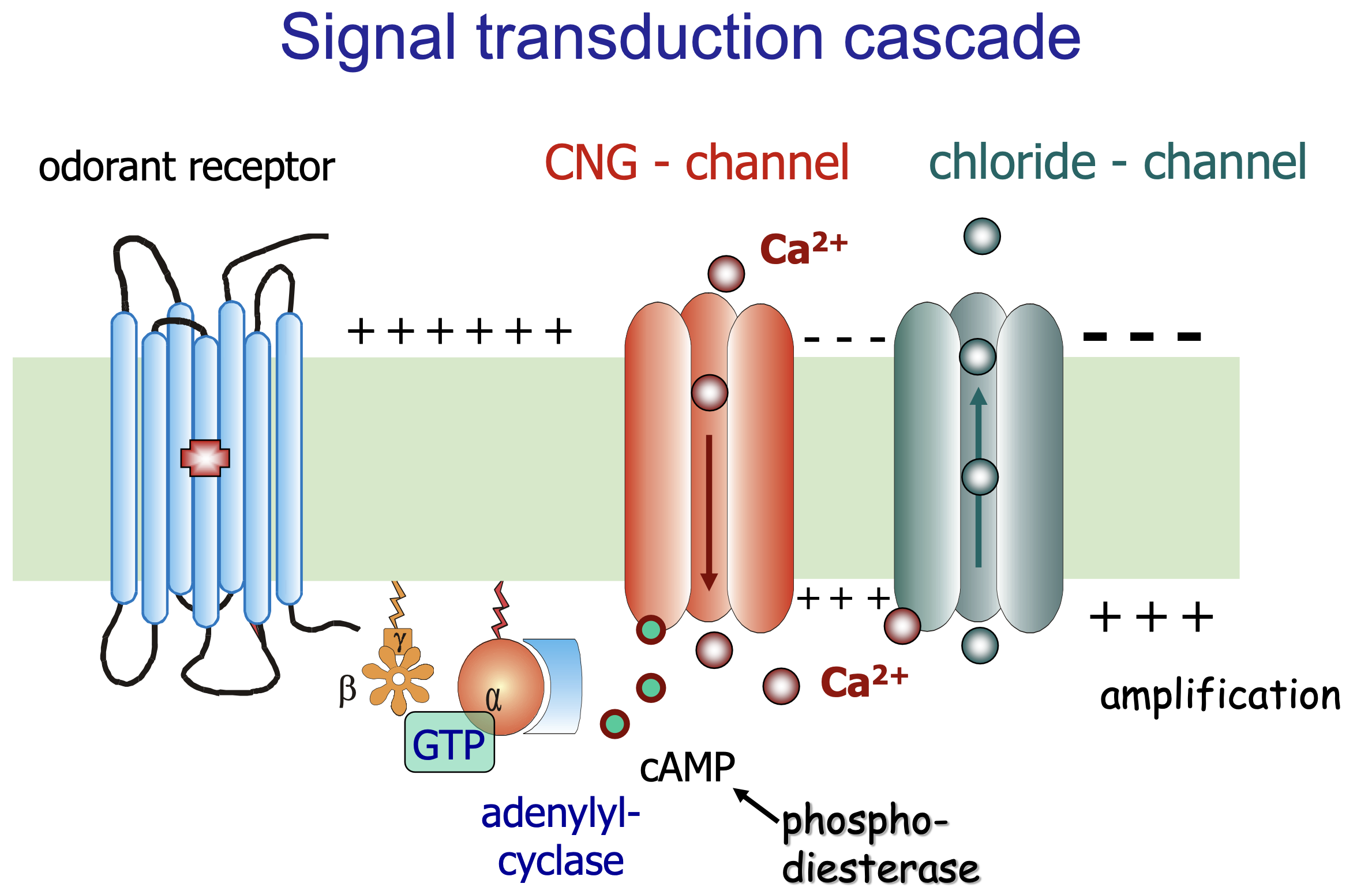
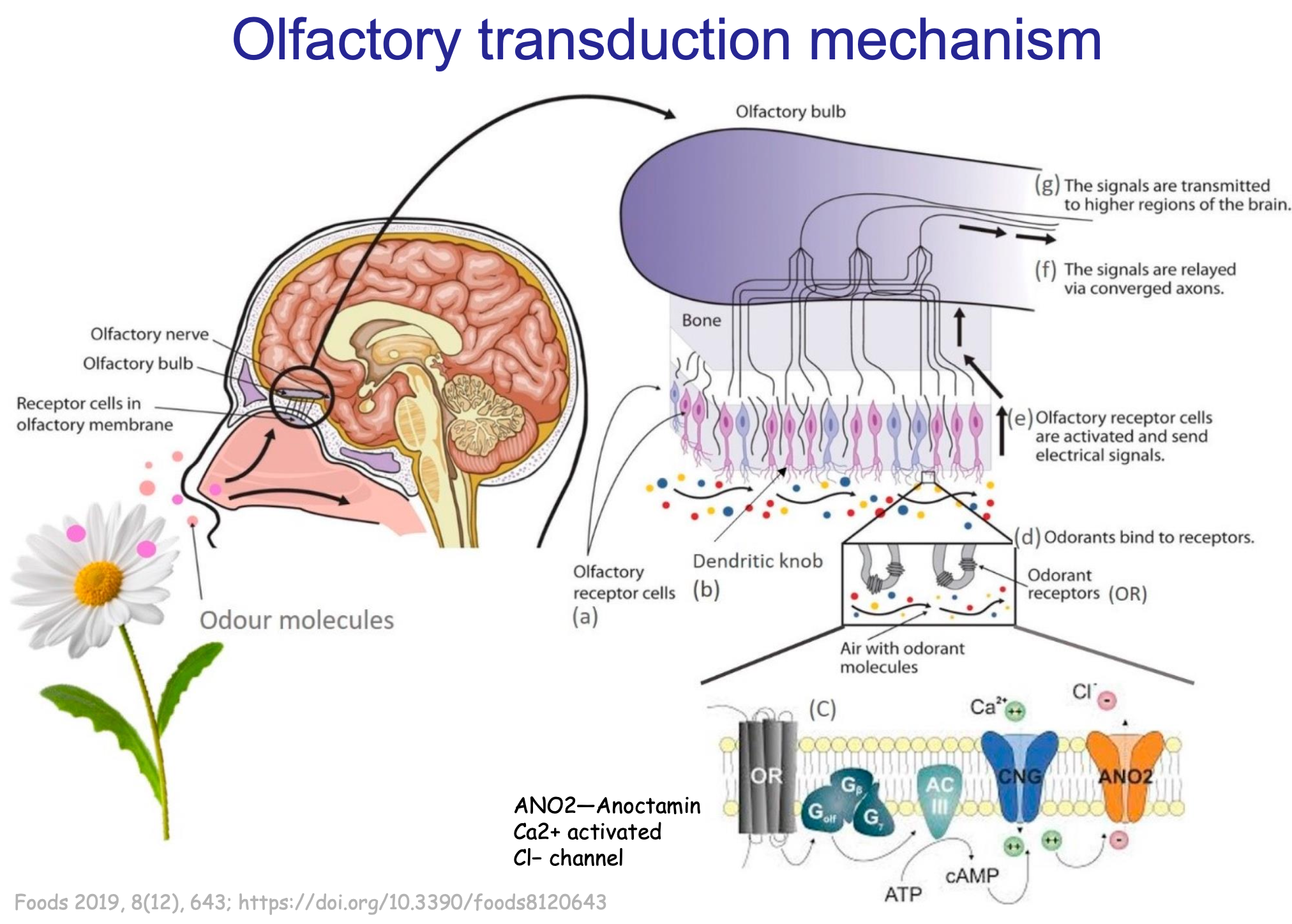
- Olfactory transduction begins when odorant molecules bind to receptor molecules on the cilia of olfactory receptor cells.
- These receptors are seven transmembrane domain proteins coupled with G-proteins, similar to rhodopsin or mAchR.
- The binding of an odorant causes dissociation of the G-protein complex, leading to the activation of Adenylyl cyclase.
- Activation of adenylyl cyclase results in an increase in cAMP level.
- The increased cAMP level causes the opening of CNG-gated ion channels with high Ca^2+ conductance.
- Calcium influx leads to membrane depolarization of the receptor cells.
- Additionally, calcium also opens chloride channels, allowing chloride to flow outward, which generates further membrane depolarization and a strong amplification of the odorant signal.
- The olfactory signal is rapidly terminated (fast adaptation) through a mechanism where cAMP blocks further G-protein activation (feedback inhibition) and is rapidly degraded by phosphodiesterase.
Pathways
olfactory pathway
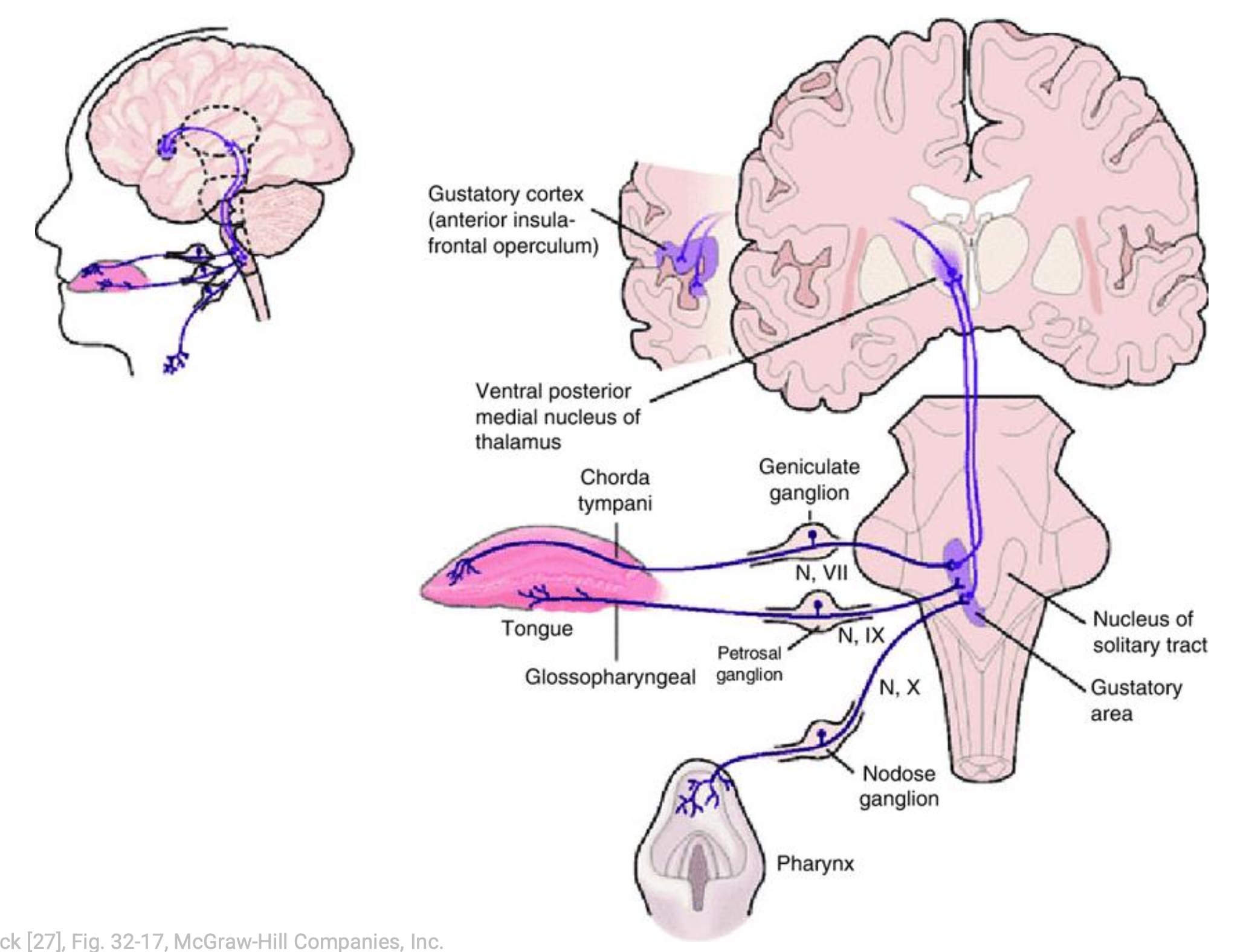
gustatory pathway
see also
Tags: neuroscience science
Superlink: 050 🧠Neuroscience
Source
Created: 28-10-24 11:21