Nucleus
The nucleus is a vital organelle found in eukaryotic cells, often referred to as the “control center” of the cell. It plays a crucial role in maintaining the integrity of genes and controlling the activities of the cell by regulating gene expression.
Key Functions:
-
Genetic Information Storage:
- The nucleus houses the cell’s DNA, which contains the genetic blueprint for the development and function of living organisms.
- DNA is organized into chromosomes, which are structures that ensure DNA is accurately replicated and distributed during cell division.
-
Gene Expression Regulation:
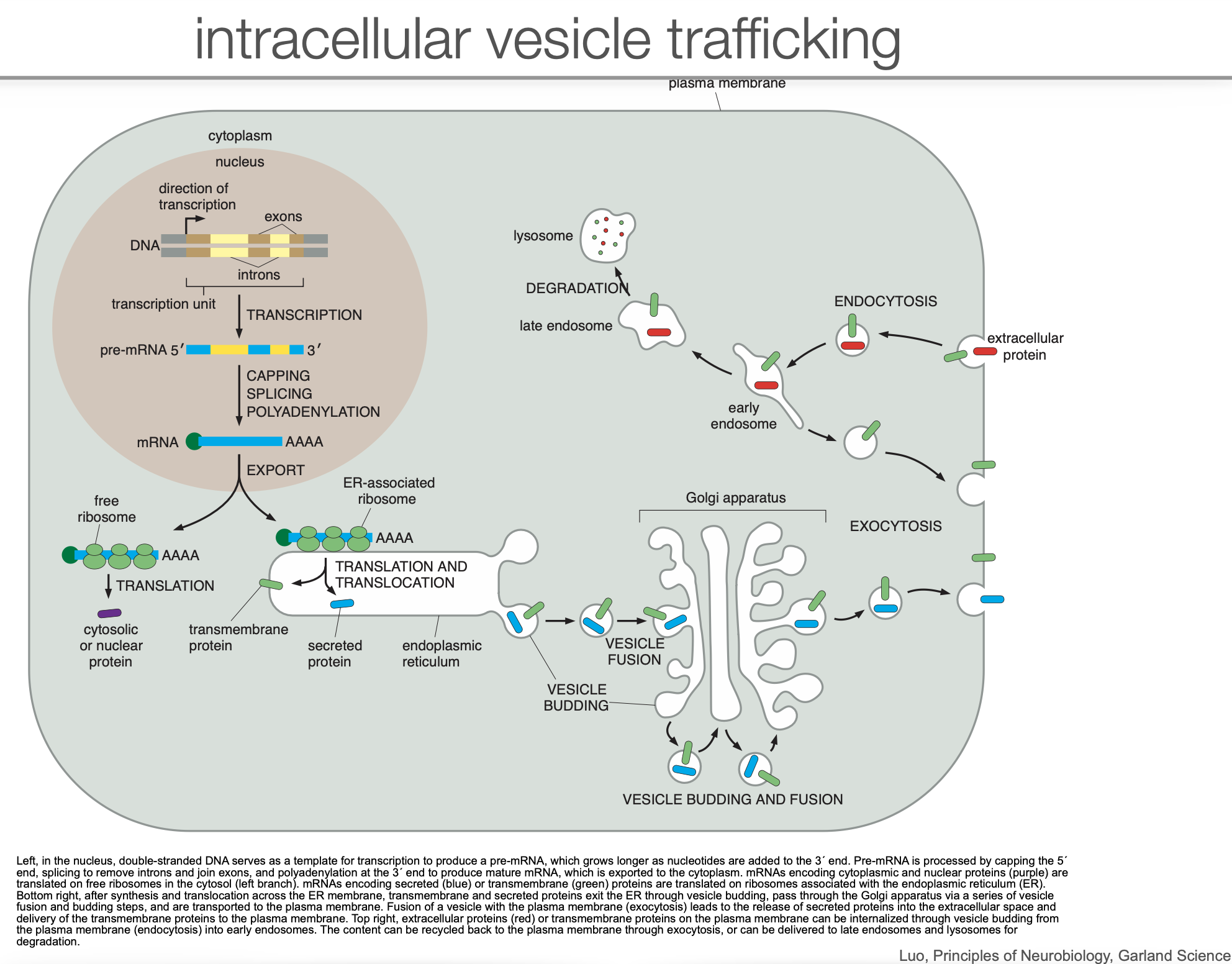
- The nucleus is responsible for the transcription of DNA into messenger RNA (mRNA), a process regulated by proteins known as transcription factors.
- This mRNA is then transported out of the nucleus to the cytoplasm, where it is translated into proteins by ribosomes.
-
Cell Growth and Reproduction:
- The nucleus plays a pivotal role in cell growth and reproduction by controlling the cell cycle and ensuring the proper replication of DNA.
Structure:
- Nuclear Envelope: A double membrane that encloses the nucleus, separating it from the cytoplasm. It contains nuclear pores that regulate the exchange of materials (such as RNA and proteins) between the nucleus and the cytoplasm.
- Nucleoplasm: The semi-fluid substance within the nucleus, where chromatin and the nucleolus are suspended.
- Chromatin: A complex of DNA and protein found in the nucleus, which condenses to form chromosomes during cell division.
- Nucleolus: A dense region within the nucleus where ribosomal RNA (rRNA) is synthesized and combined with proteins to form ribosomal subunits.
Related Concepts:
- DNA Structure: DNA in the nucleus is structured as a double helix, composed of nucleotides that include a phosphate group, a deoxyribose sugar, and a nitrogenous base (adenine, thymine, cytosine, or guanine).
- Central Dogma of Molecular Biology: The flow of genetic information from DNA to RNA to protein, highlighting the nucleus’s role in transcription.
Importance in Neurobiology:
- The nucleus is essential for the functioning of neural cells, as it regulates the expression of genes necessary for neural activity and plasticity.
This structured overview provides a comprehensive understanding of the nucleus, its functions, and its significance in cellular and molecular biology.
Sources:
see also
Tags: neurobiology science
Superlink: 051 ☣Neurobiology 050 🧠Neuroscience
Source
Created: 2025-06-11 15:03