chatbot
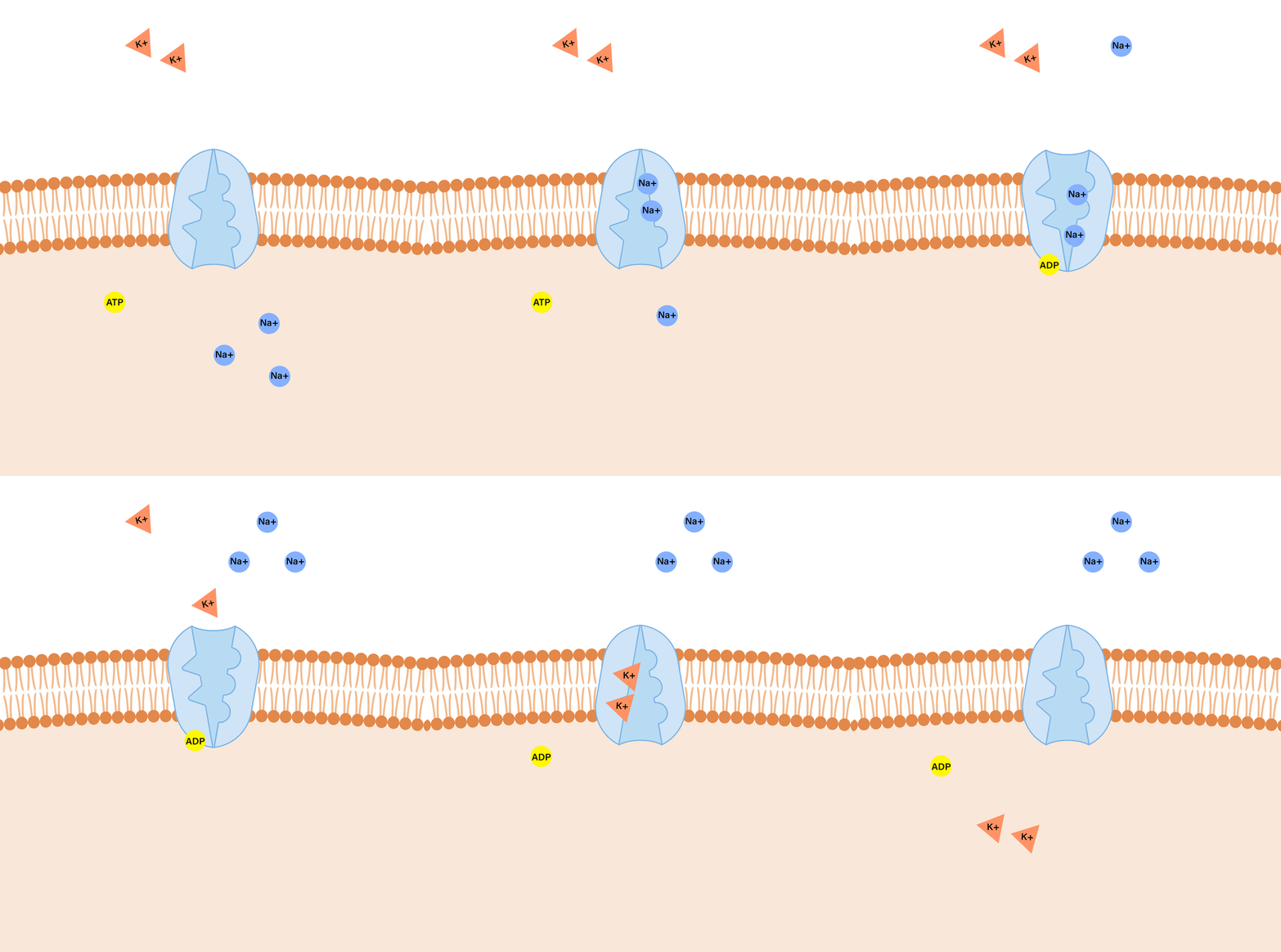
The sodium-potassium pump (often referred to as the Na⁺/K⁺-ATPase) is a crucial protein found in the plasma membrane of cells, including neurons. It plays a vital role in maintaining the resting membrane potential and restoring the ion concentration gradients after an action potential. Here’s how it works, especially in the context of neuronal action potentials and the restoration of ion gradients:
1. Basic Function:
- The sodium-potassium pump actively transports sodium (Na⁺) ions out of the cell and potassium (K⁺) ions into the cell against their concentration gradients. This process is crucial for maintaining the high concentration of Na⁺ outside the neuron and the high concentration of K⁺ inside the neuron, which are essential for the resting membrane potential and the ability of the neuron to fire action potentials.
2. ATP Consumption:
- The pump operates using energy derived from Adenosine Triphosphate (ATP). For each cycle of the pump, one molecule of ATP is hydrolyzed (broken down), which provides the energy required to transport three sodium ions out of the cell and two potassium ions into the cell.
3. Restoration of Ion Gradients:
- During an Action Potential, the rapid influx of Na⁺ ions into the neuron and the subsequent efflux of K⁺ ions disrupt the resting ion gradients. The sodium-potassium pump works continuously to restore these gradients by pumping Na⁺ out and K⁺ in, thus ensuring that the Neuron cell is ready for the next action potential.
- This active transport mechanism is essential for the neuron to return to its resting state after Hyperpolarization and during the refractory periods. It helps re-establish the negative resting membrane potential and corrects the ion imbalances caused by the action potential.
4. Contribution to Resting Membrane Potential:
- Although the direct contribution of the sodium-potassium pump to the resting membrane potential is relatively small compared to the effect of potassium leak channels, it is crucial for long-term maintenance of the resting potential. By ensuring a higher concentration of K⁺ inside the cell and a higher concentration of Na⁺ outside the cell, the pump indirectly supports the electrical gradient necessary for the negative resting potential.
5. Overall Significance:
- The sodium-potassium pump is vital for neuronal health and function. It not only helps maintain the resting membrane potential but also ensures that the neuron can repeatedly fire action potentials by restoring the necessary ion gradients. Without this pump, neurons would not be able to recover after depolarization, leading to a failure in nerve signal transmission.
In summary, the sodium-potassium pump is a critical component in the neuronal function, enabling neurons to reset after action potentials and maintain the electrochemical gradients that underlie nerve transmission.