gustatory system
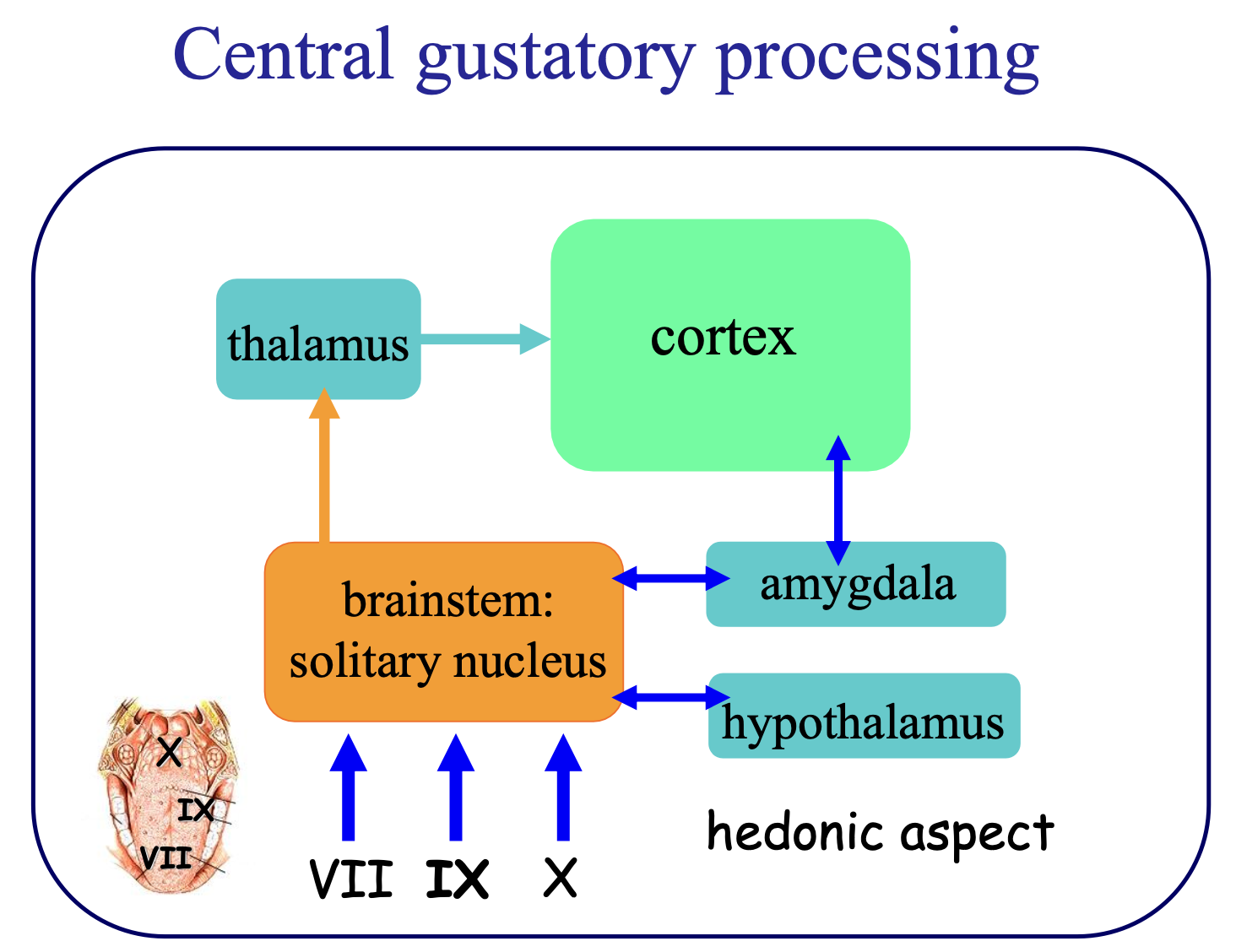
Central gustatory processing
Detecting the five tastes
-
Salty stimuli: Detected when sodium chloride dissociates in water, allowing sodium ions to passively diffuse through specialized sodium channels, leading to cell depolarization. These channels can be blocked by amiloride.
-
Sour stimuli: Characterized by an excess of protons which act through PKD2-channels (polycystic kidney disease channels), leading to the detection of sourness.
-
Bitter and sweet stimuli: Detected through G-protein coupled receptor molecules. These receptors initiate a cascade of cellular events in response to the binding of bitter or sweet compounds.
-
Umami taste: Detected as the taste of glutamate, an amino acid that signals the presence of proteins, through mechanisms similar to those for bitter and sweet, involving G-protein coupled receptors.
-
ATP as neurotransmitter: Taste cells use ATP to transmit signals to sensory neurons, not through exocytosis of synaptic vesicles but via half channels of gap junctions, indicating a unique mechanism of neurotransmitter release in taste sensation. ^28add5
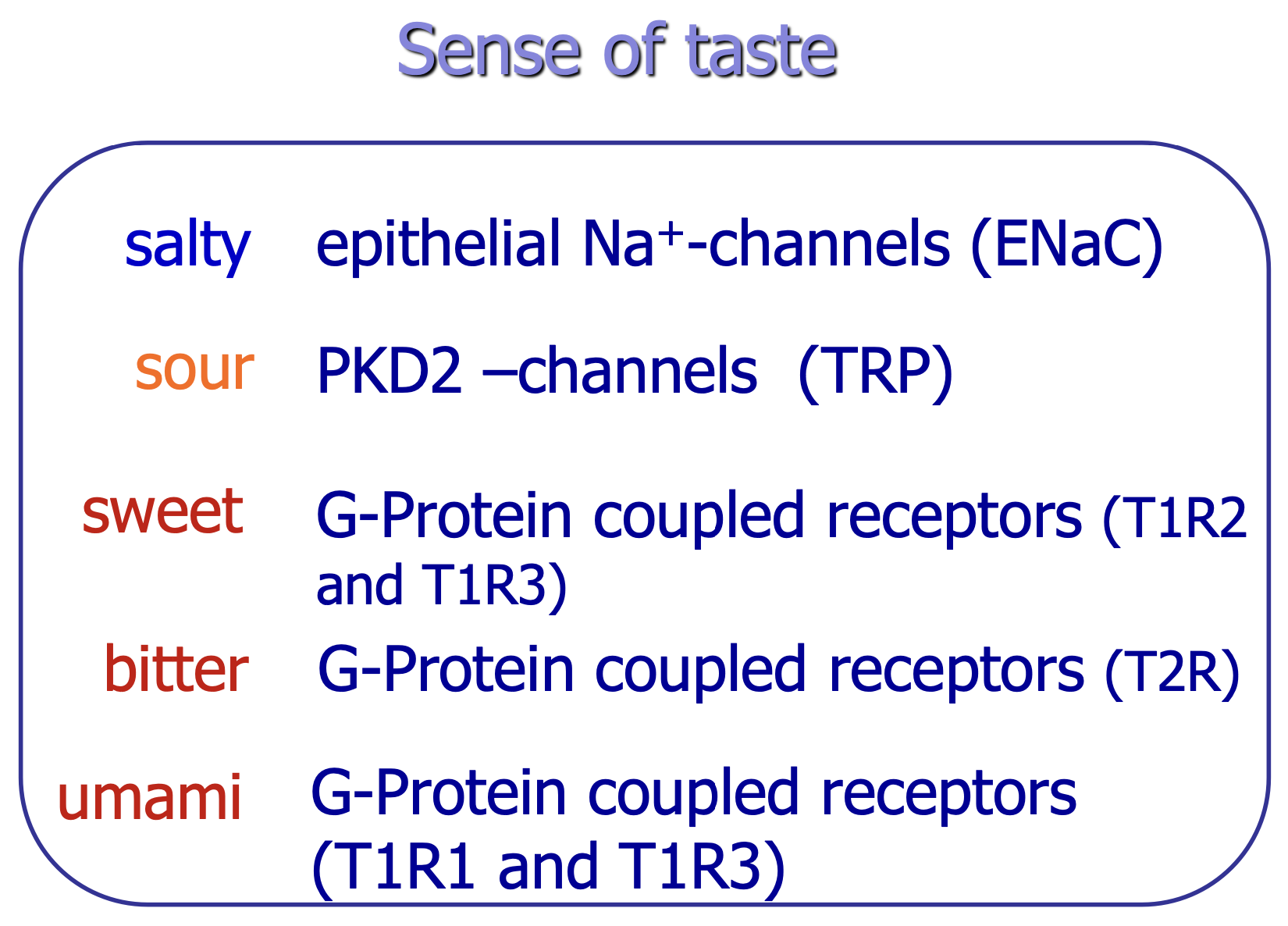
Each basic taste has a distinct pathway for detection involving specific receptors and ion channels, leading to the activation of taste receptor cells and the transmission of taste information to the brain.
Taste papillae
-
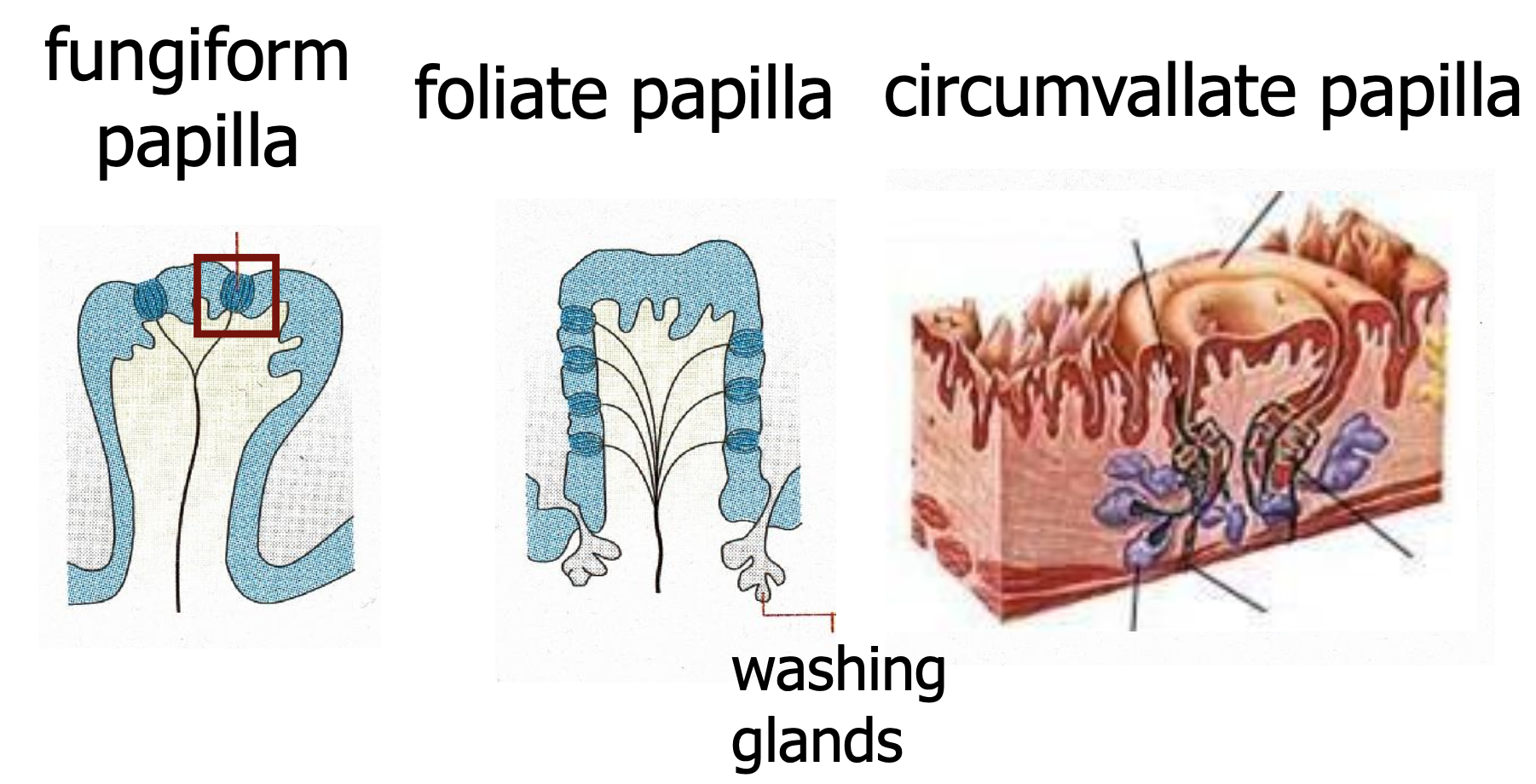
Taste papillae are structures on the tongue that house taste buds, which are responsible for detecting taste stimuli.
-
There are several types of papillae, including fungiform, foliate, and circumvallate, each containing taste buds in different quantities and locations on the tongue.
-
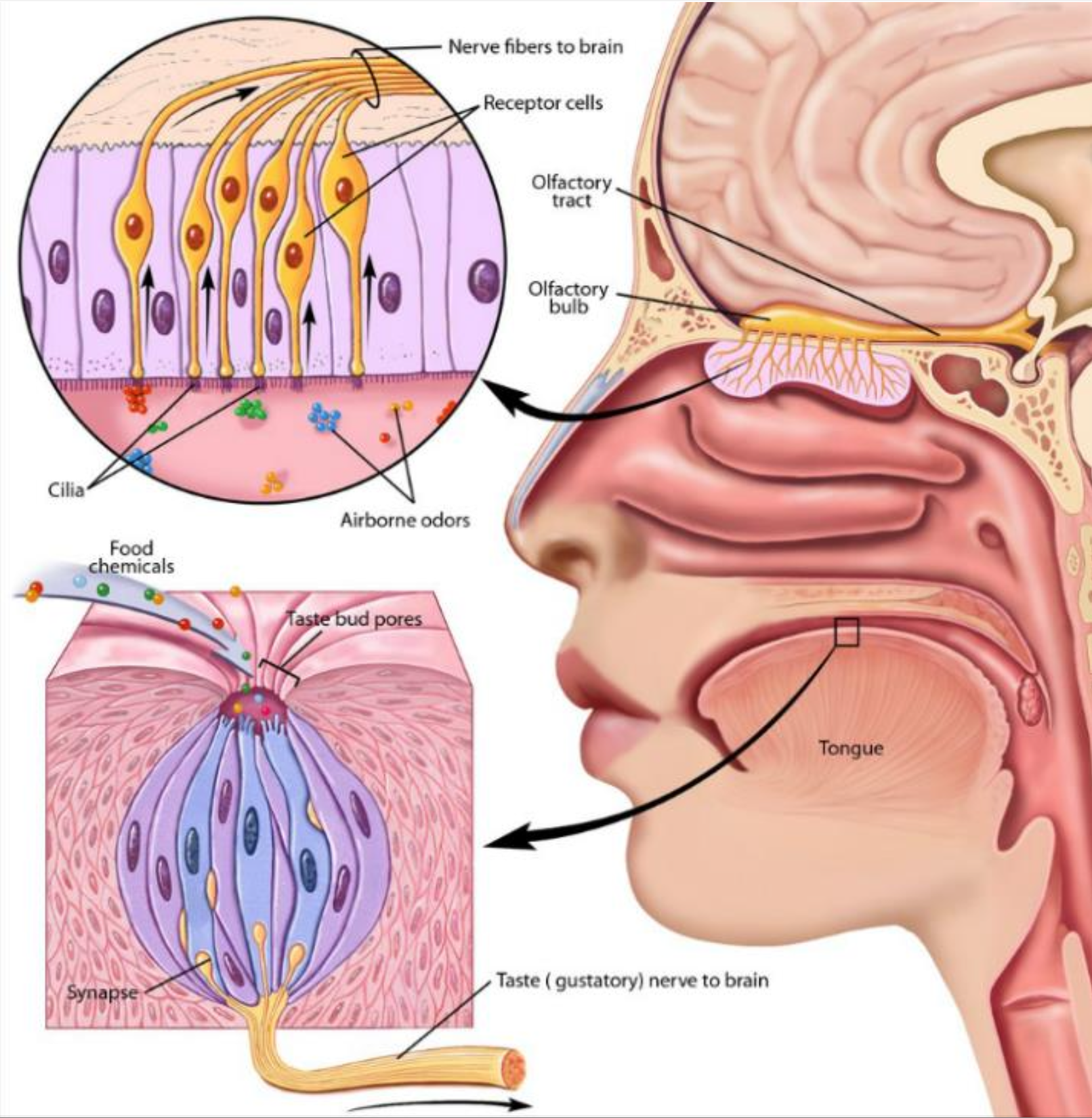
Taste buds are composed of taste receptor cells surrounded by supporting cells. Each taste bud contains more than 25 receptor cells.
-
These receptor cells have microvilli (short membrane extensions) at their upper surface, which come into contact with tasted substances.
-
Taste substances enter the taste bud through a pore at the top of the bud and interact with the microvilli.
-
Taste receptor cells are secondary sensory cells that do not generate action potentials themselves but release neurotransmitters in response to stimulation.
-
Each taste receptor cell is most sensitive to one of the five basic tastes: sweet, salty, sour, bitter, and umami, but can respond to others to a lesser extent.
-
The peripheral branches of the axons of primary sensory neurons innervate the base of each taste cell, where they receive the neurotransmitter signals.
-
When taste cells are activated by their specific stimuli, they release neurotransmitters onto these sensory neuron fibers, inducing action potentials that transmit taste information to the brain.
-
Taste receptors have a short life span of about one week and are constantly replaced, ensuring sensitivity to taste stimuli is maintained.
-
Signal transduction for tastes involves different mechanisms: salty and sour tastes are detected through ion channels (sodium channels for salty, PKD2L1 channels for sour), while sweet, bitter, and umami tastes are detected through G-protein coupled receptors.
-
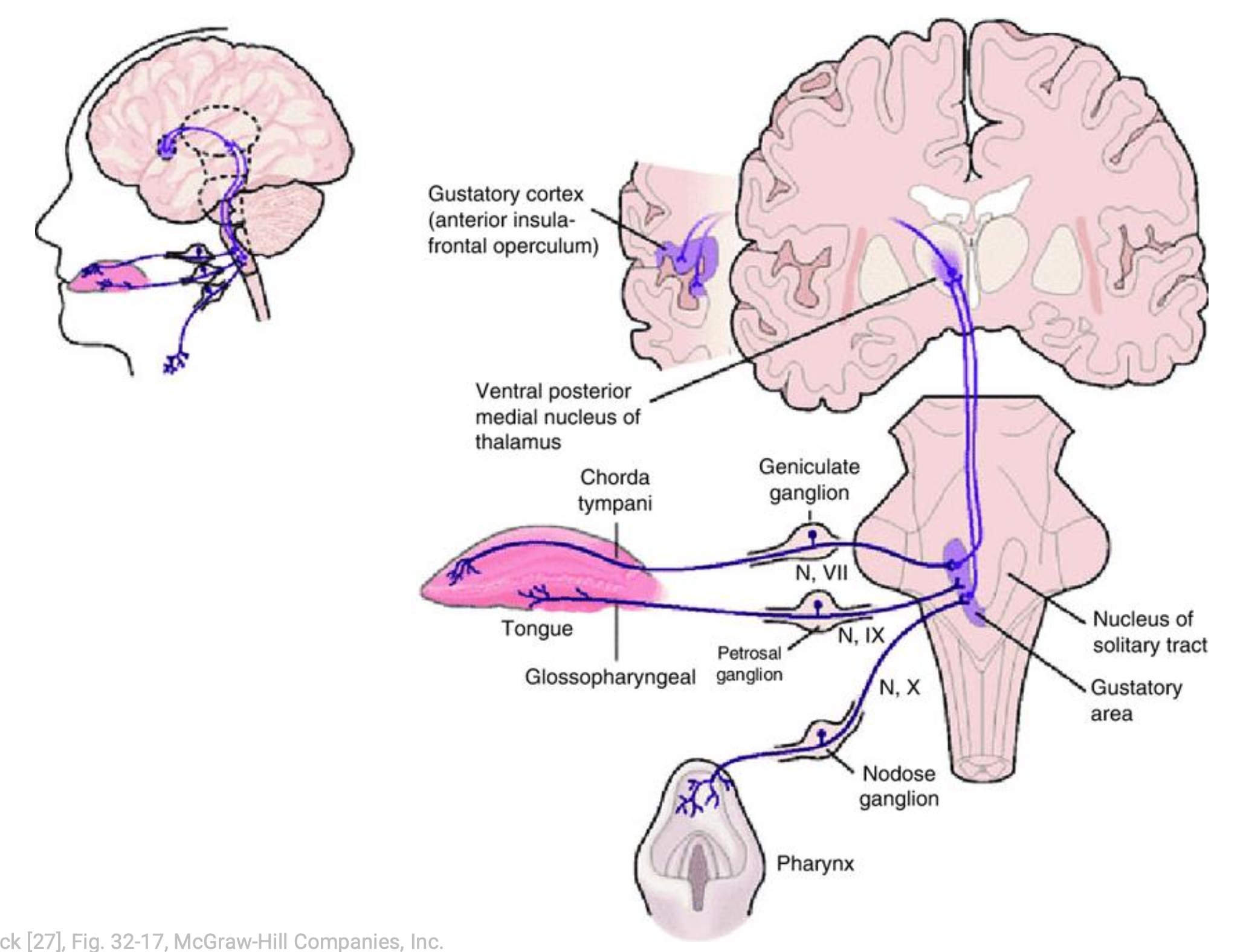
The gustatory pathway begins with the taste information being sent from the taste receptor cells through the facial, glossopharyngeal, and vagus nerves to the brainstem, and then to the thalamus and cortex for further processing.
Taste receptor cells
- secondary sensory cells
- short life span (max. two weeks)
- microvilli carry receptor molecules
- cells are responsive to a single taste
see also
Tags: neuroscience science
Superlink: 050 🧠Neuroscience
Source
Created: 28-10-24 13:00