Microglia
Microglia are a type of glial cell found throughout the central nervous system (CNS). Here is a structured overview of their characteristics and functions:
Structure
- Size and Appearance: Microglial cells are small and have a ramified (branched) structure.
- Distribution: They are distributed throughout the adult CNS.
Functions
- Immune Defense: Microglia play a crucial role in the immune defense of the CNS. They express a variety of immunomodulatory peptides and surface receptors similar to lymphocytes.
- Response to Injury: Upon injury, microglia become activated, start to divide, and migrate to the site of injury. They can transform into macrophage-like cells capable of clearing damaged cells and debris through phagocytosis.
- Phagocytosis: This process involves engulfing and digesting cellular debris and pathogens, helping to maintain a healthy neural environment.
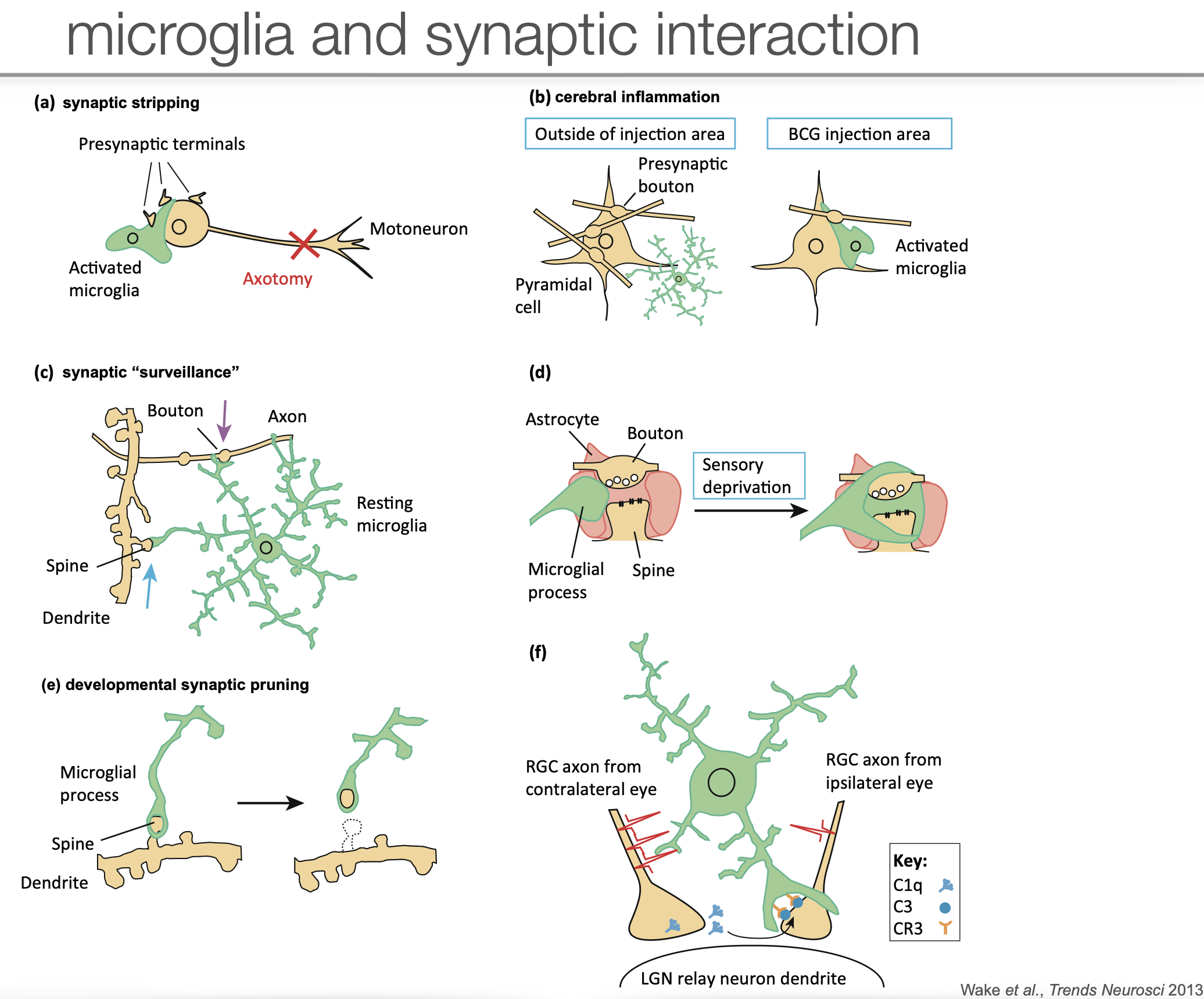
Activation
- Transformation: When activated, microglia undergo changes that enhance their ability to respond to CNS damage or infection.
- Expression of Receptors: Activated microglia express receptors that are involved in recognizing and responding to pathogens and damaged cells.
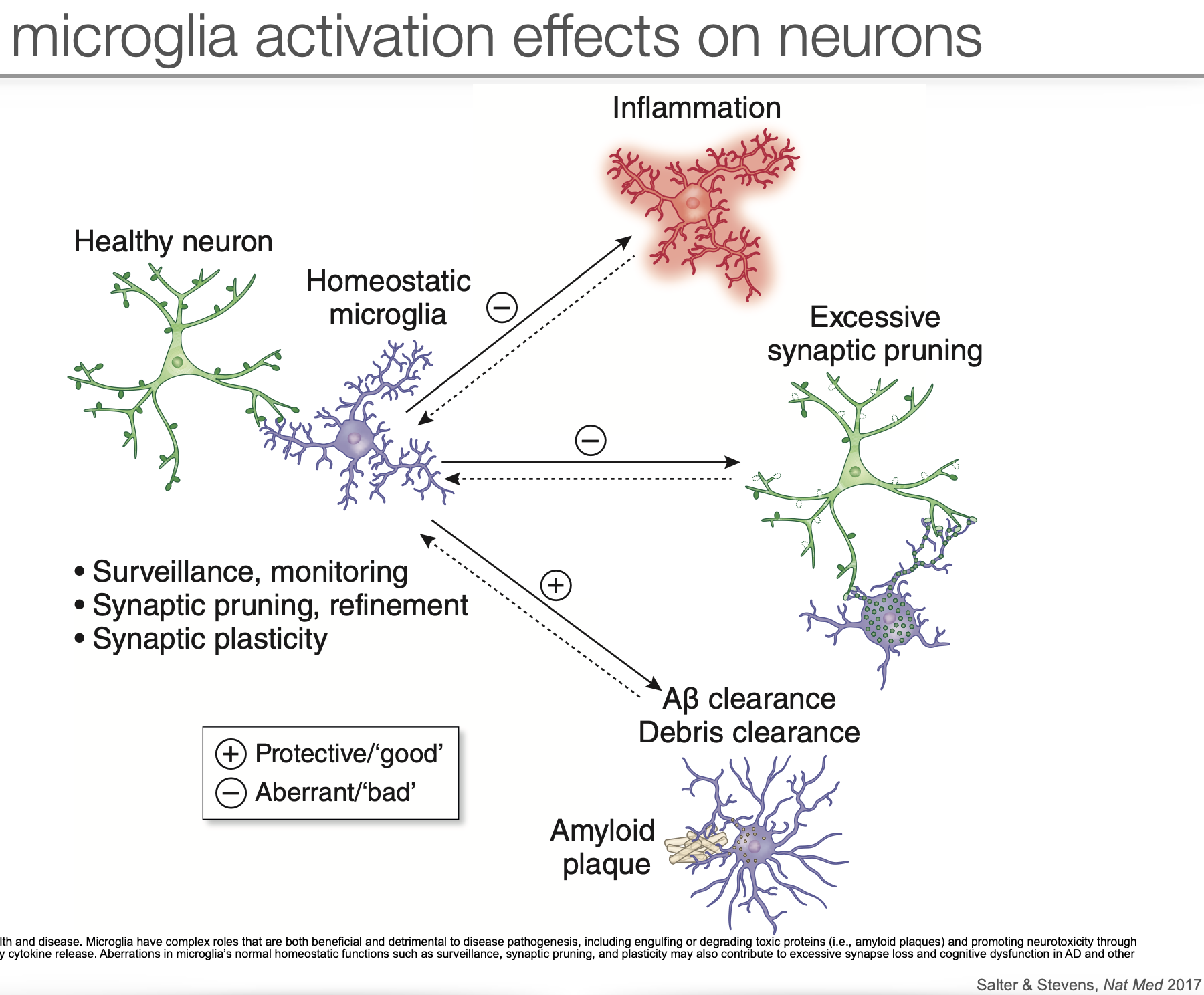
Microglia are essential for maintaining Homeostasis in the CNS, responding to injury, and participating in immune responses. Their ability to transform and clear debris makes them vital for neural health and recovery processes.
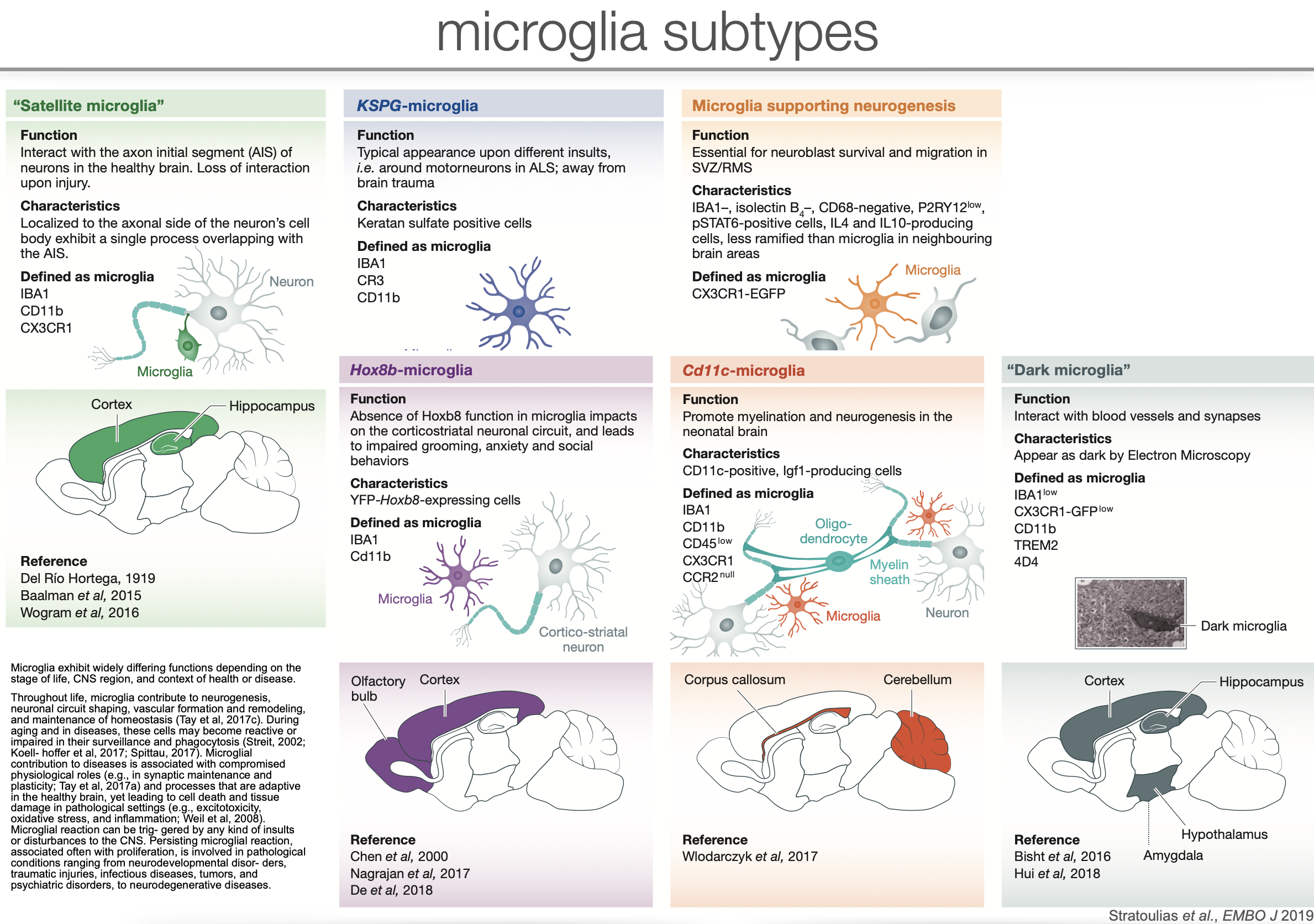
Subtypes of microglia
Sources:
see also
Tags: neurobiology science
Superlink: 051 ☣Neurobiology 050 🧠Neuroscience
Cell
Central Nervous System (CNS)
Immune System
Glia cells
Source
Created: 11-02-25 13:02