PKA
- Also Known As: cAMP-dependent protein kinase.
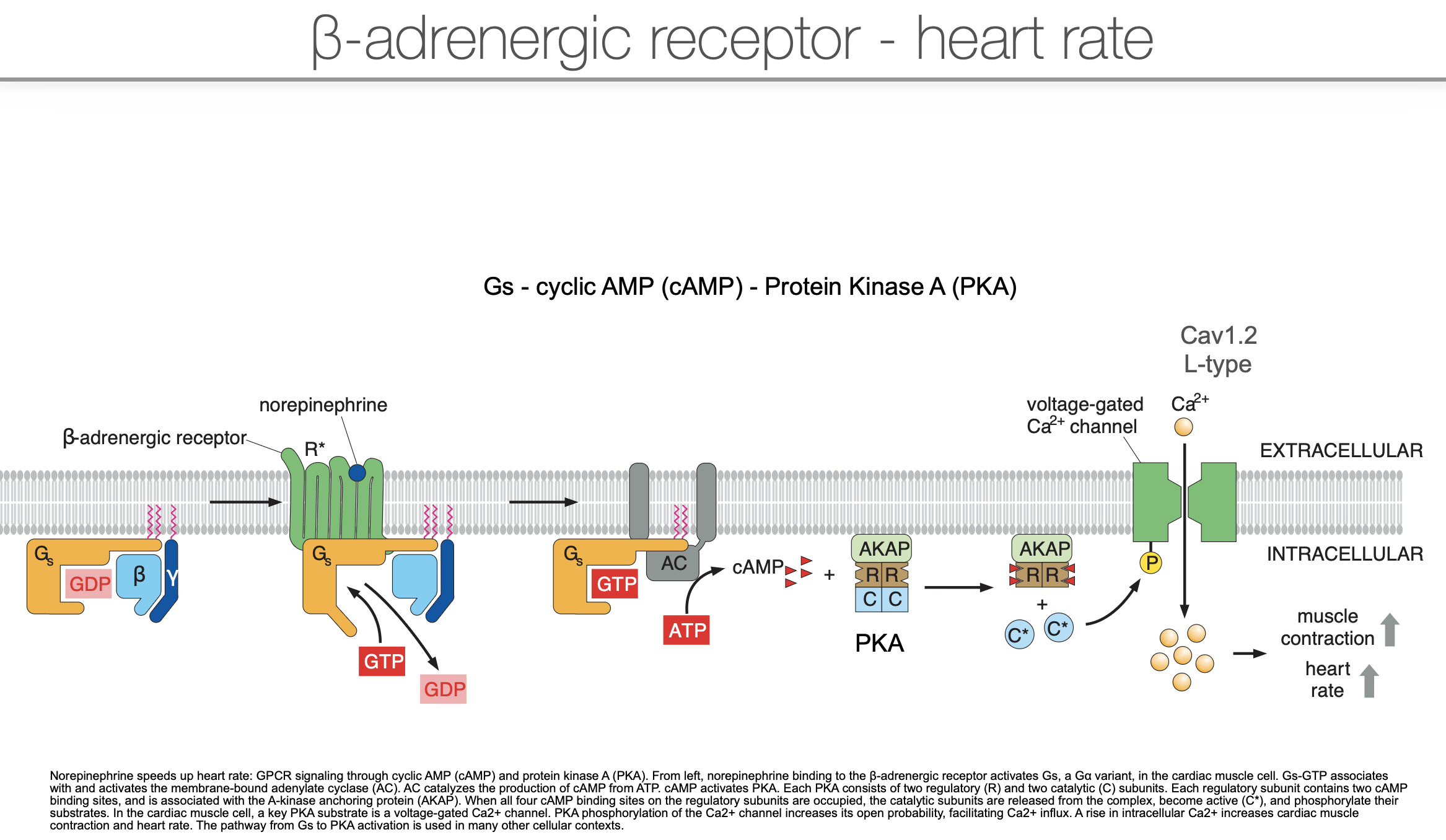
- Activation: PKA is activated by the binding of cAMP (cyclic adenosine monophosphate). When cAMP levels increase in the cell, it binds to the regulatory subunits of PKA, causing a conformational change that releases the catalytic subunits. These catalytic subunits are then free to phosphorylate target proteins.
- Function: PKA regulates various cellular processes, including metabolism (e.g., glycogen, sugar, and lipid metabolism), gene expression, cell cycle, and memory formation in the nervous system. It is a critical mediator of the action of hormones like adrenaline and glucagon, which increase cAMP levels.
- Target Proteins: PKA can phosphorylate a wide range of target proteins, including enzymes, receptor proteins, and transcription factors, thereby modulating their activity.
see also
Tags: neurobiology science
Superlink: 051 ☣Neurobiology 050 🧠Neuroscience
Protein Kinase G
Protein
Source
Created: 19-09-24 16:26