Sleep, Schlaf
aus Hyperfocus
The size of our Attentional Space can shrink by as much as 60 percent as the result of a sleep deficit—complex tasks can take more than twice as long when we’re tired.
(p.166)
Better sleep more and work less. This increases the productivity of the time of work which remains. It’s worth the effort.
Dreaming activates the same brain regions as in scatterfocus. It is even more active during sleep, kind of scatterfocus on drugs.
less sleep leads to:
• feel more pressure at work;
• focus for a shorter duration of time (even less than forty seconds);
• fire up social media sites more often;
• experience more negative moods;
• actively seek less demanding tasks (eliminating those that no longer fit into our shrunken attentional space); and
• spend more time online throughout the day.
(p.168)
Sleep Phases
Defining features of sleep stages are listed in Table 1. NREM sleep is classified as light NREM (stages 1–2; now termed N1–2) and deeper slow wave sleep (SWS, formerly known as stages 3–4; N3–4), as well as REM sleep. Typically, approximately 75% of the night is spent in NREM sleep and up to 25% in REM sleep.
NREM N1
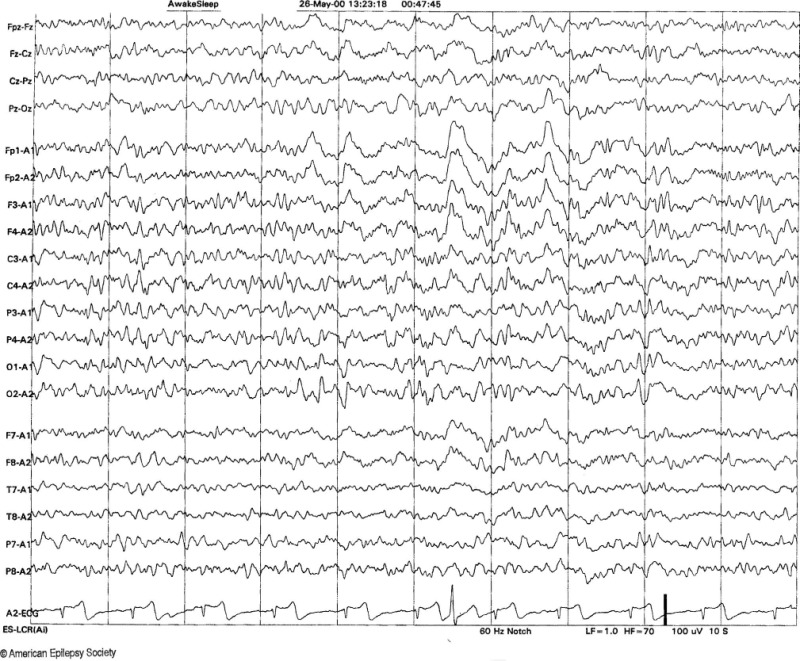
Stage 1 (N1) sleep is contiguous with drowsiness and is characterized by SEMS and slower theta and delta EEG frequencies of 1 to 7 Hz, with less than 50% alpha frequency activity in a 30-second epoch. It is easily marked by the appearance of vertex waves (V-waves); sharply contoured, fronto-centrally predominant waves (Figure 15).
more facts about N1
-
Transition Phase: N1 is the initial stage of sleep, acting as the transition from wakefulness into sleep. It’s the period where you’re just beginning to fall asleep.
-
Short Duration: This phase is relatively short, typically lasting for about 1-5 minutes, though it can extend up to 7 minutes in some cases. It constitutes about 5% of the sleep cycle.
-
Light Sleep: During N1, you are in a light sleep state. You can be easily awakened or disturbed by noises or other external stimuli.
-
Decreased Physiological Activity: There’s a noticeable decrease in physiological activities such as heart rate, breathing rate, and muscle tension. However, these changes are not as pronounced as in the deeper stages of sleep.
-
Hypnic Jerks: A common phenomenon experienced in this stage is the hypnic jerk or sleep start, which is a sudden, brief muscle contraction that can feel like falling, often causing a person to awaken suddenly.
-
Theta Waves: The brain wave activity during N1 is dominated by theta waves, which are slower and of higher amplitude than the alpha waves that predominate during wakefulness.
-
Reduced Sensory Awareness: There’s a gradual loss of awareness of the external environment, making it easier for someone to fall asleep, although they can still be easily awakened.
-
Hallucinations and Hypnagogic Sensations: Some people experience vivid sensory phenomena or hallucinations during the transition to sleep in N1, known as hypnagogic hallucinations. These can include visual, auditory, or tactile sensations and are usually brief and not remembered.
Understanding the NREM 1 phase is crucial for studying sleep patterns and disorders, as disturbances in the transition into deeper sleep stages can affect sleep quality and overall health.
NREM N2
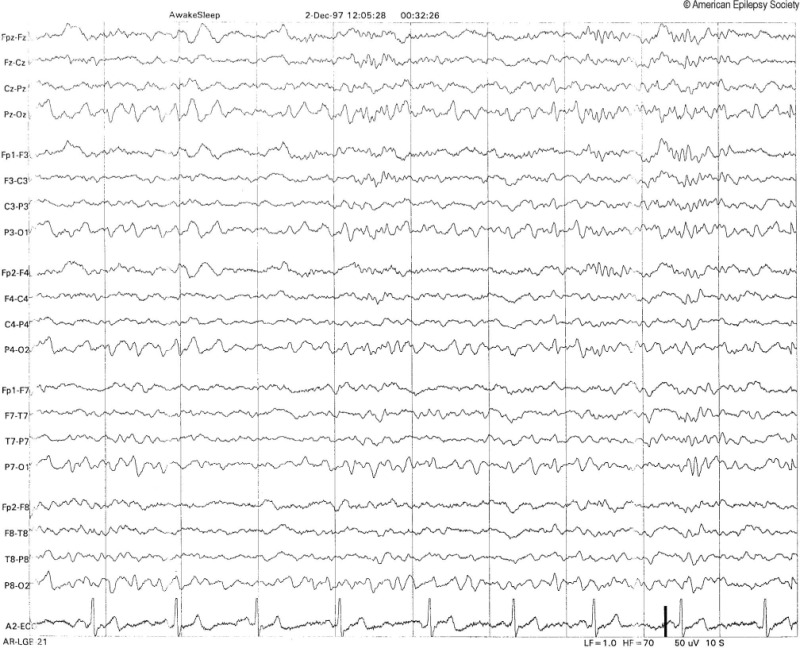
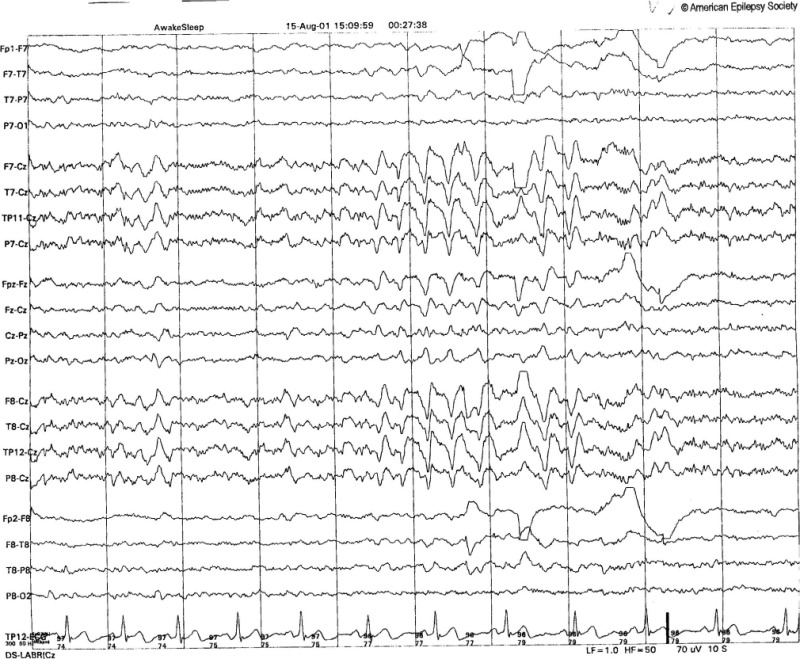
During stage 2 (N2) sleep, more delta frequency background begins to emerge, and the defining features of sleep spindles, K-complexes, and posterior occipital sharp transients of sleep (POSTS) are seen (Figures 16, 17). Sleep spindles are thought to reflect the synchronous activity mediated by thalamo-cortical neuronal networks.
SWS N3
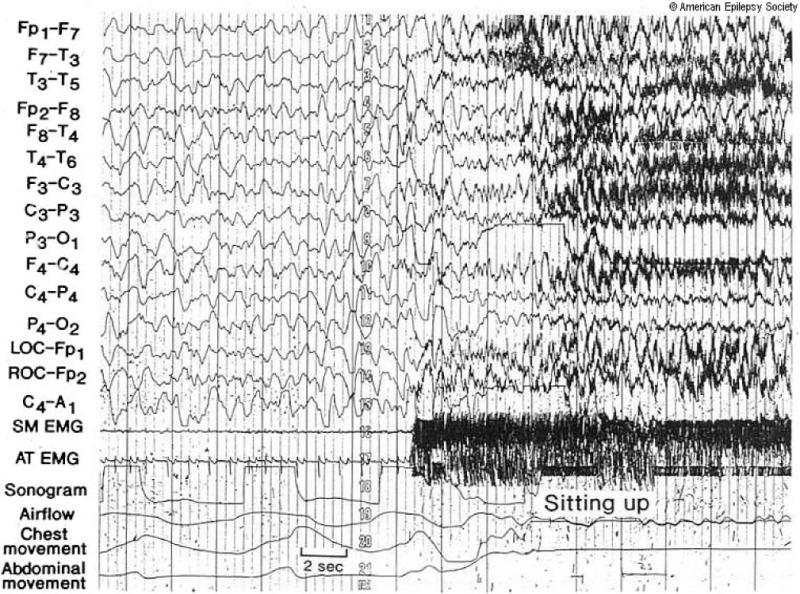
SWS (N3) has similar features, but less spindles, K-complexes, and POSTS are seen and even more delta frequency activity emerges (Figure 18).
REM
see also
PN Ablenkung
PN Social Media
Introducing Scatterfocus
Three Styles of Scatterfocus
Tags: neurobiology science productivity
Superlink: 051 ☣Neurobiology 050 🧠Neuroscience
Quellen
Chapter 7 Recharging Your Attention
Britton JW, Frey LC, Hopp JLet al., authors; St. Louis EK, Frey LC, editors.
Chicago: American Epilepsy Society; 2016.
https://www.ncbi.nlm.nih.gov/books/NBK390343/figure/f15/?report=objectonly
Erstellt: 08-06-22 14:45