Tonic receptor
- Tonic receptors are a type of sensory receptor.
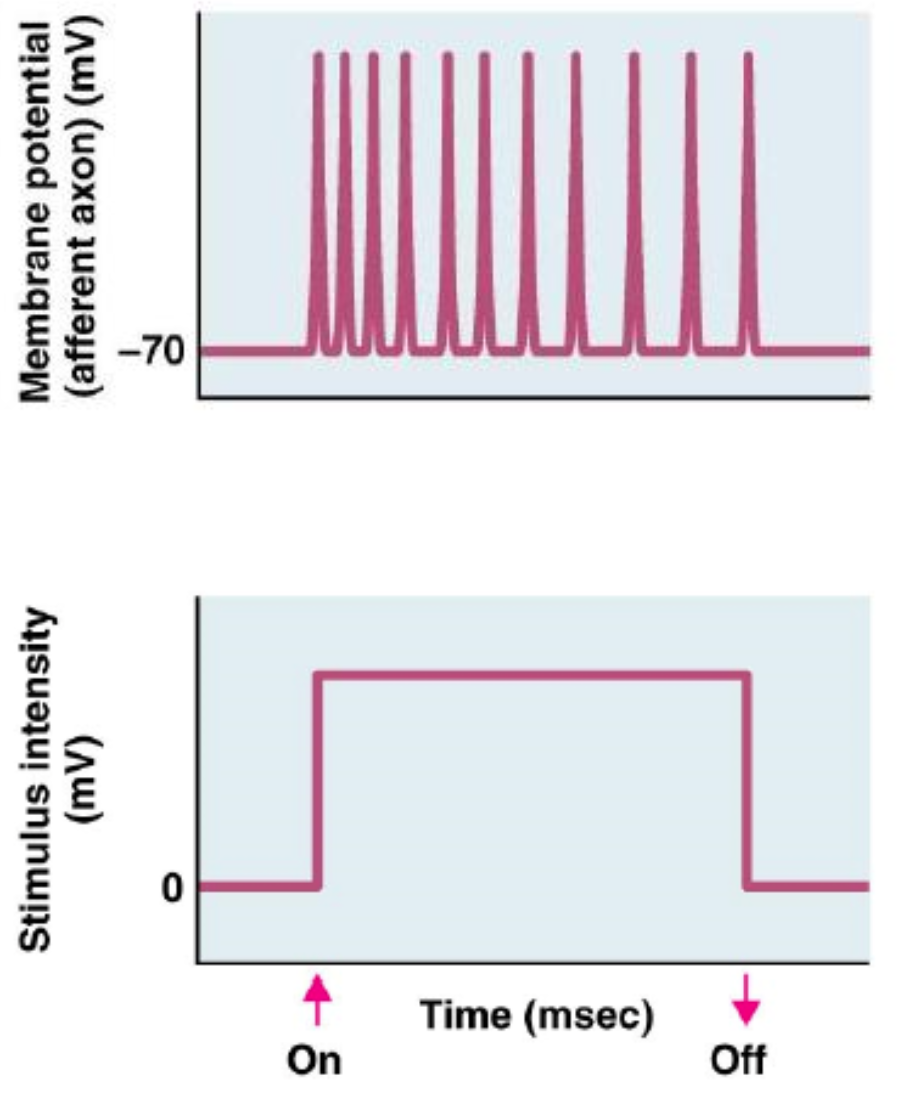
- They respond to stimuli over a prolonged period.
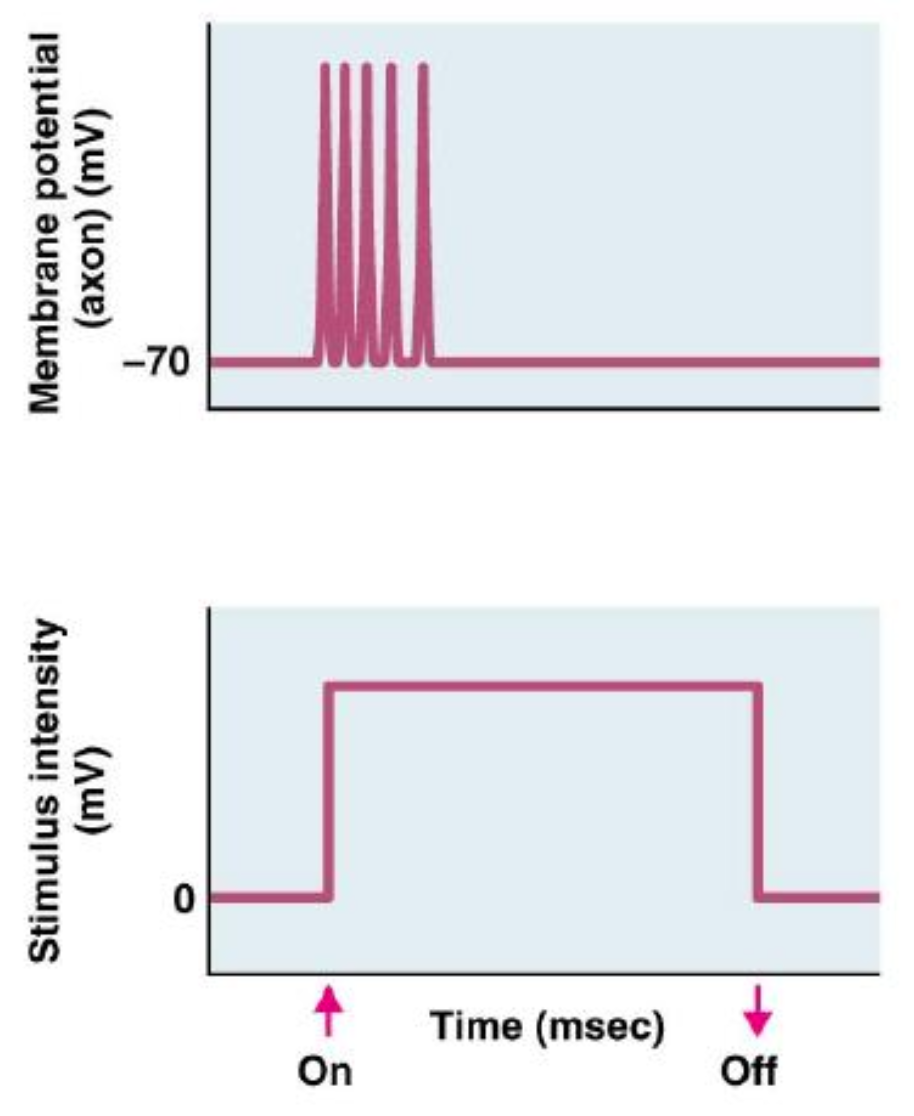
- Unlike phasic receptors, tonic receptors do not adapt quickly to a constant stimulus.
- They generate nerve signals as long as the stimulus continues.
- Ideal for monitoring steady states within the body, such as posture, muscle tension, and temperature.
- Their response is gradual and sustained.
- Important for detecting continuous information about the intensity and duration of a stimulus.
- The frequency of action potentials (nerve signals) they send can vary with the strength of the stimulus.
- Tonic receptors are crucial for maintaining homeostasis by providing constant feedback to the nervous system.
- Examples include pain receptors and muscle stretch receptors.
see also
Tags: neurobiology science
Superlink: 051 ☣Neurobiology 050 🧠Neuroscience
phasic and tonic receptors.png
Source
Created: 23-10-24 22:01