decision making
False positives and True positive rate:
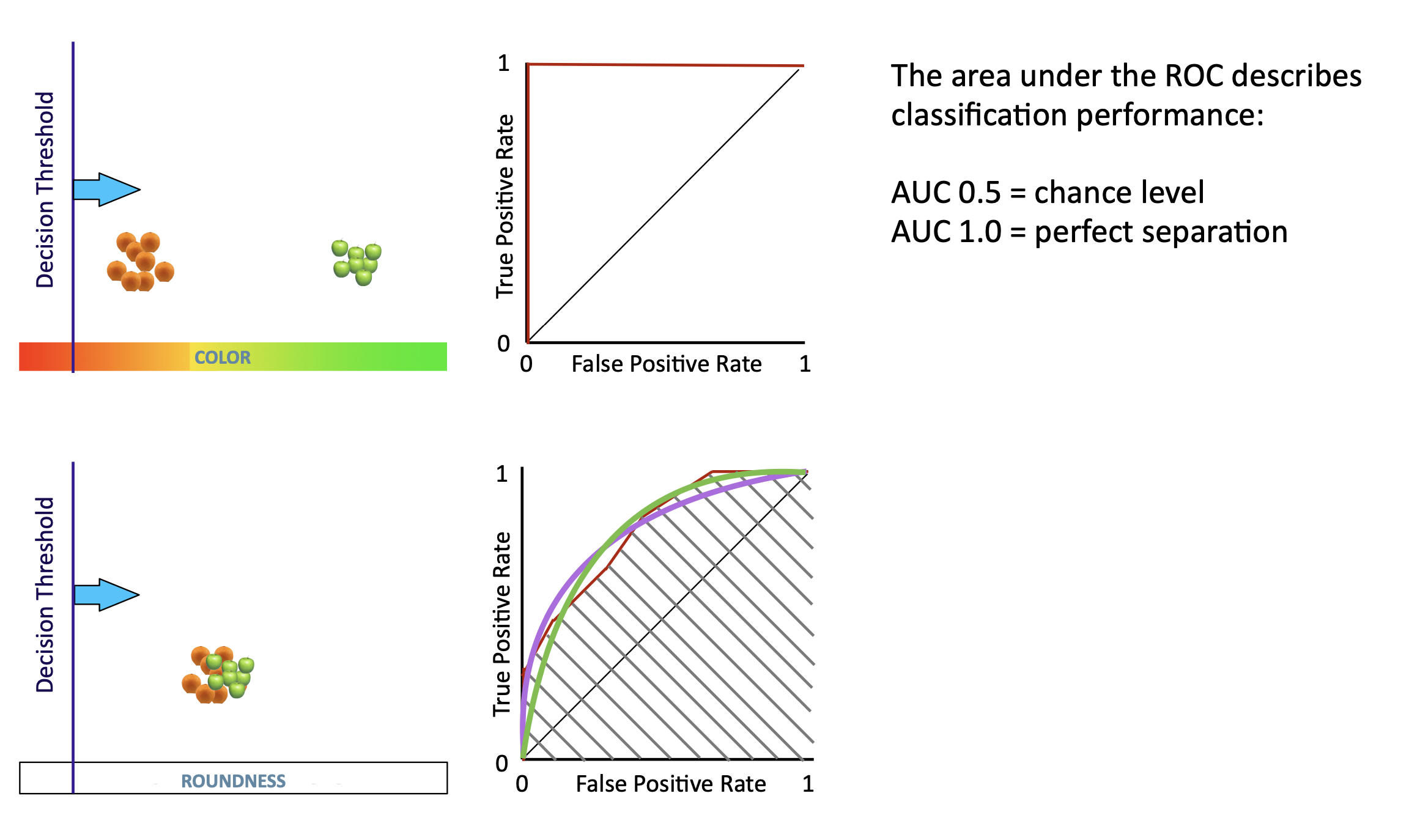
the area under the curve gives you the quality of your classification algorithm
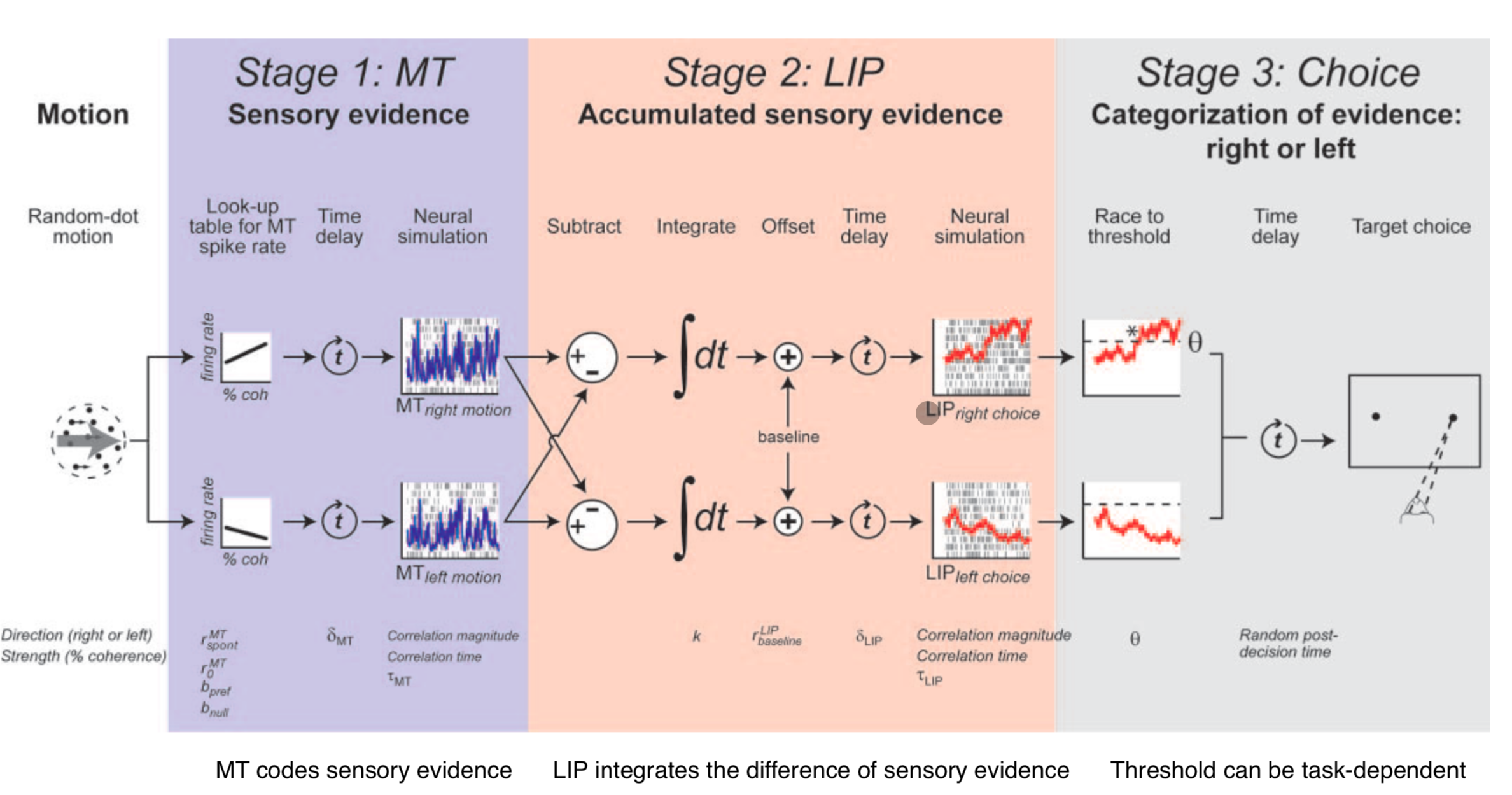
The complete model of forming decisions
This is a general model, not limited to dot-motion (MT) and saccade responses (Lateral Intraparietal Cortex (LIP)).
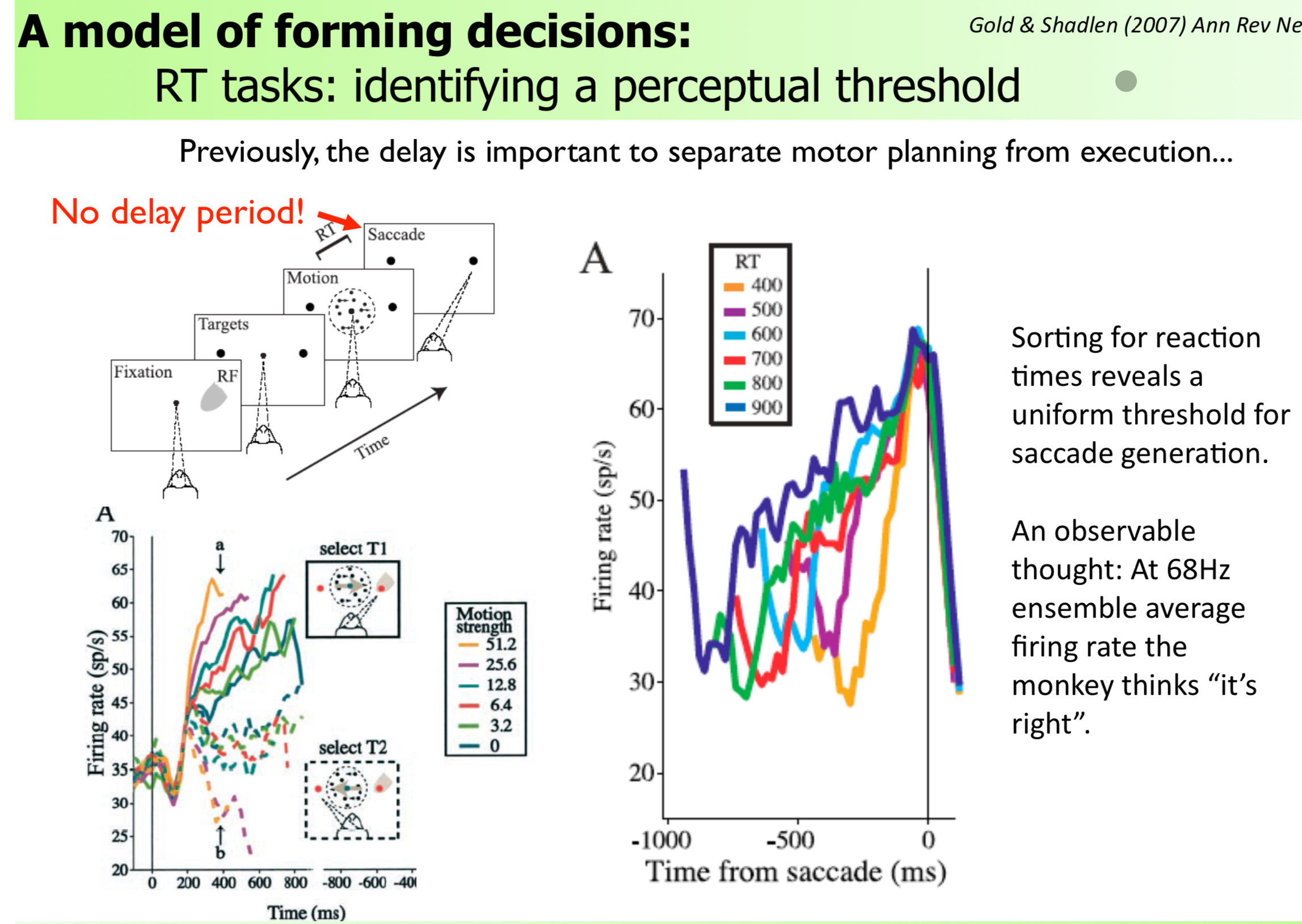
When the subject is supposed to react as fast as possible, an average threshold emerges.
decision process correlates with LIP neurons
what the monkey tells you closely correlates with the firing of LIP neurons, even though it’s wrong what the monkey thinks
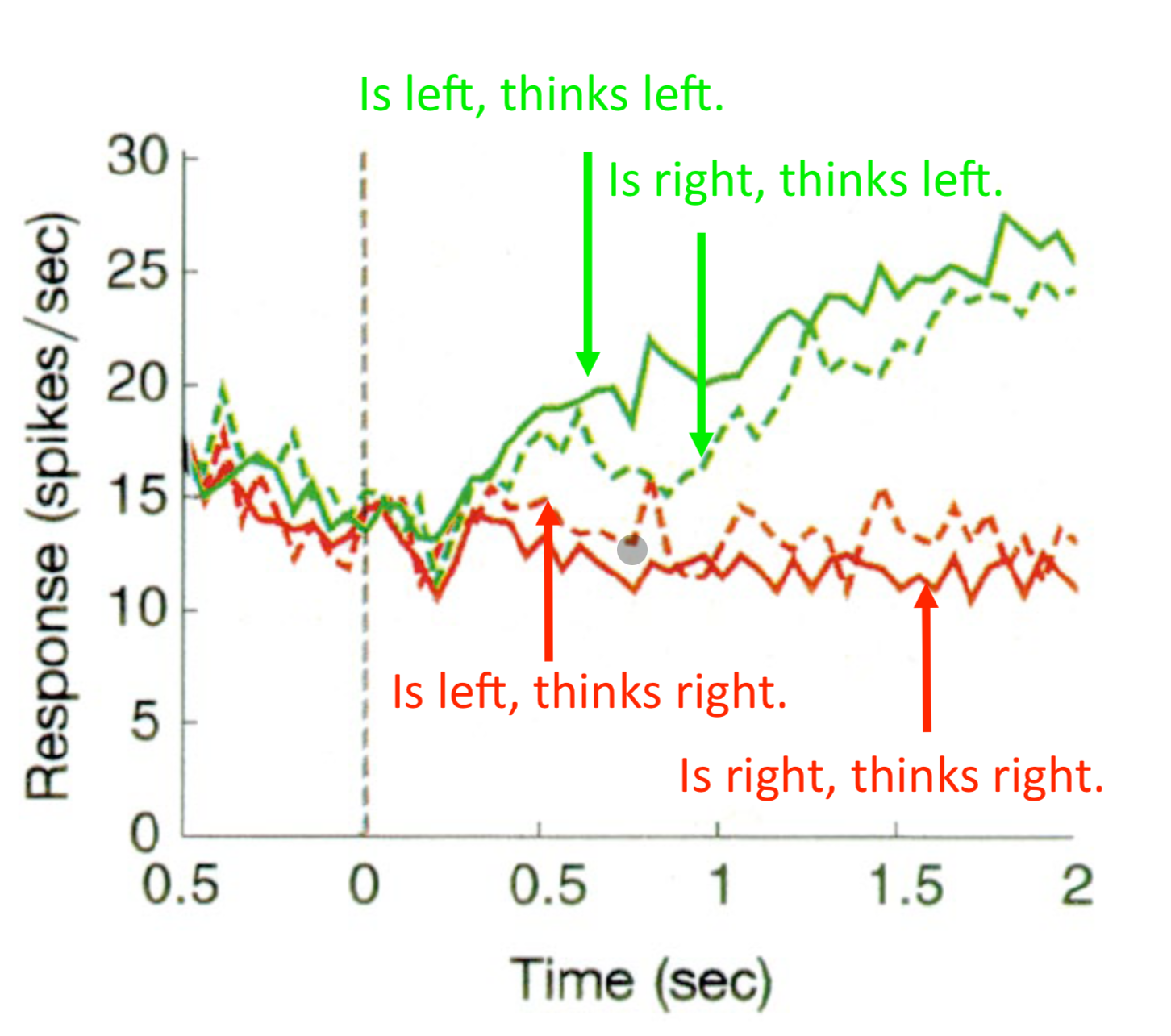
In the case of error trials, the activity in LIP matches the behavioural response,
i.e., what the monkey thinks what the stimulus is.
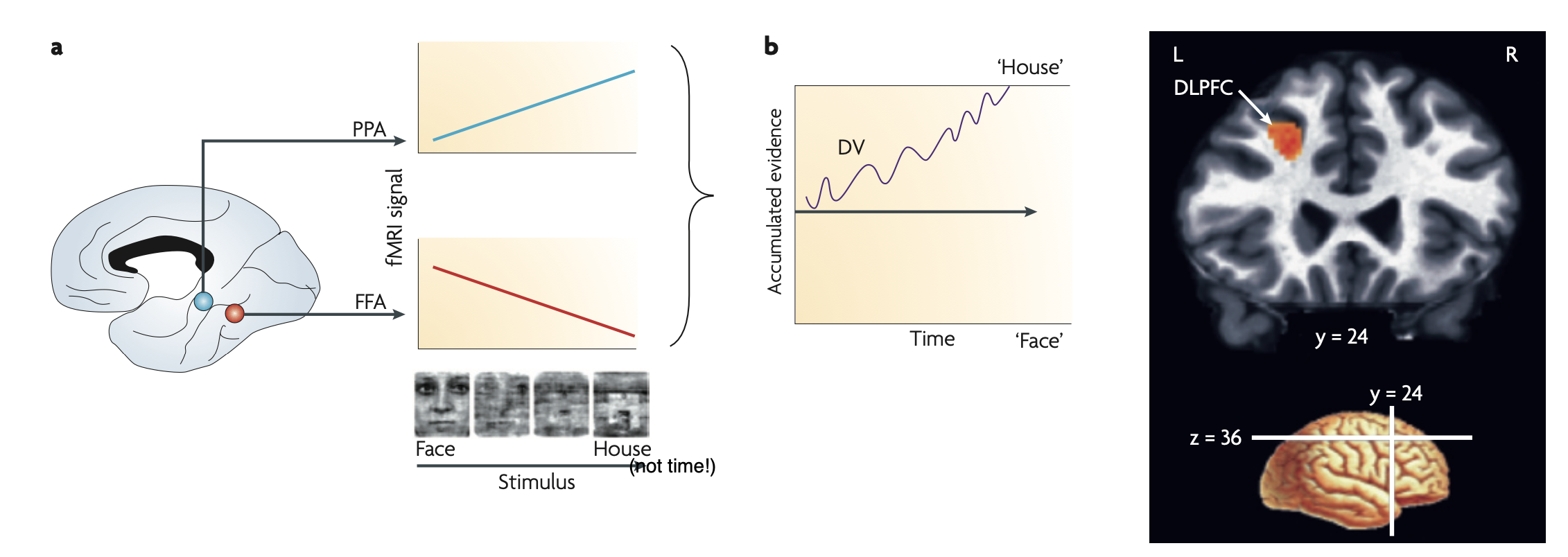
This fMRI study of a face–house task showed that activity in the dorsolateral PFC matched the expectation based on the integration of available evidence.
Eye movements as decisions
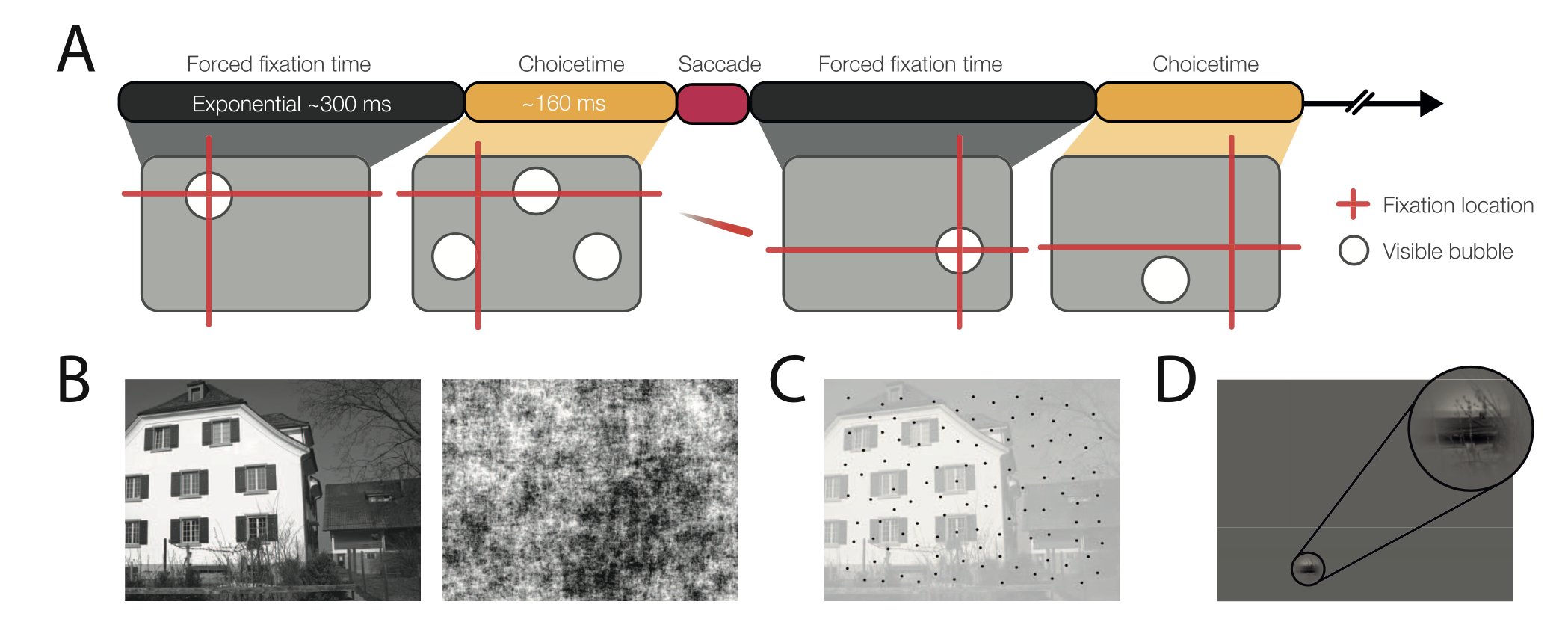
Eye movements are a highly convenient paradigm to investigate decisions.
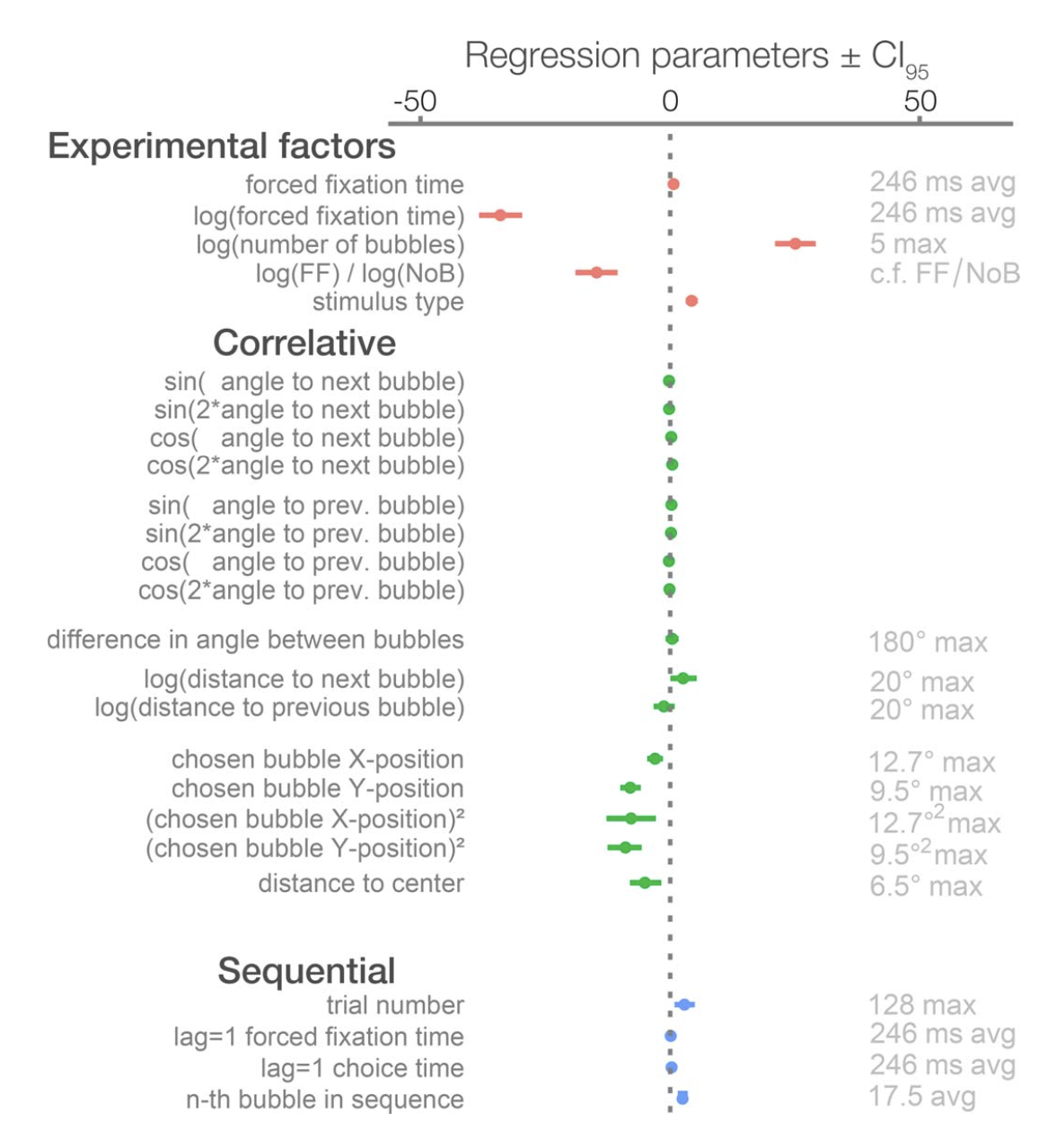
green: irrelevant
red: relevant
log(forced fixation time before choosing another bubble) reduced decision time (as you couldn’t wait for new input)
the longer you looked at a location, the faster you are willing to look somewhere else.
log(number of bubbles). If you have more bubbles, you need a longer to decide.
from GPT-4
Decision making is a complex process that involves both conscious and subconscious elements. The process begins in the brain, specifically in the supplementary motor area (SMA), which is responsible for controlling movement. Before a person consciously makes a decision, there is an electrical signal in the brain known as the “readiness potential.” This signal increases in strength as the person gets closer to making a decision, indicating that the brain starts responding before the individual has consciously decided to carry out an action. The urge to perform the action kicks in at a certain point, which is when most people become aware of their desire to make a decision. This suggests that our actions are predetermined by subconscious processes, challenging the notion of free will.
The decision-making process is not limited to simple actions but extends to complex cognitive tasks, including moral decision making. In these scenarios, the brain runs through both thought and somatic feeling experiments, weighing the potential outcomes and how they might feel. This involves various parts of the brain, such as the amygdala, insular cortex (insula), ventromedial PFC, and dorsolateral PFC, depending on the nature of the decision. For instance, immediate, gut-reaction decisions might involve the amygdala and insula, while more calculated, consequential decisions engage the dorsolateral PFC.
Research using fMRI and studies on neuron activity, such as those in the Lateral Intraparietal Cortex (LIP), have shown that the decision-making process correlates with specific neural patterns. For example, in tasks where subjects must choose between different visual stimuli, the activity in certain brain areas matches the subject’s decision, even in cases where the decision is incorrect. This indicates a close correlation between neural activity and the conscious experience of making a decision.
Furthermore, decision making involves evaluating the quality of different choices, as illustrated by models that analyze the true positive rate and false positives in decision outcomes. These models help in understanding how decisions are formed and the thresholds at which decisions are made, especially in situations requiring quick responses.
In summary, decision making is a multifaceted process that involves both subconscious neural activity and conscious cognitive evaluation. It engages various brain regions depending on the type of decision being made, from simple motor actions to complex moral judgments. The readiness potential and studies on neuron activity in specific brain areas provide insight into how decisions are initiated and processed in the brain, offering a glimpse into the intricate mechanisms underlying our choices.
see also
When does a decision begin?
Tags: neuroscience science
Superlink: 050 🧠Neuroscience
how do judges make decisions?
moral decision making
Quellen
Erstellt: 15-05-22 07:41