A link between Aβ and vascular disease is most clearly demonstrated in the case of cerebral amyloid angiopathy (CAA), where deposition of Aβ in the vascular media and adventitia leads to loss of integrity of the vessel wall with resulting brain hemorrhages, both large and small.
recent evidence links Aβ with impaired blood vessel morphology and function in the absence of deposition in the vascular media.
Aβ is produced by proteolytic cleavage of the amyloid precursor protein by β-secretase and γ-secretase.
Aβ accumulates in the interstitial fluid in correlation with the degree of synaptic activity.
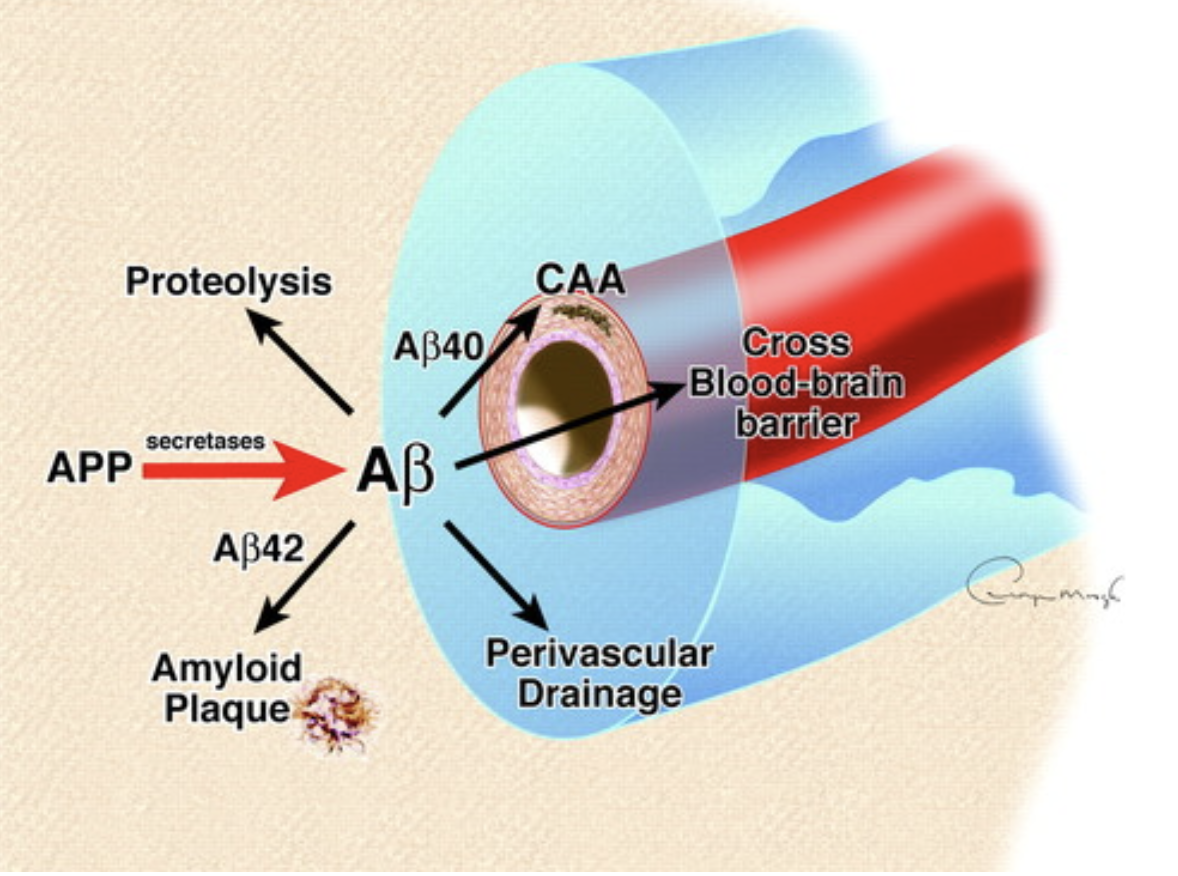
Figure 1. Aβ production and clearance. Amyloid precursor protein undergoes proteolytic cleavage by α- and γ-secretase to yield a 40 amino acid fragment (Aβ40) or 42 amino acid fragment (Aβ42). Possible fates include parenchymal or vascular deposition as amyloid, proteolytic cleavage, perivascular drainage, or efflux across the blood–brain barrier.
q
it is believed that Aβ is predominantly generated by neurons and then deposited in the vessel wall.
see also
Tags: neurobiology science
Superlink: 051 ☣Neurobiology 050 🧠Neuroscience
Memory in Sleep
Source
https://www.ahajournals.org/doi/10.1161/STROKEAHA.108.536839
Created: 03-02-24 17:35