LTD
- Gegenteil von LTP - long term potentiation
- Long-lasting reduction in the excitability of a neuron for a synaptic input occurs when the postsynaptic neuron is hyperpolarized or only slightly depolarized.
Basis
- Relatively low-frequency pulse sequence (< 10 Hz) in the presynaptic ending:
- Decrease in the number of AMPA receptors in Dendritess
- Enzymes (here Protein phosphatases) activated, which counteract the effect of protein kinases.
- NMDA receptors also activated, but only weakly (both LTP - long term potentiation and LTD are blocked by AP5, an NMDA receptor blocker) → There are 2 forms of NMDA receptors!
- Receptors that cause LTD: allow little calcium to flow into the postsynaptic membrane, low calcium concentration then activates protein phosphatases (enzymes) that are opposite in function to protein kinases.
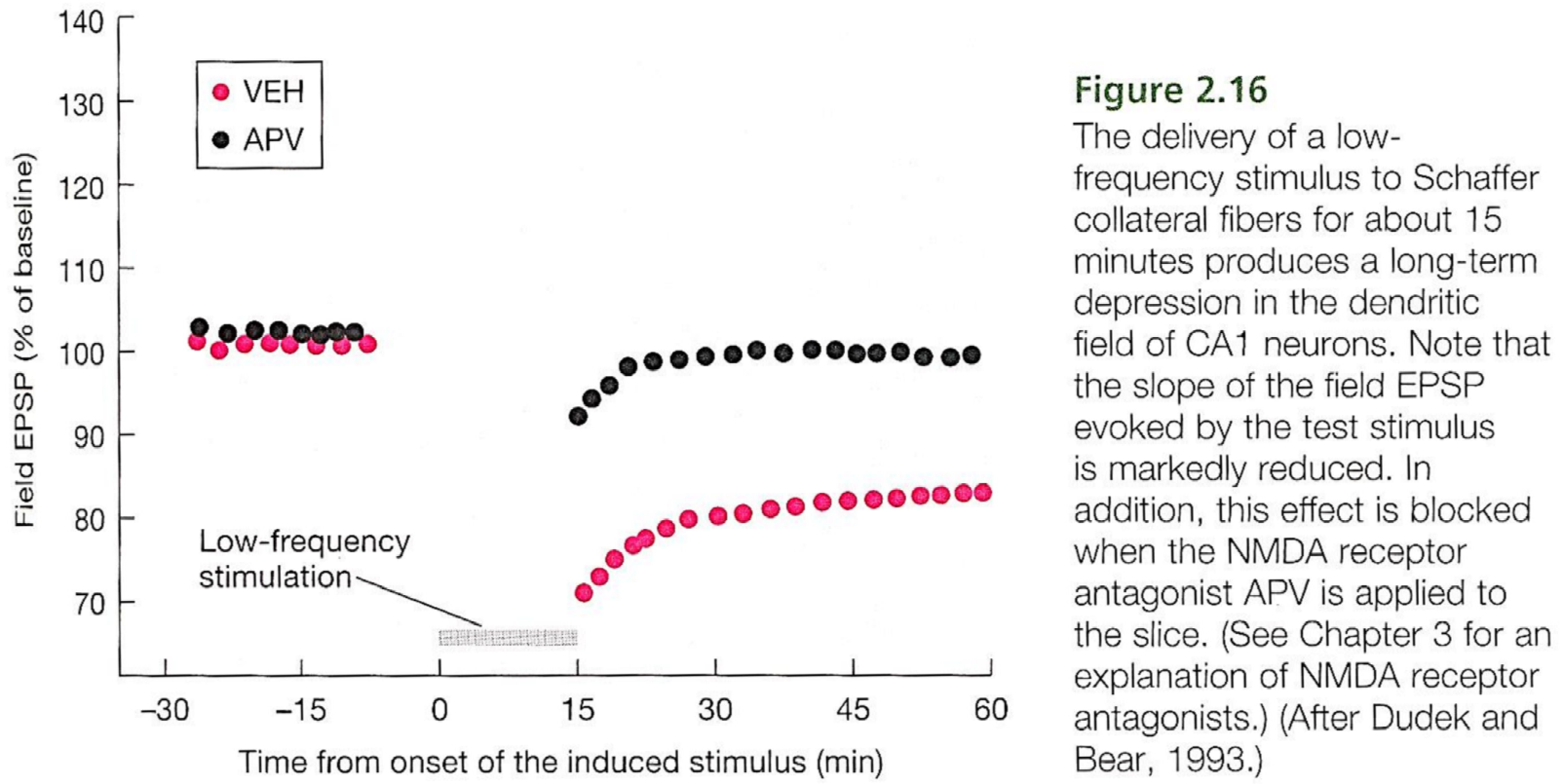
- Receptors that cause LTD: allow little calcium to flow into the postsynaptic membrane, low calcium concentration then activates protein phosphatases (enzymes) that are opposite in function to protein kinases.
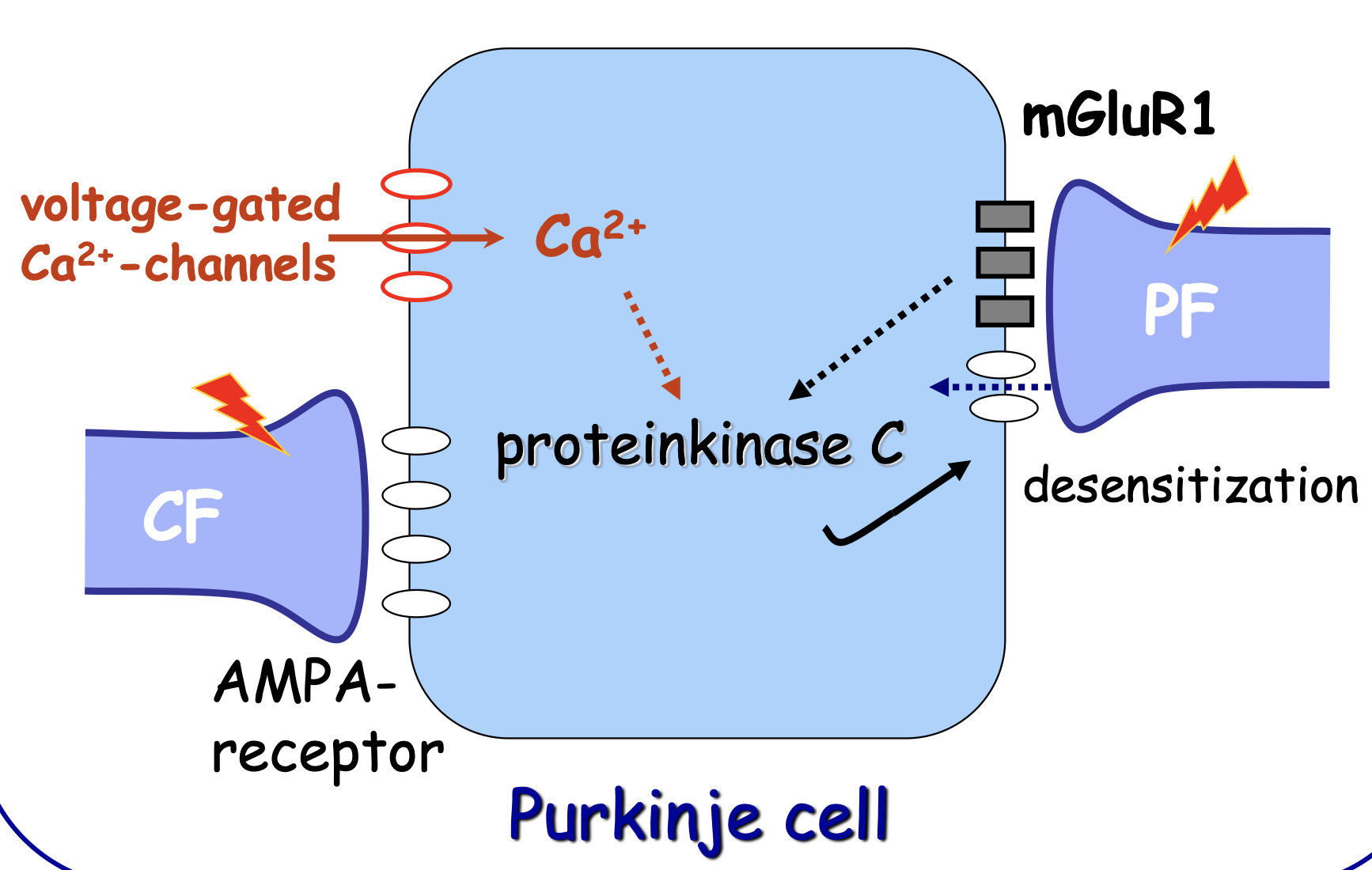
Associative LTD
Associative LTD occurs when synaptic inputs are activated at the time when the postsynaptic membrane is only weakly depolarised or is hyperpolarised. (Action Potential)
see also
Tags: neurobiology science
Superlink: 051 ☣Neurobiology 050 🧠Neuroscience
LTP - long term potentiation
AP5
NMDA
AMPA
Glutamate
Source
Created: 01-06-24 12:26