cAMP and cGMP
chatbot
cGMP (cyclic guanosine monophosphate) and cAMP (cyclic adenosine monophosphate) are both cyclic nucleotides that act as intracellular second messengers in various biological processes. Despite their structural similarities, they have distinct functions and signaling pathways.
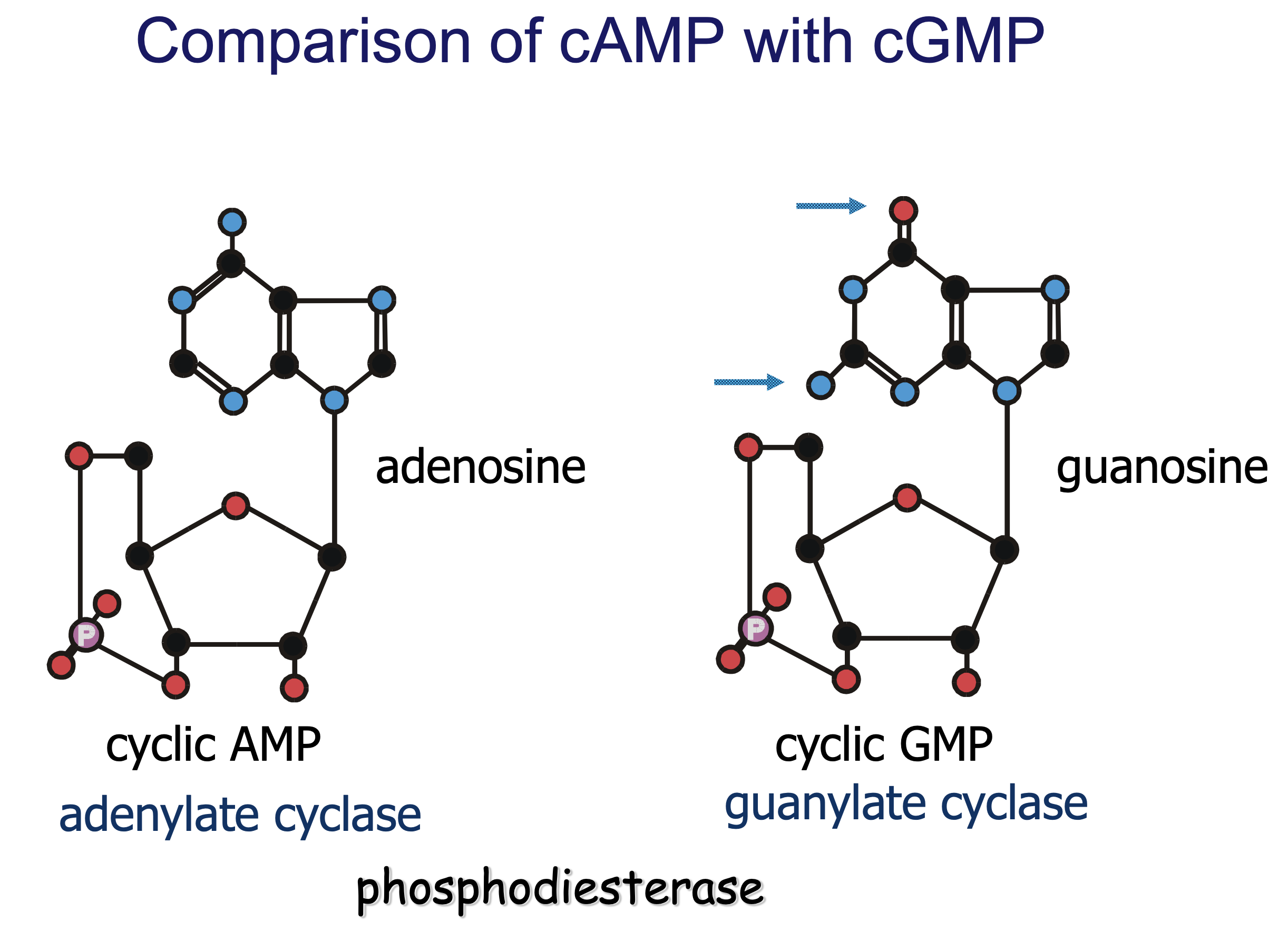
cAMP:
- Structure: Composed of adenine, ribose, and a phosphate group arranged in a cyclic form.
- Synthesis: Produced from ATP by the action of the enzyme adenylate cyclase.
- Function: cAMP is involved in a wide range of cellular processes, including lipid metabolism, glucose metabolism, and the regulation of gene expression. It plays a pivotal role in the signal transduction pathways of hormones and neurotransmitters that cannot cross the cell membrane, such as glucagon and adrenaline.
- Mechanism of Action: cAMP exerts its effects primarily by activating protein kinase A (PKA). Once activated, PKA phosphorylates various target proteins, leading to changes in their activity and thus altering cellular functions.
- Role in Cells: It is crucial for processes like heart rate modulation, cell division, and ion channel regulation.
cGMP:
- Structure: Composed of guanine, ribose, and a phosphate group arranged in a cyclic form.
- Synthesis: Produced from GTP by the action of the enzyme guanylate cyclase. Guanylate cyclase can be found in two forms: soluble guanylate cyclase (sGC), which is activated by nitric oxide (NO), and membrane-bound guanylate cyclase (mGC), which is activated by natriuretic peptides.
- Function: cGMP is involved in vascular smooth muscle relaxation, phototransduction in the eyes, and modulation of ion channels. It plays a significant role in the cardiovascular system by mediating vasodilation and in the nervous system by participating in the visual and olfactory signal transduction pathways.
- Mechanism of Action: Its primary mechanism of action is through the activation of protein kinase G (PKG), which phosphorylates various target proteins, leading to smooth muscle relaxation, platelet aggregation inhibition, and other effects.
- Role in Cells: Important for blood pressure regulation, erectile function, and intestinal fluid secretion.
Key Differences:
- Primary Enzyme: cAMP is synthesized by adenylate cyclase, whereas cGMP is synthesized by guanylate cyclase.
- Second Messenger Role: cAMP is primarily involved in metabolic regulation and gene expression, while cGMP plays a key role in cardiovascular and nervous system functions.
- Target Kinases: cAMP activates Protein Kinase A, and cGMP activates PKG, leading to different cellular responses.
- Physiological Effects: cAMP affects heart rate, metabolism, and gene expression, whereas cGMP is more involved in vasodilation, vision, and olfaction.
In summary, while both cGMP and cAMP serve as crucial second messengers in cellular signaling, their roles and mechanisms of action are distinct, reflecting the complexity and specificity of cellular communication pathways.
see also
Tags: neurobiology science
Superlink: 051 ☣Neurobiology 050 🧠Neuroscience
Source
Created: 19-09-24 16:25