Amacrine Cells
chatbot
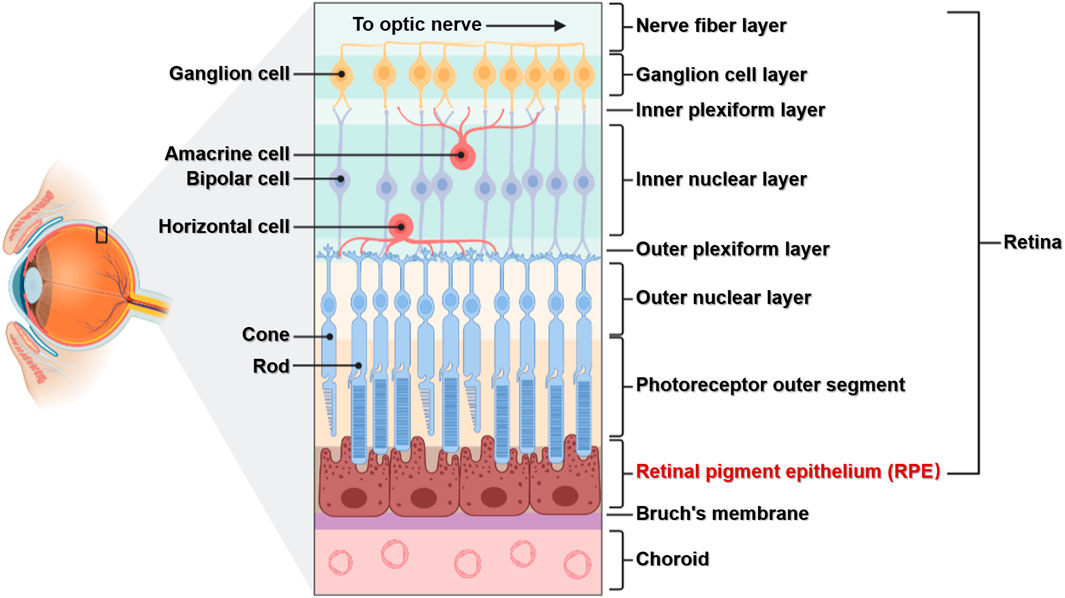
Amacrine cells are located in the inner nuclear layer of the Retina and interact at the level of the inner plexiform layer, where they form connections with bipolar cells, other amacrine cells, and retinal ganglion cells. Their functions include:
- Modulation of Retinal Signal Processing: Amacrine cells play a critical role in the modulation of the signal processing within the retina. They are involved in several complex visual processing tasks, including the adjustment of sensitivity to motion, changes in illumination, and certain aspects of temporal (time-based) visual processing.
- Contribution to Visual Functions: They contribute to various visual functions, such as contrast sensitivity, temporal resolution (the ability to discern changes in visual stimuli over time), and adaptation to different levels of light. Amacrine cells are particularly important for motion detection and the initiation of reflexive responses to moving objects.
- Diversity and Specialization: There are many subtypes of amacrine cells, each with unique morphological and functional properties. This diversity allows them to participate in a wide range of visual processing tasks, making them essential for the fine-tuning of visual information before it is sent to the brain.
Amacrine and horizontal cells summary
horizontal and amacrine cells are integral to the complex network of retinal neurons, contributing to the preprocessing of visual signals by modulating the flow of information from photoreceptors to ganglion cells. Their activities are crucial for enhancing visual clarity, contrast, and the perception of motion, playing a significant role in our ability to interpret and respond to the visual world around us.
see also
Tags: neurobiology science
Superlink: 051 ☣Neurobiology 050 🧠Neuroscience
Horizontal Cells
structure of the retina.jpg
034 💪🦵Physiology
Source
Created: 16-09-24 14:53