Horizontal Cells
Horizontal Cells
chatbot
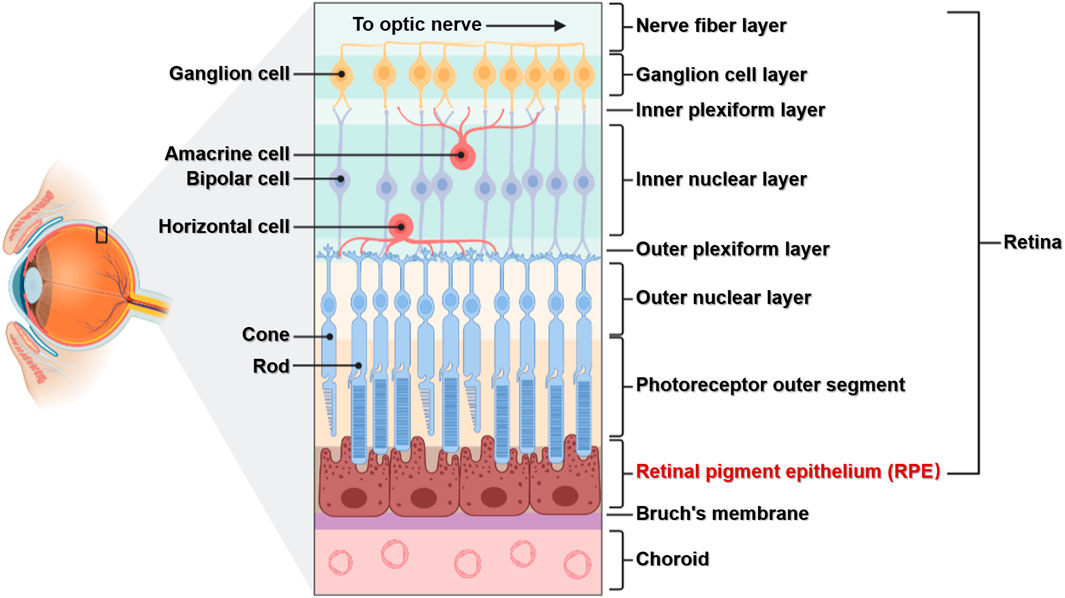
Horizontal cells receive input from multiple photoreceptor cells and project their processes laterally to influence surrounding Photoreceptor cells and bipolar cells. Their primary functions include:
- Lateral Inhibition: They are involved in the process of lateral inhibition, which enhances the contrast and sharpness of visual images. By inhibiting the activity of neighboring photoreceptors and bipolar cells, horizontal cells help to create a more distinct demarcation between areas of light and dark, improving the edge detection and overall visual acuity.
- Integration of Visual Information: Horizontal cells integrate signals from several photoreceptors over a wide area, allowing for the spatial averaging of light information. This process is essential for the perception of uniform fields of color and luminance.
Horizontal and amacrine cells
Horizontal and amacrine cells are two types of interneurons found in the retina, playing crucial roles in the processing of visual information before it is transmitted to the brain. They are involved in the retinal circuitry that modulates the input from photoreceptor cells (rods and cones) to the retinal ganglion cells, which then send visual information to the brain via the optic nerve.
see also
Tags: neurobiology science
Superlink: 051 ☣Neurobiology 050 🧠Neuroscience
structure of the retina.jpg
Amacrine Cells
Source
Created: 16-09-24 14:51