hair cells
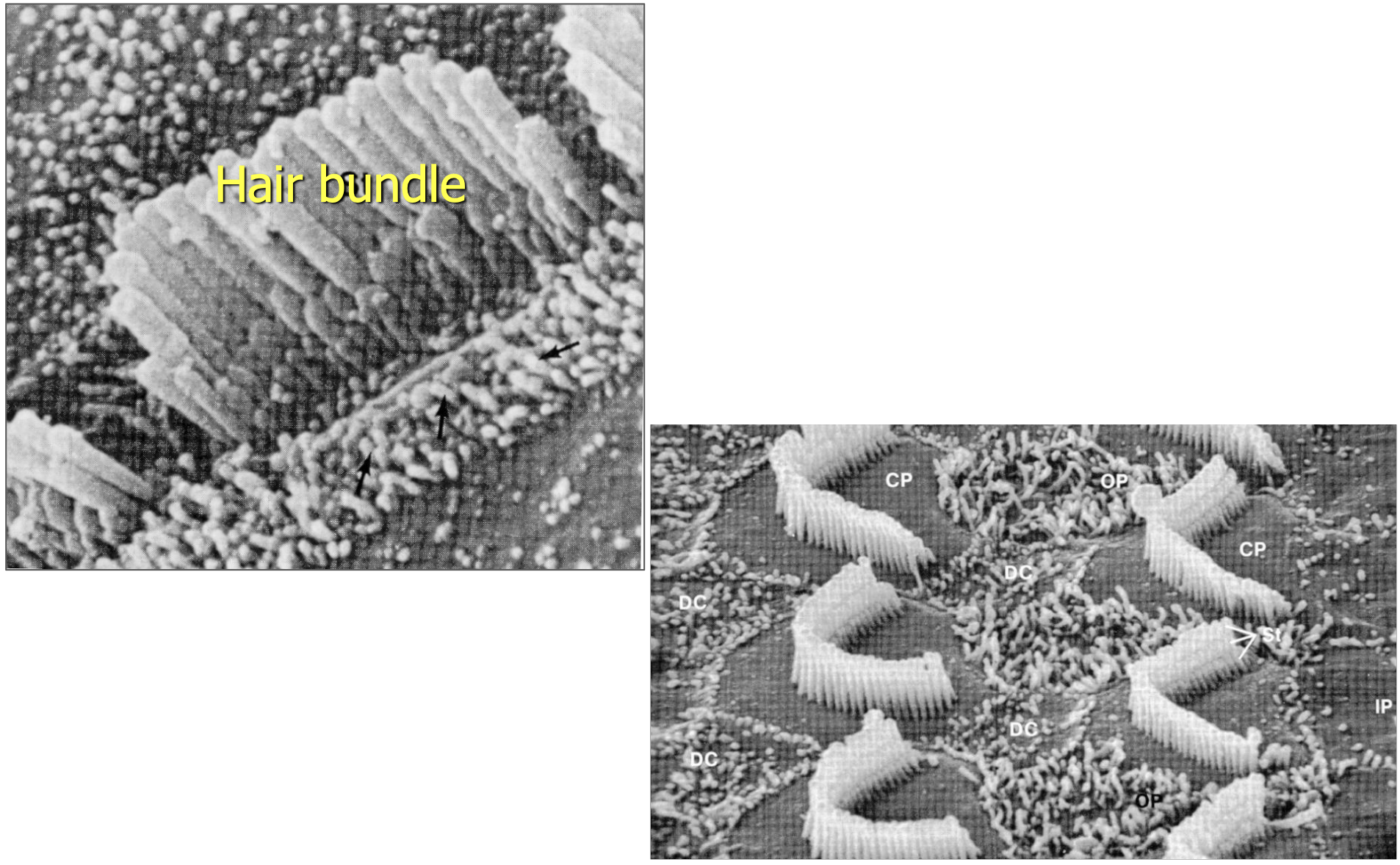
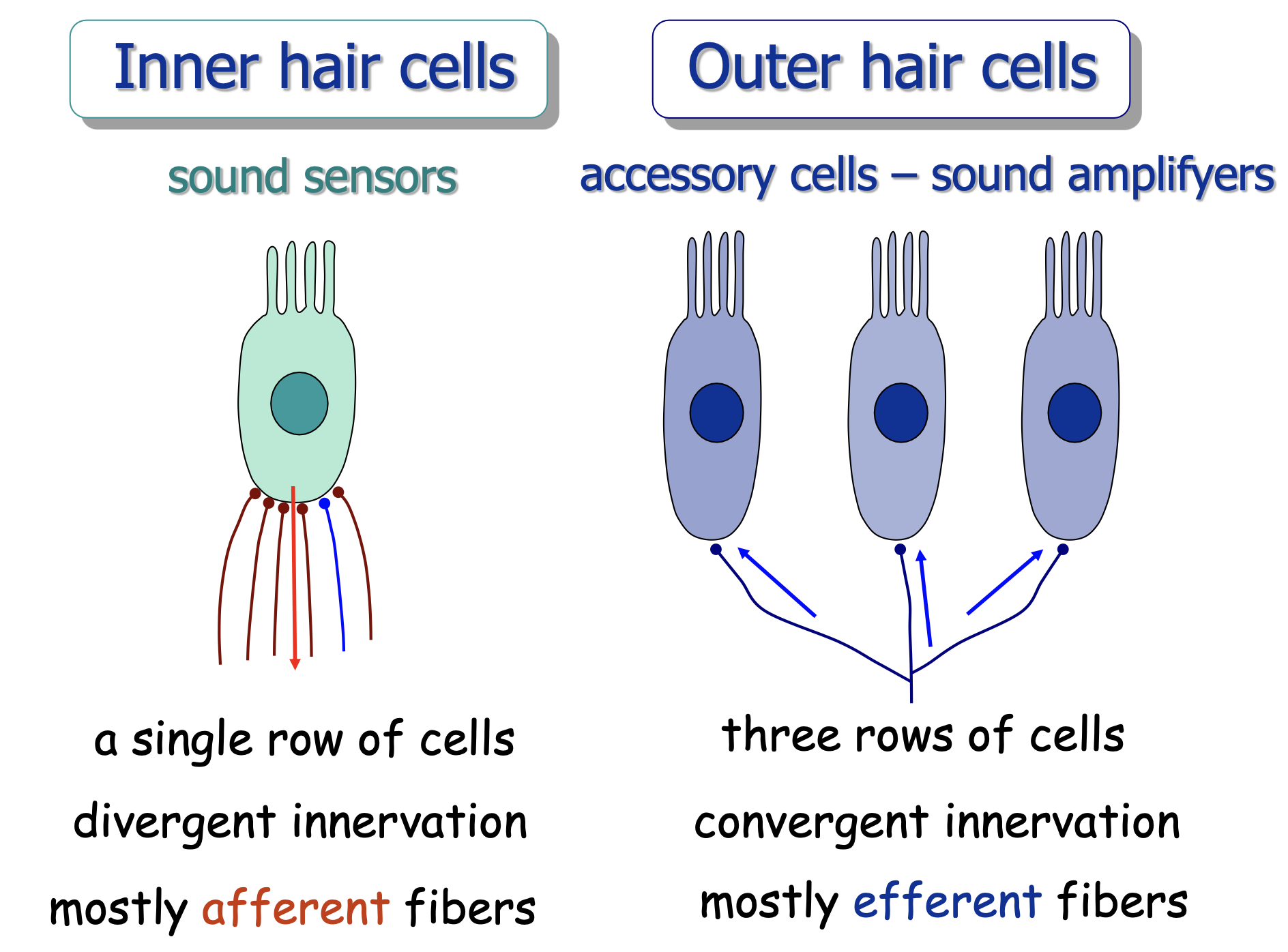
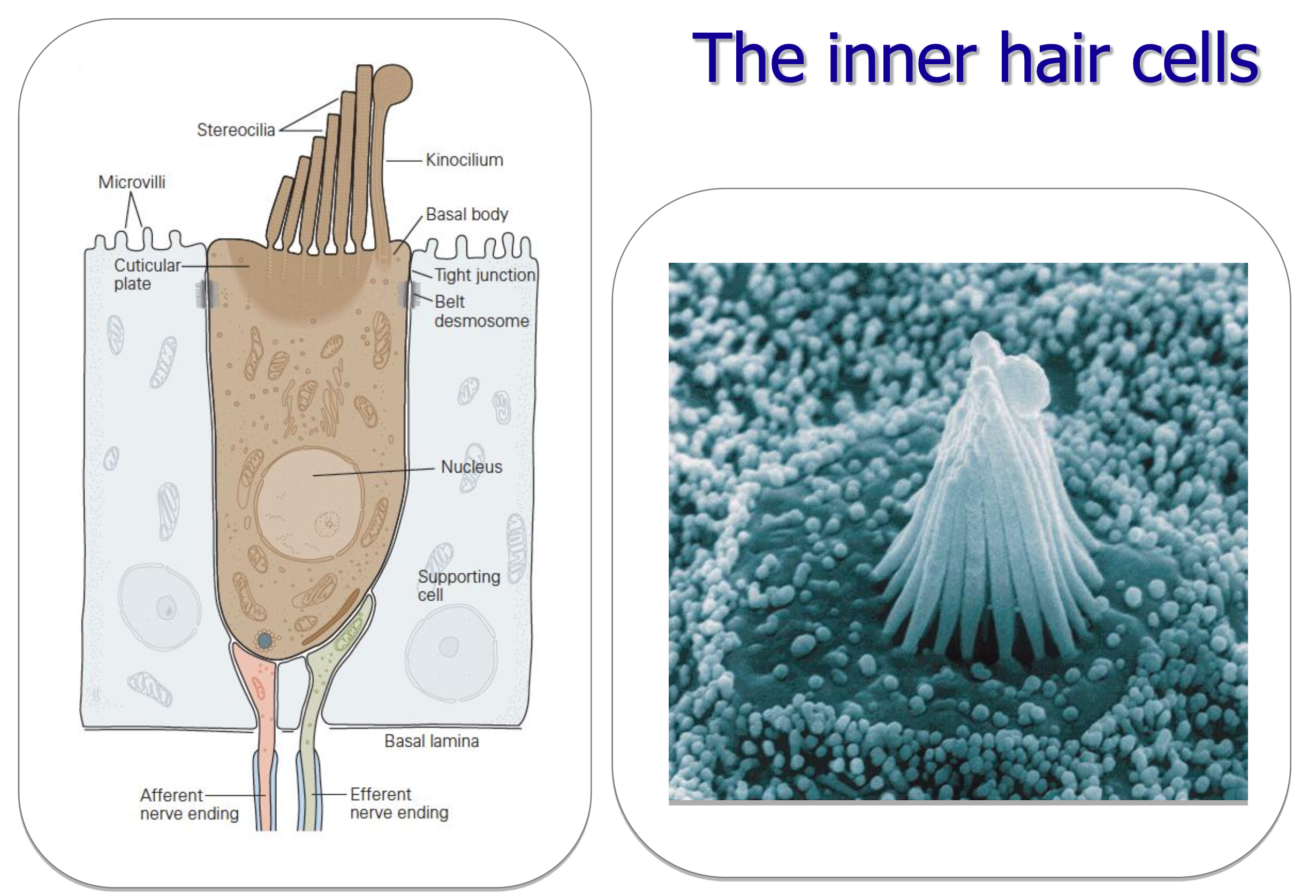
Inner Hair Cells:**
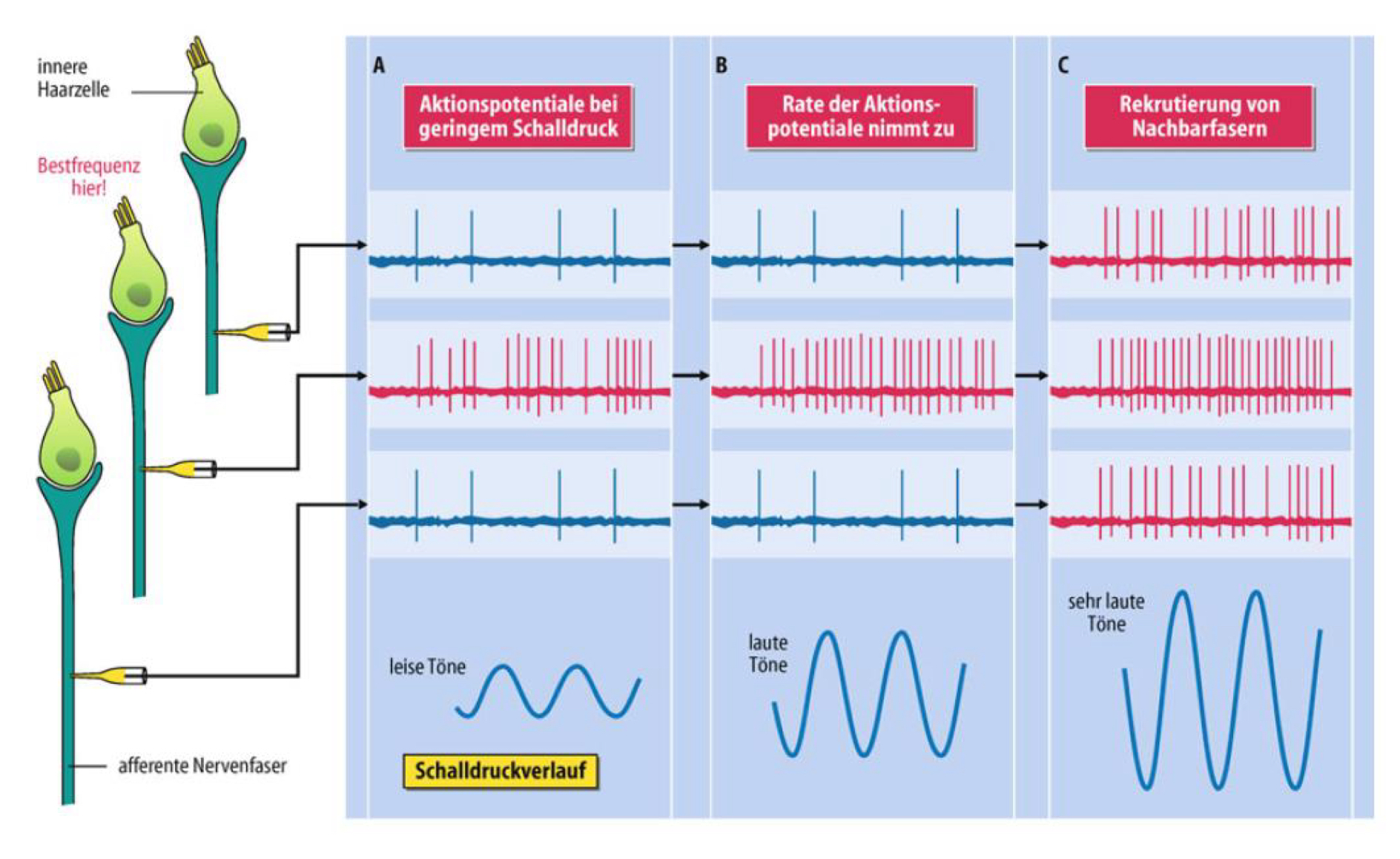
- Function primarily in sound detection, converting mechanical sound vibrations into electrical signals.
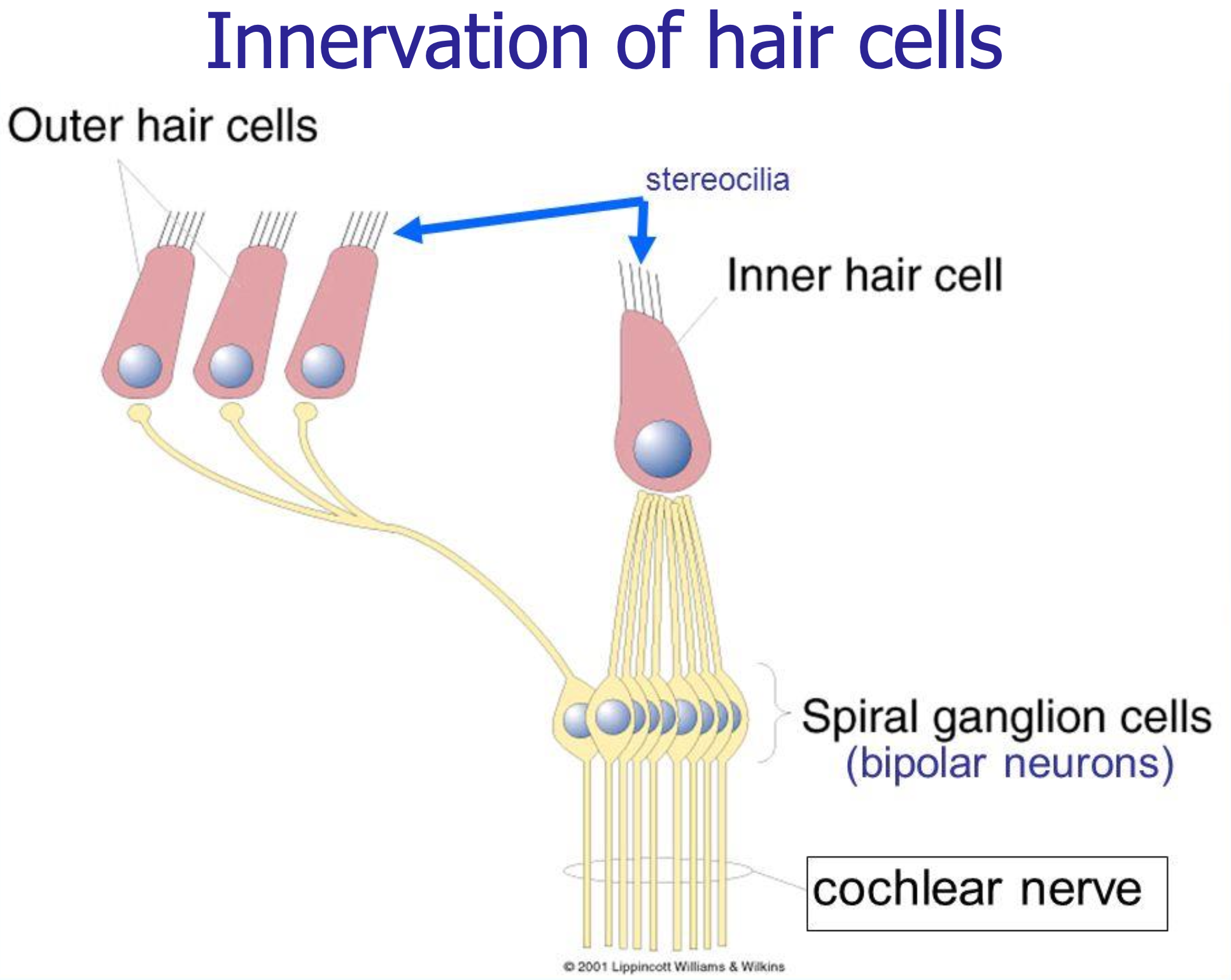
- Form a single row of cells within the cochlea.
- Directly connected synaptically with 90% of the auditory nerve fibers, making them crucial for transmitting sound information to the brain.
- Do not have direct contact with the tectorial membrane, which plays a role in the mechanotransduction process.
- Responsible for the clarity and perception of sound, acting as the main transducers of auditory information.
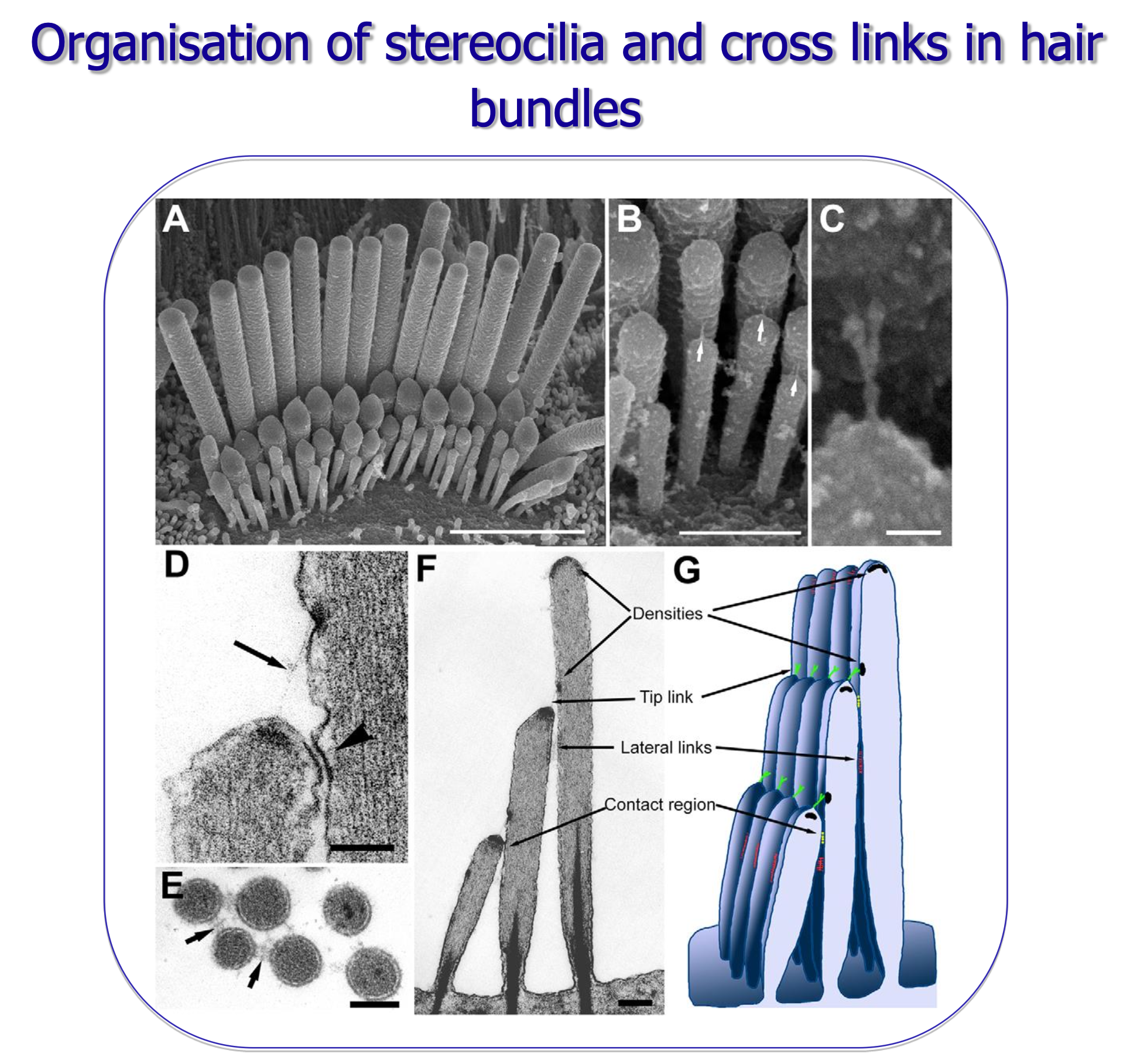
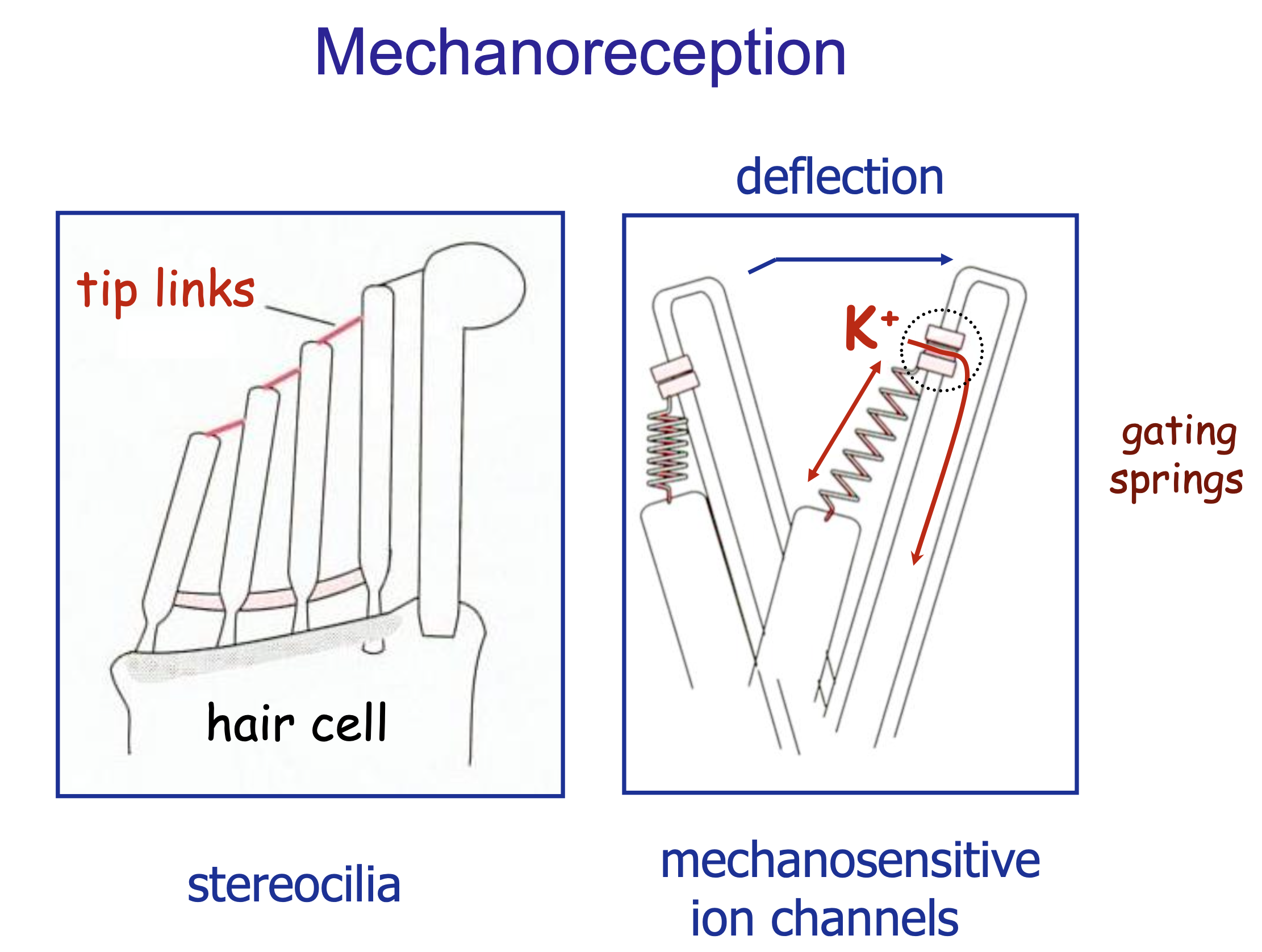
Outer Hair Cells:**
- Function in modulating and amplifying the sensitivity of sound reception, enhancing the precision of sound transmission.
- Form three rows of cells, indicating a structural difference from inner hair cells.
- Connected with only 10% of the afferent fibers but receive strong efferent input from the brain, which helps in tuning and amplifying sounds.
- Able to contract or relax in response to sound vibrations, which is crucial for the cochlea’s mechanical amplification of sound signals.
- Contain the Protein prestin in their lateral membranes, acting as a voltage to force converter and allowing for extremely fast cell contractions. This contributes to a 1000 fold signal amplification and the sharpening of the traveling wave within the cochlea.
- Outer hair cells are more vulnerable to overstimulation and damage, which can lead to hearing loss, highlighting their role in the fine-tuning of hearing sensitivity and frequency discrimination.
Prestin
- Prestin is a protein located in the lateral membrane of outer hair cells in the human cochlea.
- It acts as a direct voltage to force converter, enabling outer hair cells to contract or relax in response to electrical signals.
- This contraction and relaxation of outer hair cells lead to a 1000 fold signal amplification of the sound vibrations received by the cochlea.
- Prestin allows for extremely fast cell contractions, up to 20,000 times per second, enhancing the cochlea’s ability to sharpen (focus) the traveling wave of sound for more precise frequency analysis.
- The presence of prestin and its unique function in outer hair cells is crucial for modulating and amplifying the sensitivity of sound reception, particularly important for sounds below 60 dB where the endolymph stream alone is insufficient to stimulate the inner hair cells effectively.
- By modifying the mechanical coupling between the inner hair cells and the tectorial membrane, prestin plays a vital role in the fine-tuning of our hearing sensitivity and frequency discrimination.
Discrimination of frequencies by the basilar membrane
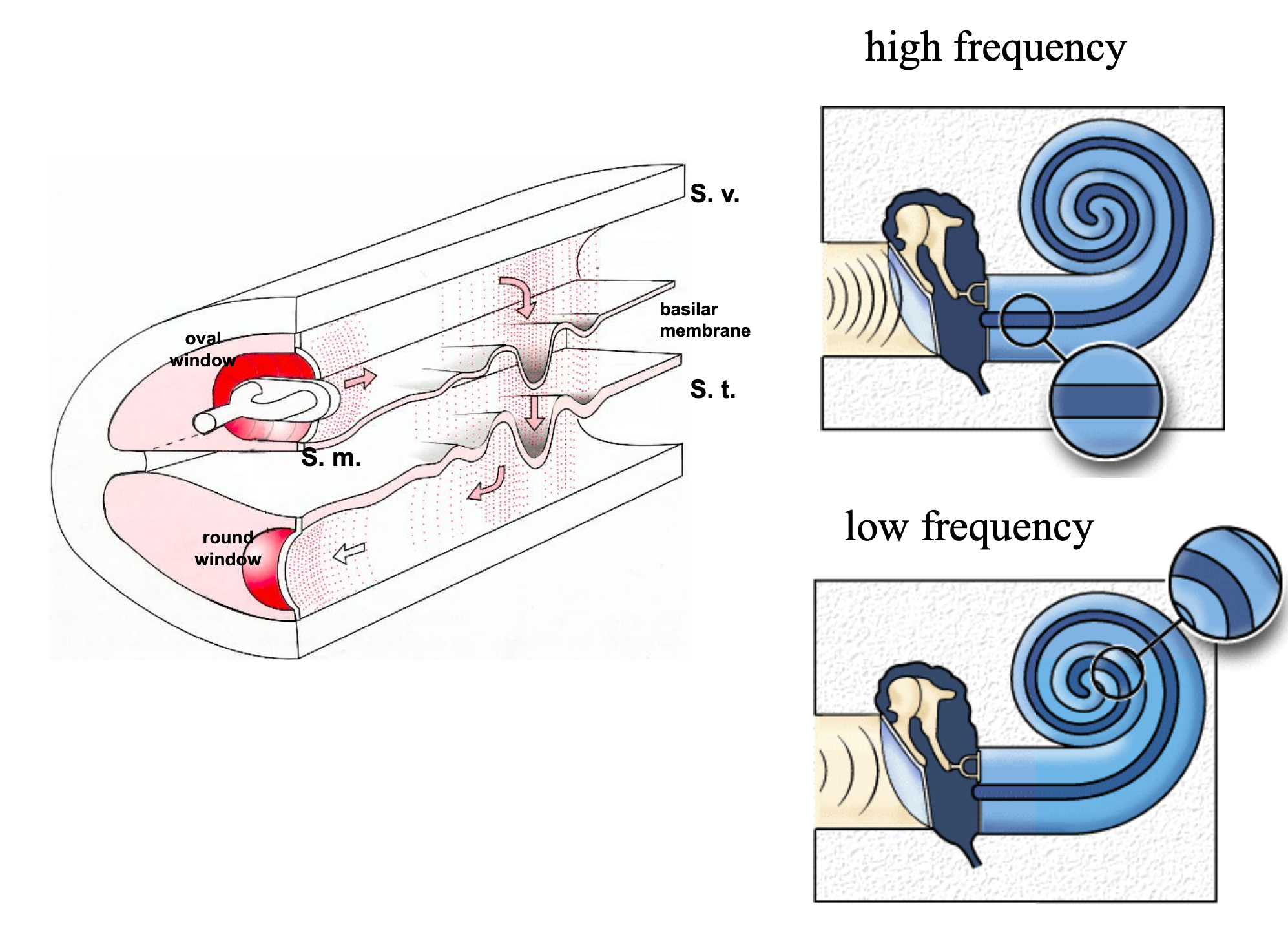
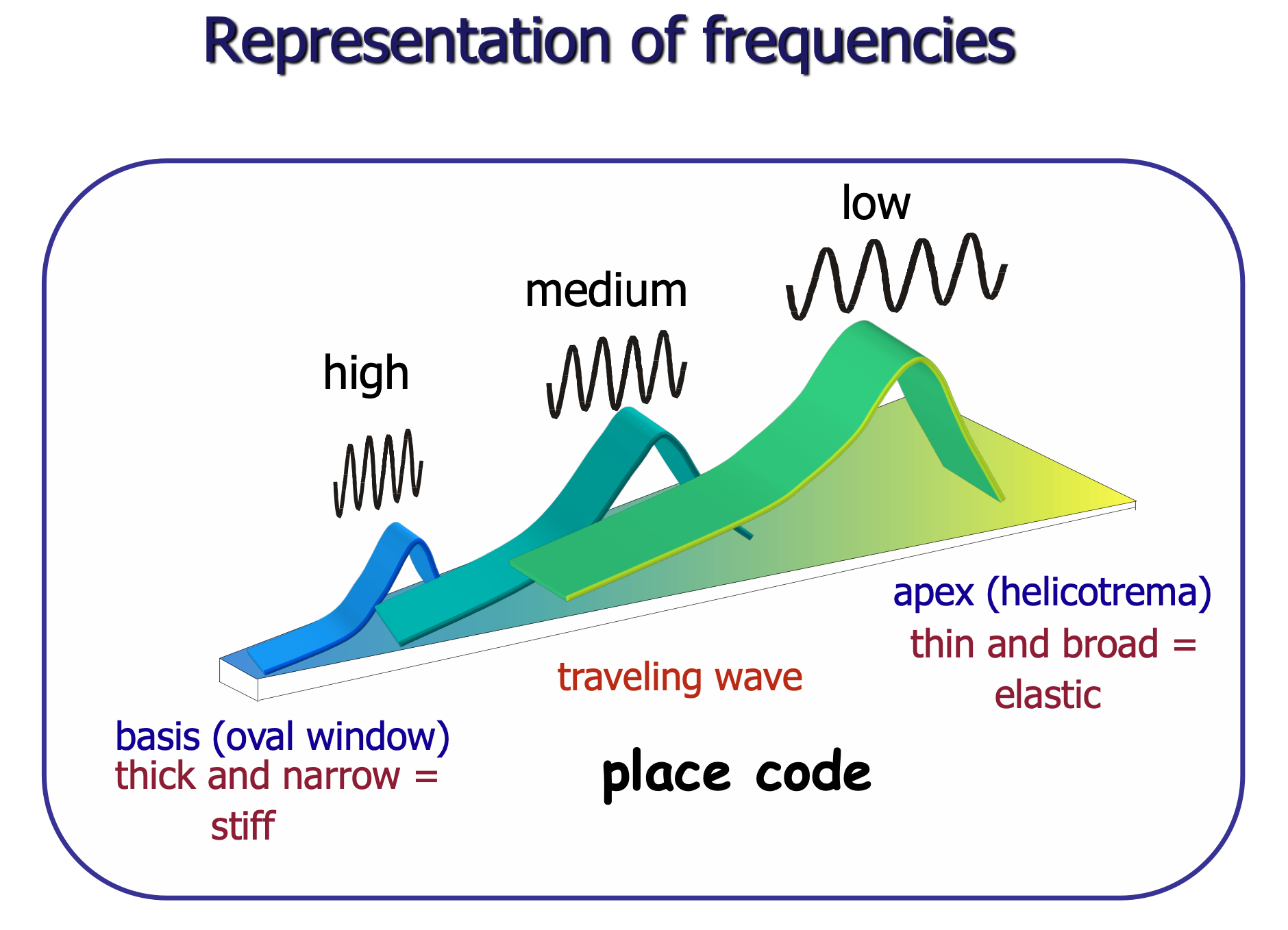
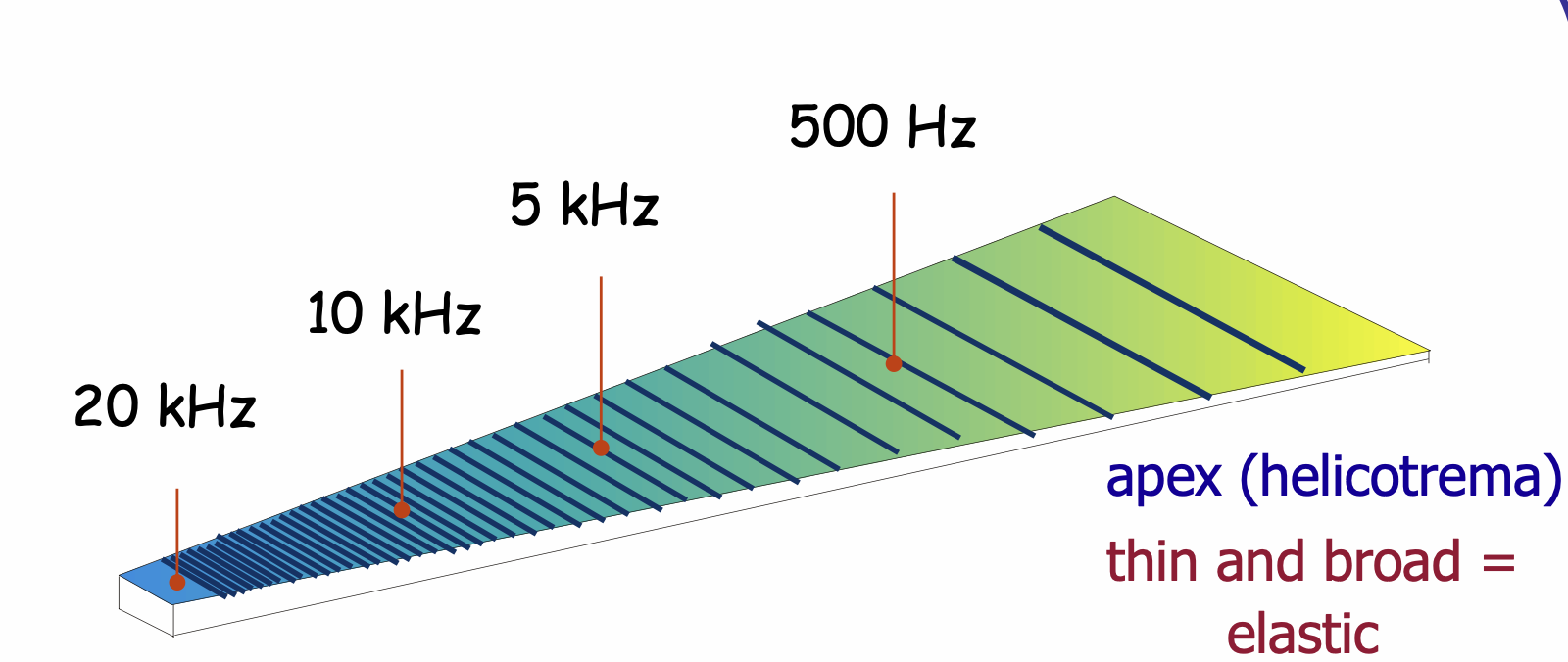
- The basilar membrane acts as a mechanical gradient of stiffness, being thicker, stiffer, and narrower at the base and more elastic, broader, and thinner at the apex.
- This mechanical design enables the selective response of hair cells to different frequencies of sound due to the varying mechanical properties along its length.
- High-frequency sounds cause the greatest vibrations at the base of the cochlea, where the membrane is stiffer and narrower.
- Low-frequency sounds maximally deflect hair cells in the apex of the cochlea, where the membrane is more elastic and broader.
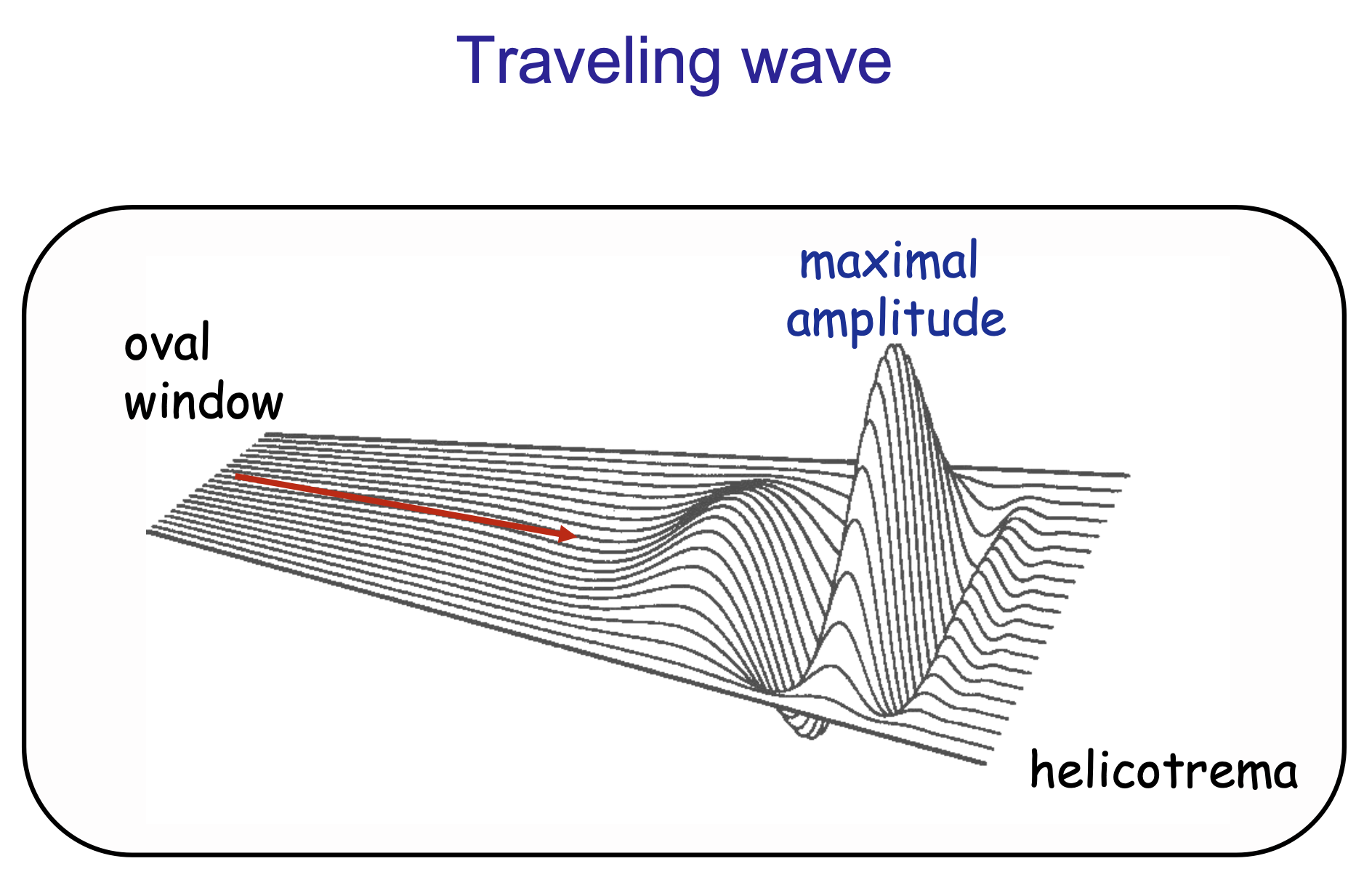
- The movement of the basilar membrane in response to sound creates traveling waves that peak at specific locations along the membrane, depending on the sound frequency.
- The extent of membrane displacement determines how strongly the hair cells are stimulated, with maximal displacement of up to 1 μm.
- Loudness affects spatial selectivity on the basilar membrane; louder sounds have less spatial selectivity, while weaker sounds have more restricted localization, influencing frequency discrimination.
- The tuning curve of an individual hair cell, which describes the sound pressure required to produce a change in membrane potential at various sound frequencies, is determined by its position along the cochlea.
- The frequency analysis capability of the cochlea, facilitated by the basilar membrane’s properties, is critical for our ability to discriminate between different frequencies of sound, contributing to our complex hearing abilities.
see also
Tags: science medicine biology
Superlink: 091 🏃Body and Medicine, 090 🌱Biology
cochlea
Human ear
cochlear nucleus
Source
Created: 24-10-24 16:59