Synapse
Definition
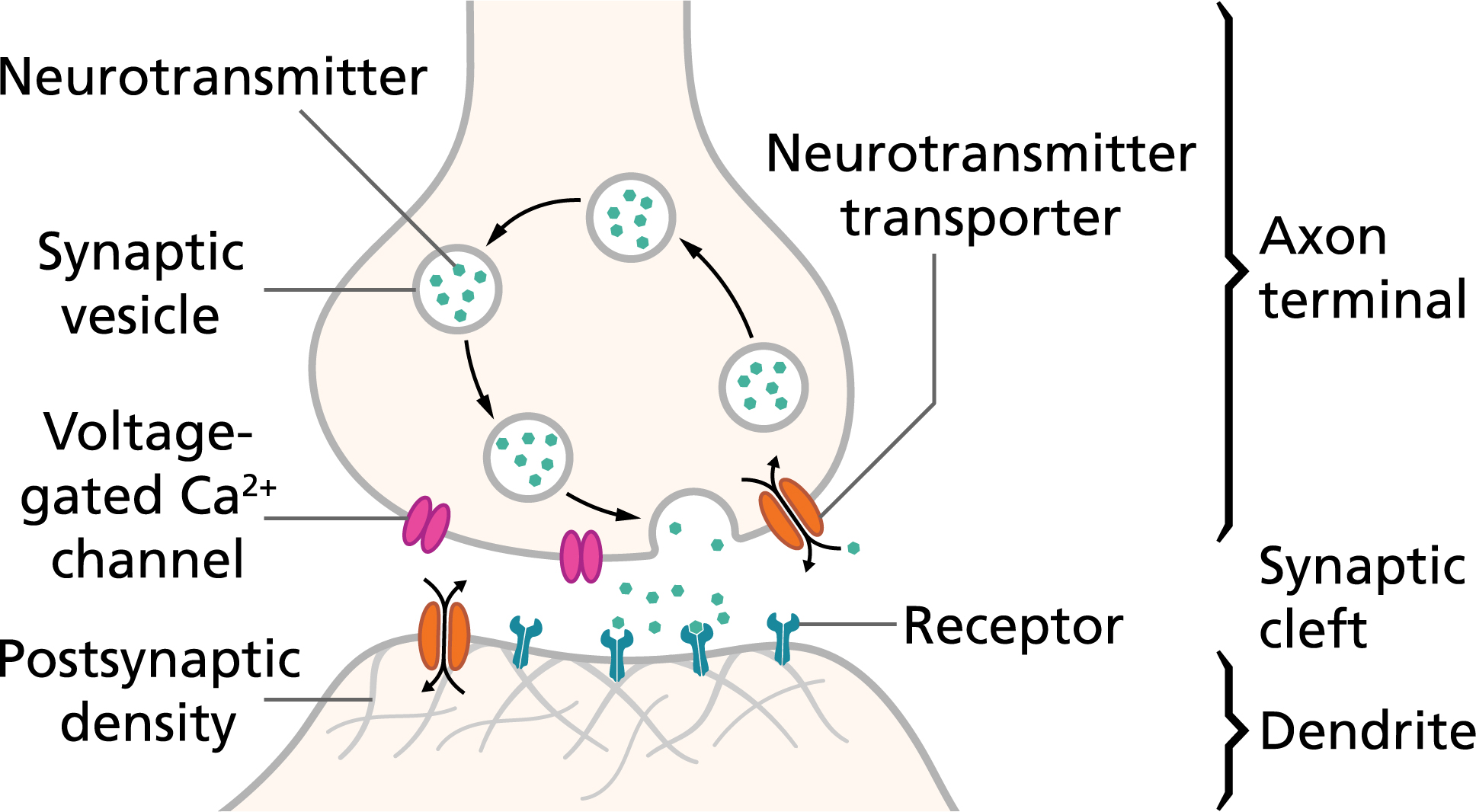
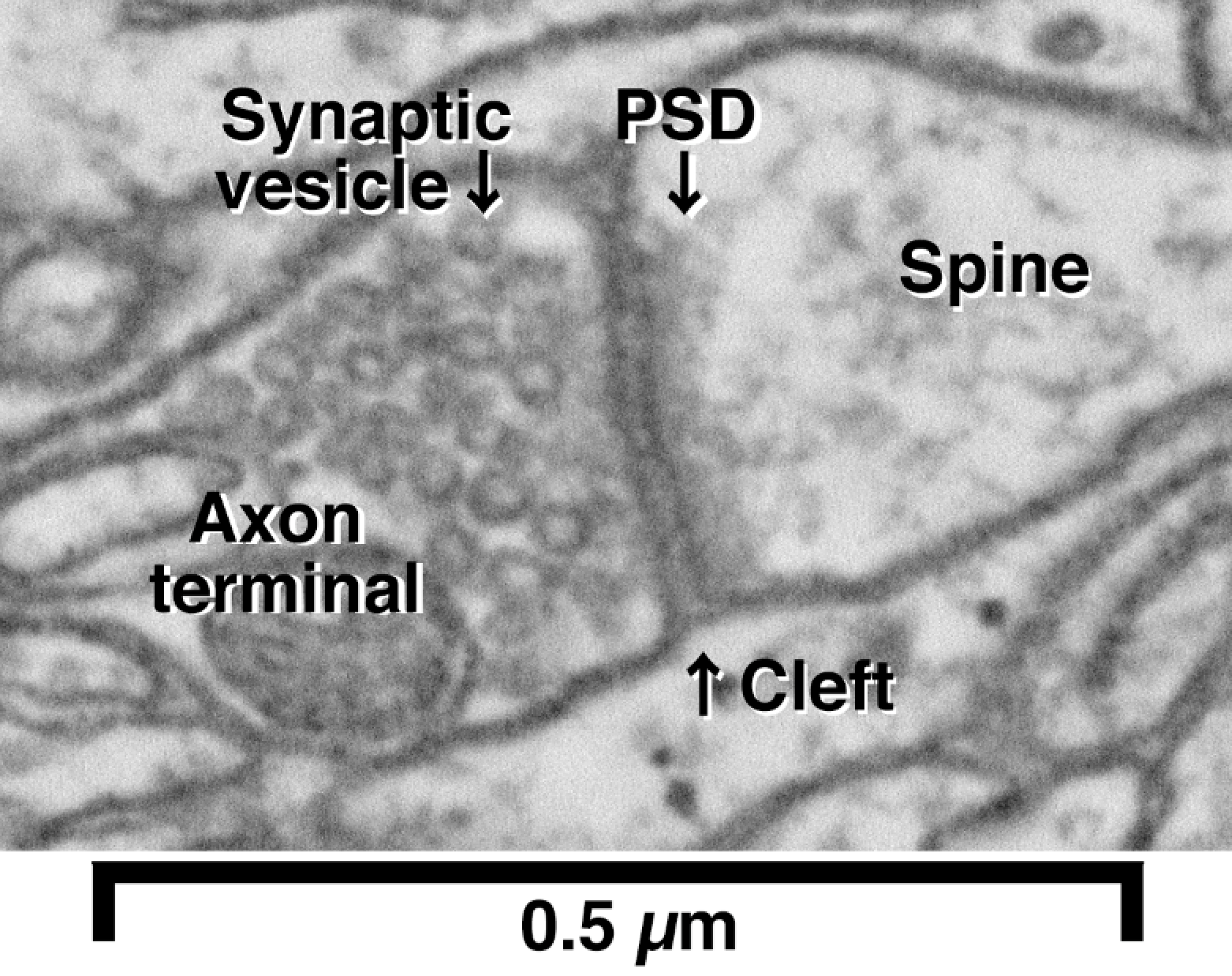
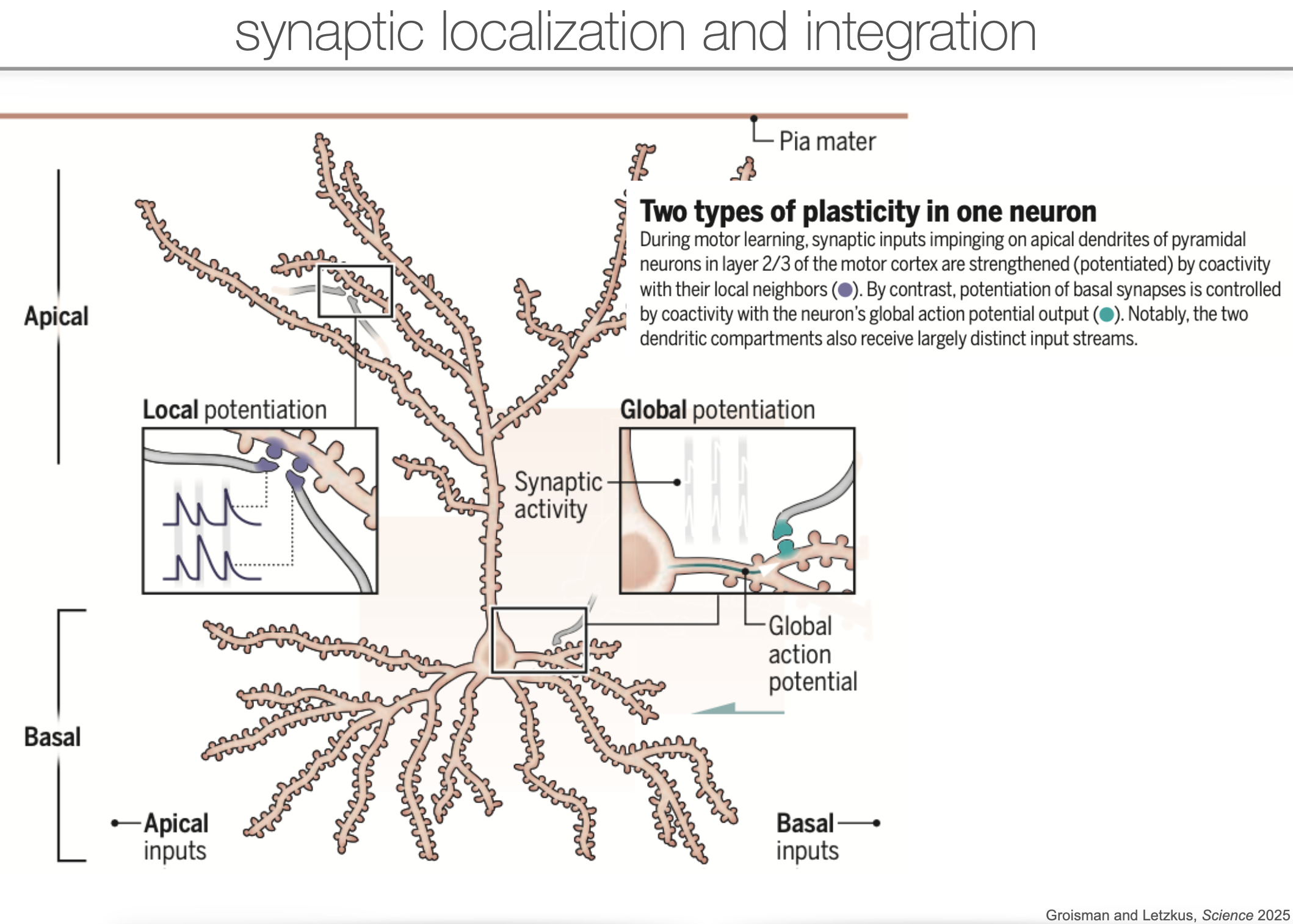
A synapse is a connection that facilitates the transmission of signals between a nerve or sensory cell and another nerve cell or a muscle. This process is crucial for communication within the nervous system.
der Übertragung von Reizen dienende Verbindung zwischen einer Nerven- oder Sinneszelle und einer anderen Nervenzelle oder einem Muskel.
Die Neurotransmitter übertragen ein Hormon zu einer anderen Cell. Die Neurotransmitter werden an der Empfängerzelle von Enzyme abgebaut und in das Axon (Nerve) Terminal zum Recycling gebracht und danach wiederverwendet.
https://www.nips.ac.jp/nips_research/eng/press/2018/02/post_358.html
Types of Synapses
-
Chemical Synapses (Electrochemical Synapses):
- Mechanism:
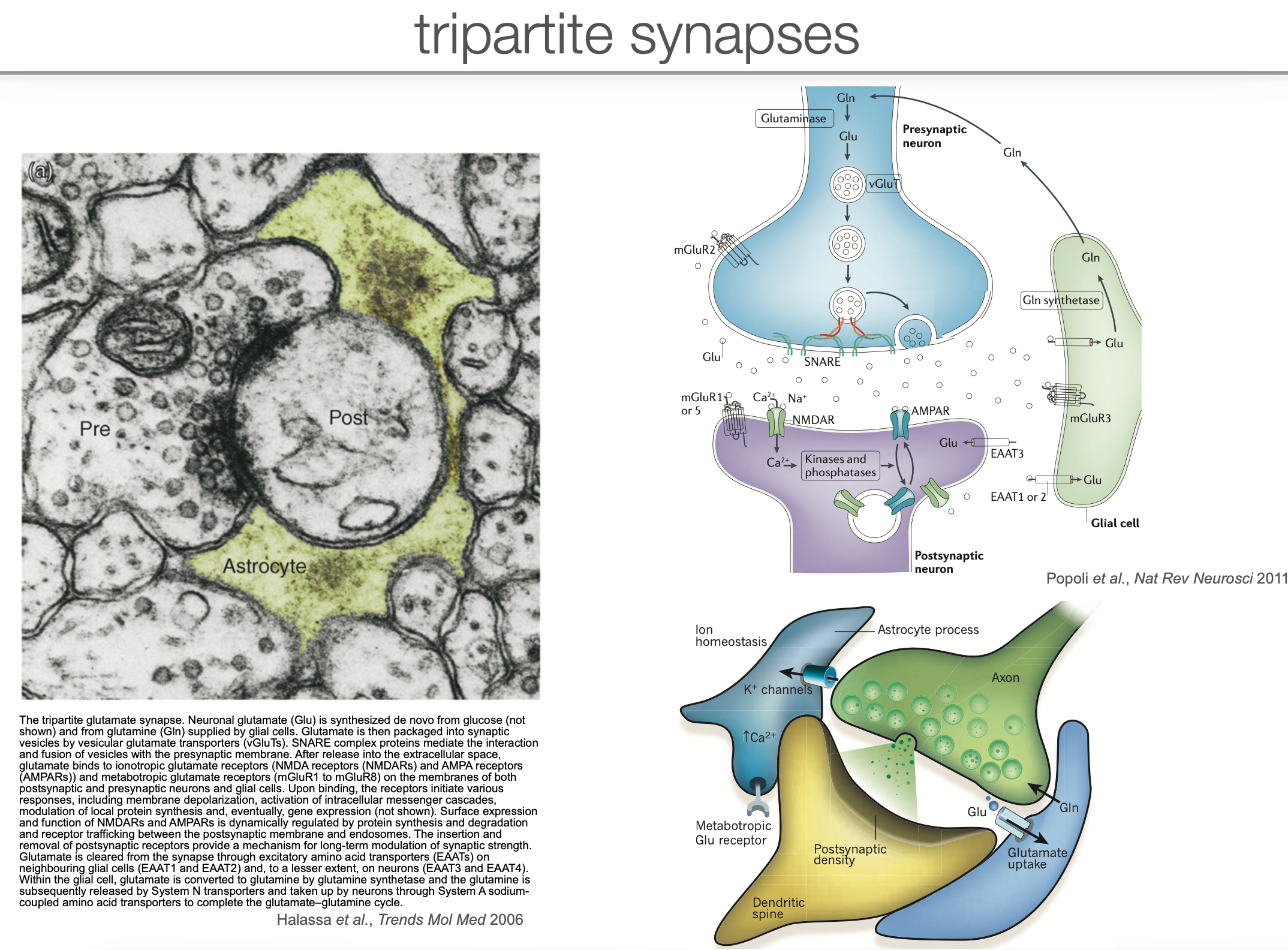
- Involves neurotransmitters to relay signals from a presynaptic cell to a postsynaptic cell.
- An action potential triggers the opening of voltage-gated calcium channels at the nerve terminal.
- Calcium influx causes synaptic vesicles to fuse with the presynaptic membrane, releasing neurotransmitters into the synaptic cleft.
- Neurotransmitters bind to receptors on the postsynaptic membrane, altering its membrane potential.x
- Signal transmission ends with the degradation or reuptake of neurotransmitters.
- Advantages:
- Amplification, modulation, diversity, plasticity, and unidirectionality.
- Disadvantages:
- Delay, limited speed, and energy requirement.
- Mechanism:
-
Electrical Synapses:
- Mechanism:
- Direct electrical coupling via gap junctions, allowing ions and small molecules to flow directly between cells.
- No neurotransmitters are required.
- Advantages:
- Speed, bidirectionality, synchronization, and low energy requirement.
- Disadvantages:
- No amplification, limited modulation, and less flexibility.
- Mechanism:
Structure and Function
- Synaptic Vesicles:
- Contain neurotransmitters and are crucial for storing and releasing them into the synaptic cleft.
- Neurotransmitter Release:
- Triggered by an action potential, leading to the fusion of vesicles with the plasma membrane and release of neurotransmitters.
- Synaptic Cleft and Receptors:
- The space between the nerve terminal and the target cell where neurotransmitters bind to specific receptors.
- Endplate Potential:
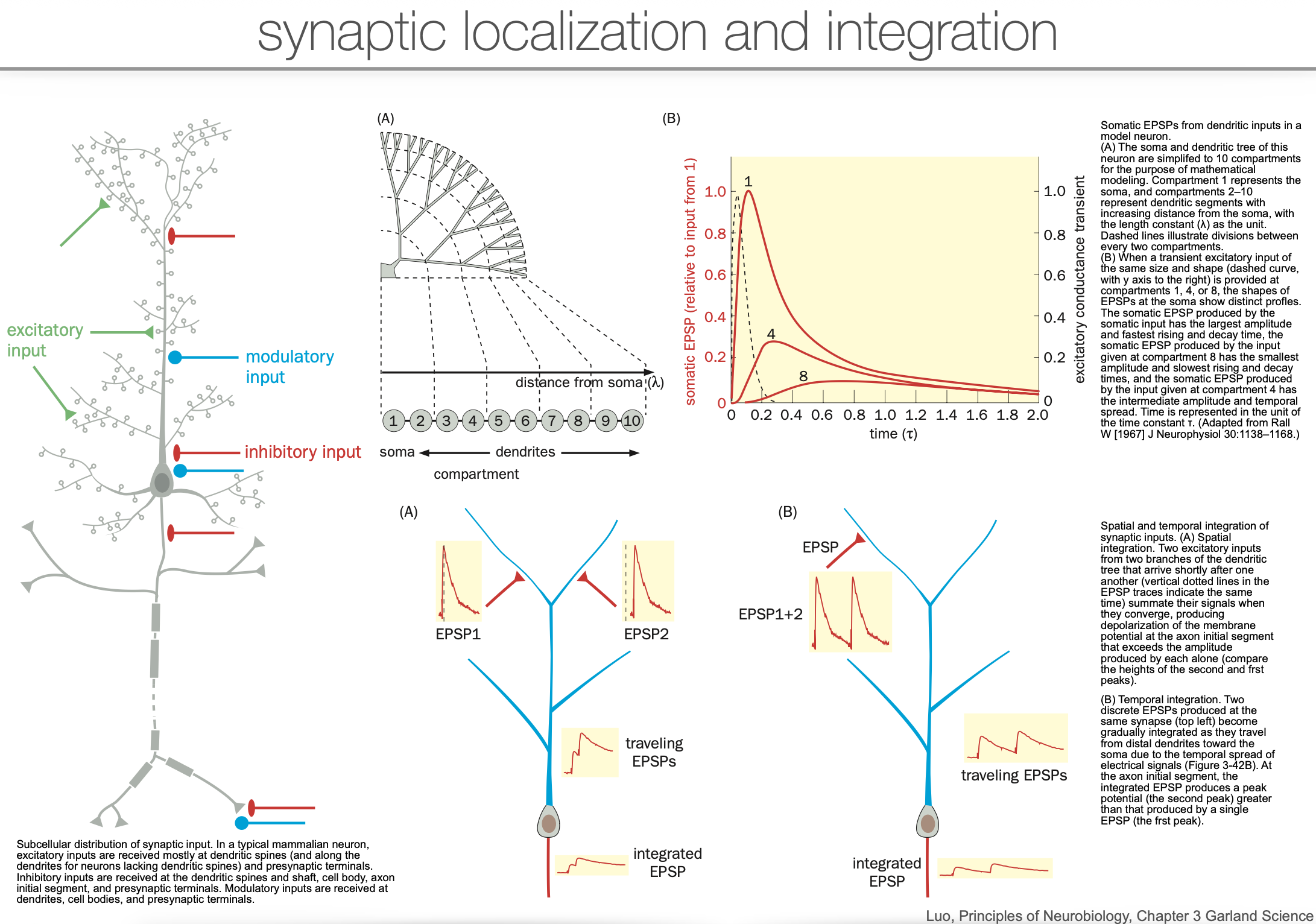
- A small membrane depolarization induced by neurotransmitter binding, which can trigger an action potential.
Size
- Synapses are very small, with a gap of approximately 20-40 nanometers wide.
Importance
- Synapses are essential for neuronal communication, allowing for complex information processing and synchronization of neural activities.
See Also
Tags
Superlink
Sources:
Erstellt: 19-08-21 11:55