Myelination is a critical process in the Nervous system that involves the wrapping of axons with a fatty substance called myelin. Based on the context previously discussed, here are the key points about myelination:
-
Purpose of Myelination:
- Enhances the speed and efficiency of electrical signal transmission along the nerve fiber.
- Reduces signal attenuation and increases conduction velocity.
-
Myelin Sheath Composition:
- Made out of the modified plasma membrane of glial cells.
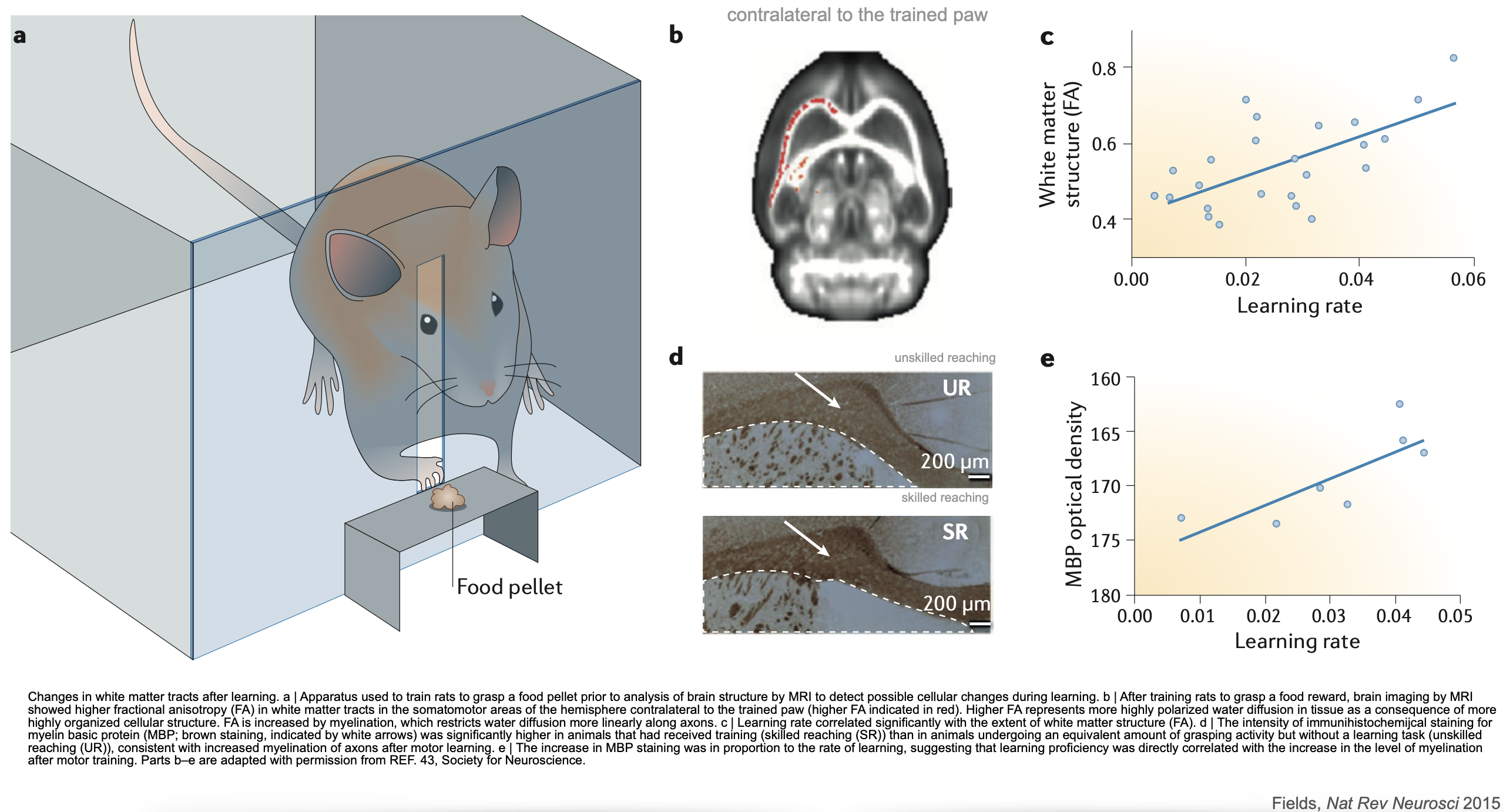
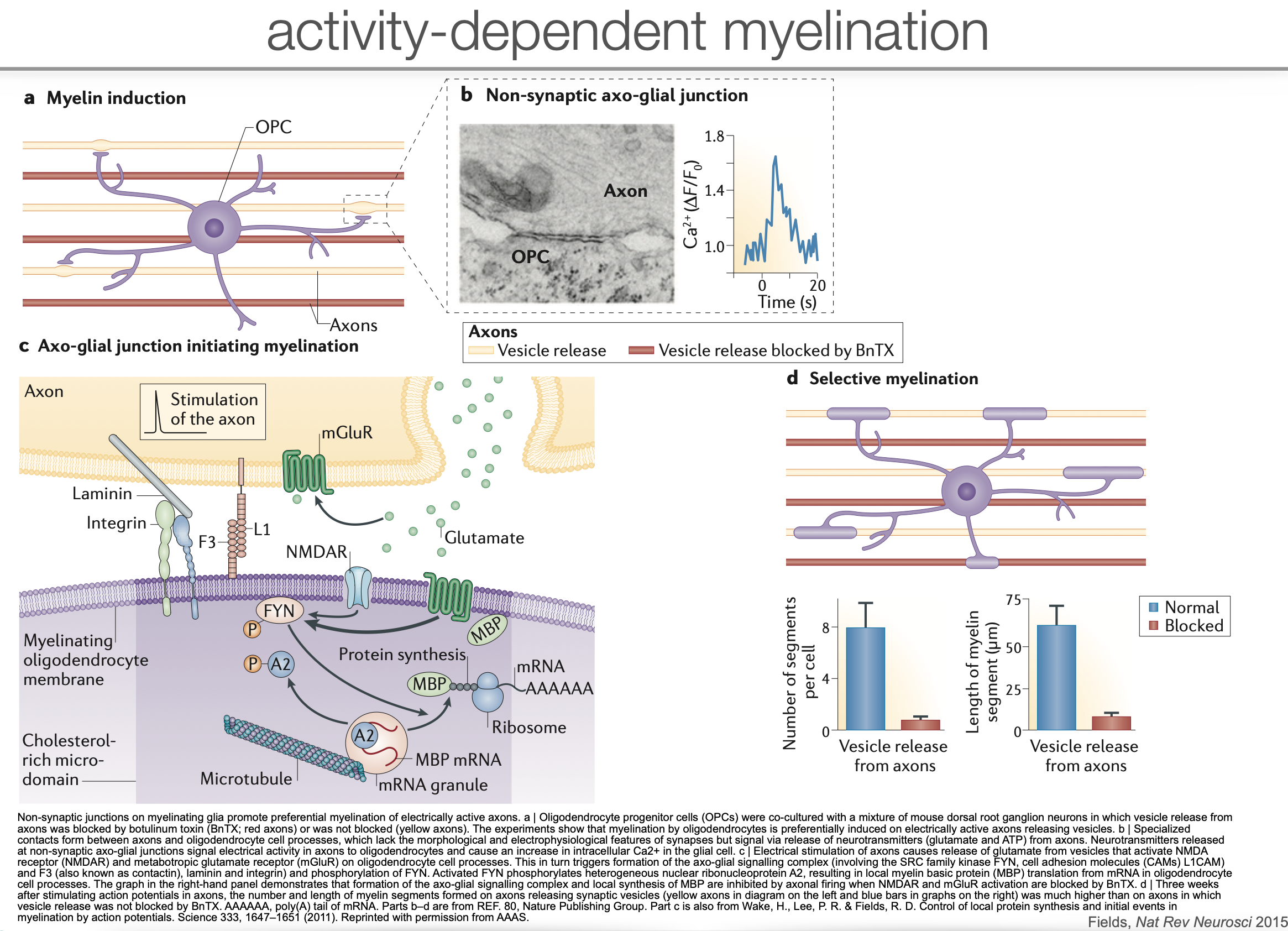
- Consists of a high proportion of lipids and Proteins, including the myelin basic protein (MBP).
-
Glial Cells Involved:
- Schwann Cells: Found in the Peripheral Nervous System (PNS), responsible for myelinating a single segment of an axon.
- Oligodendrocytes: Located in the Central Nervous System (CNS), capable of myelinating multiple axon segments.
-
Process of Myelination:
- Glial cells wrap their plasma membrane around the axon multiple times to form the myelin sheath.
- This wrapping isolates the axon and facilitates rapid signal transmission.
-
Saltatory Conduction:
- Myelinated fibers exhibit saltatory conduction, where electrical impulses jump from one Node of Ranvier (gaps in the myelin sheath) to the next.
- Significantly increases the speed of neural transmission compared to unmyelinated fibers.
-
Energy Efficiency:
- Myelination reduces the need for sodium-potassium ATPase pumps along the axon, making neural transmission less energy-consuming.
-
Impact of Myelination on Conduction Velocity:
- In myelinated nerve fibers, the relationship between axon diameter and conduction velocity is linear. Increasing the diameter increases the velocity proportionally.
-
Clinical Relevance:
- Damage to the myelin sheath or myelinating cells, as seen in autoimmune diseases like multiple sclerosis, can severely impair neural function.
- The autoimmune response against myelin proteins, such as MBP, leads to demyelination and neurological symptoms.
Understanding myelination is crucial for grasping how the nervous system efficiently conducts electrical signals and the pathophysiology of demyelinating diseases.
Sources:
Intro to Neurobiology Deck
Action&Cognition Motor System
Differences between myelin sheath and schwann cells