Temporal lobe
Was wird im temporal lobe verarbeitet?
- somatosensory system
Das Spüren der Hautoberfläche - vestibular system
Das Spüren von Gleichgewicht - vom Visual cortex kommen Signale über den ventral pathway (den What-Pathway), um dann im temporal lobe als Objekte identifiziert zu werden
- Menschen ohne den temporal lobe können Objekte mit unterschiedlichen Formen nicht unterscheiden
- in voll funktionsfähigen Gehirnen arbeiten die beiden what- und how-pathways miteinander. Also kommunizieren der temporal lobe mit dem Parietal lobe.
- Die Kommunikation zum parietal lobe läuft auch über die Temporo parietal junction
Krankheiten
Der temporal lobe ist der aktiv bei OBEs (out-of-body-experiences, also Autopsien)
Brain Map: Temporal Lobes
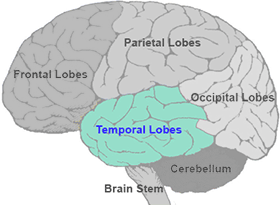
The temporal lobes sit behind the ears and are the second largest lobe. They are most commonly associated with processing auditory information and with the encoding of memory. The temporal lobes are also believed to play an important role in processing affect/emotions, language, and certain aspects of visual perception.
The dominant temporal lobe, which is the left side in most people, is involved in understanding language and learning and remembering verbal information. The non-dominant lobe, which is typically the right temporal lobe, is involved in learning and remembering non-verbal information (e.g. visuo-spatial material and music).
Damage to the temporal lobes can result in:
- Difficulty in understanding spoken words (Receptive Aphasia)
- Disturbance with selective attention to what we see and hear
- Difficulty with identification and categorisation of objects
- Difficulty learning and retaining new information
- Impaired factual and long-term memory
- Persistent talking
- Difficulty in recognising faces (Prosopagnosia)
- Increased or decreased interest in sexual behaviour
- Emotional disturbance (e.g. Aggressive behaviour)
see also
Tags: gehirnregion
Superlink: 050 🧠Neuroscience
Quellen
https://www.health.qld.gov.au/abios/asp/brain
hier mal reinschauen vielleicht?
https://www.medicalnewstoday.com/articles/temporal-lobe
Erstellt: 18-09-21 06:11