LTP - long term potentiation
When does LTP occur?
LTP is the process by which the first burst of NMDA receptor activation causes a prolonged increase in excitability of the synapse.
So the presynaptic axon terminal yells “glutamate” more loudly whereas the dendritic spine listens more attentively.
LTP occurs when the pre- and postsynaptic cells als depolarized at the same time
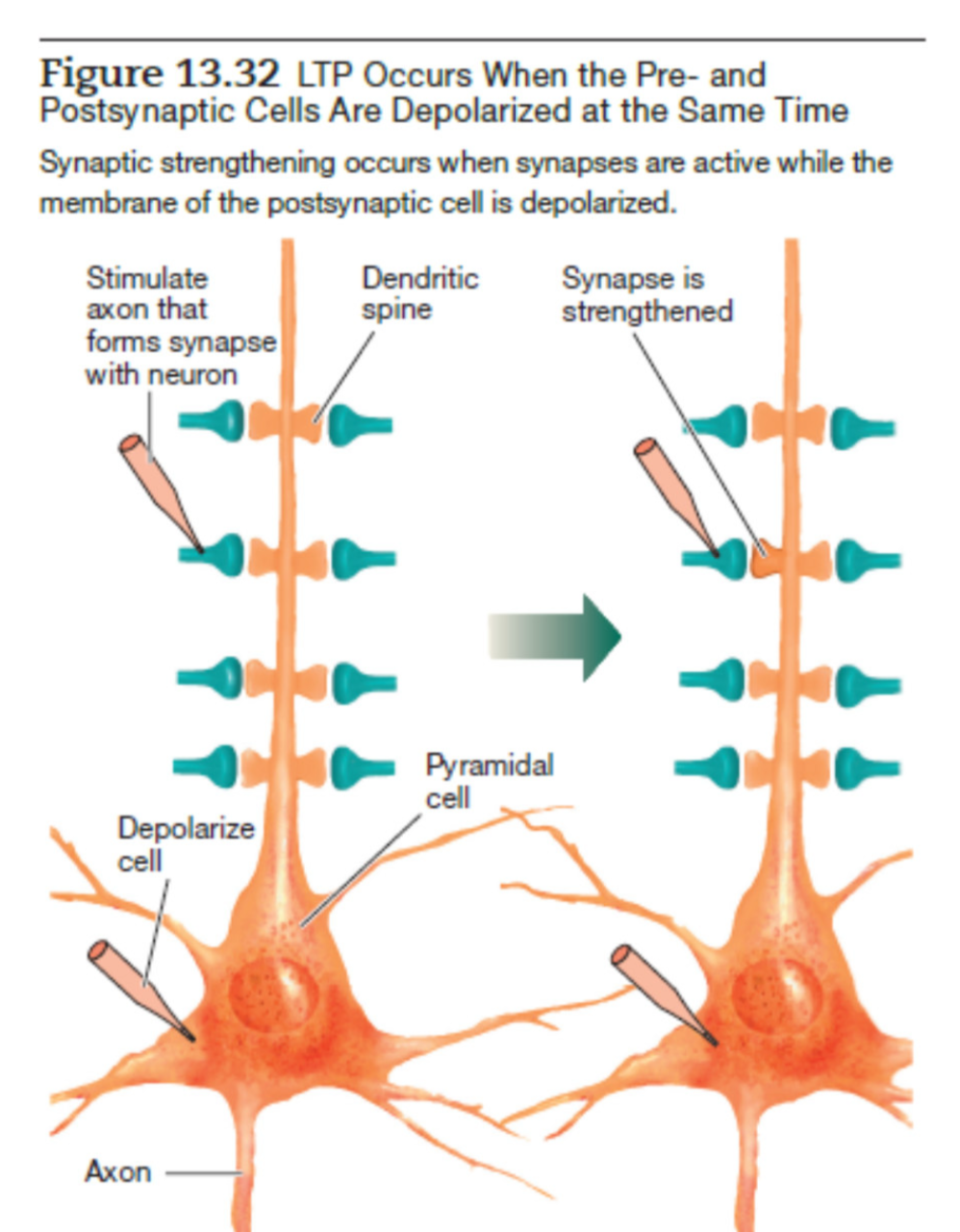
LTP effects
So, in Depression, LTP is lower.
LTP is what happens in the Hippocampus when you learn something.
Fear conditions involves synapses in LTPing in the basolateral Amygdala.
LTP underlies the frontal cortex learning to control the amygdala.
This is the same why dopaminergic systems associate a stimulus with a reward - that’s how addicts some to associate a location with a drug, feeling for cravings when in that setting.
Good, stimulatory stress promotes hippocampal LTP while prolonged stress disrupts LTP.´and promotes LTD (long term depression - less LTP)
sustained stress and Glucocorticoids exposure enhance LTP and suppress LTD in the Amygdala, boosting fear conditioning, and stress LTP in the frontal cortex.
This leads to more excitable synapses in the amygdala and less in the PFC.
This explains stress-induced impulsivity and poor emotional regulation.
Associative LTP
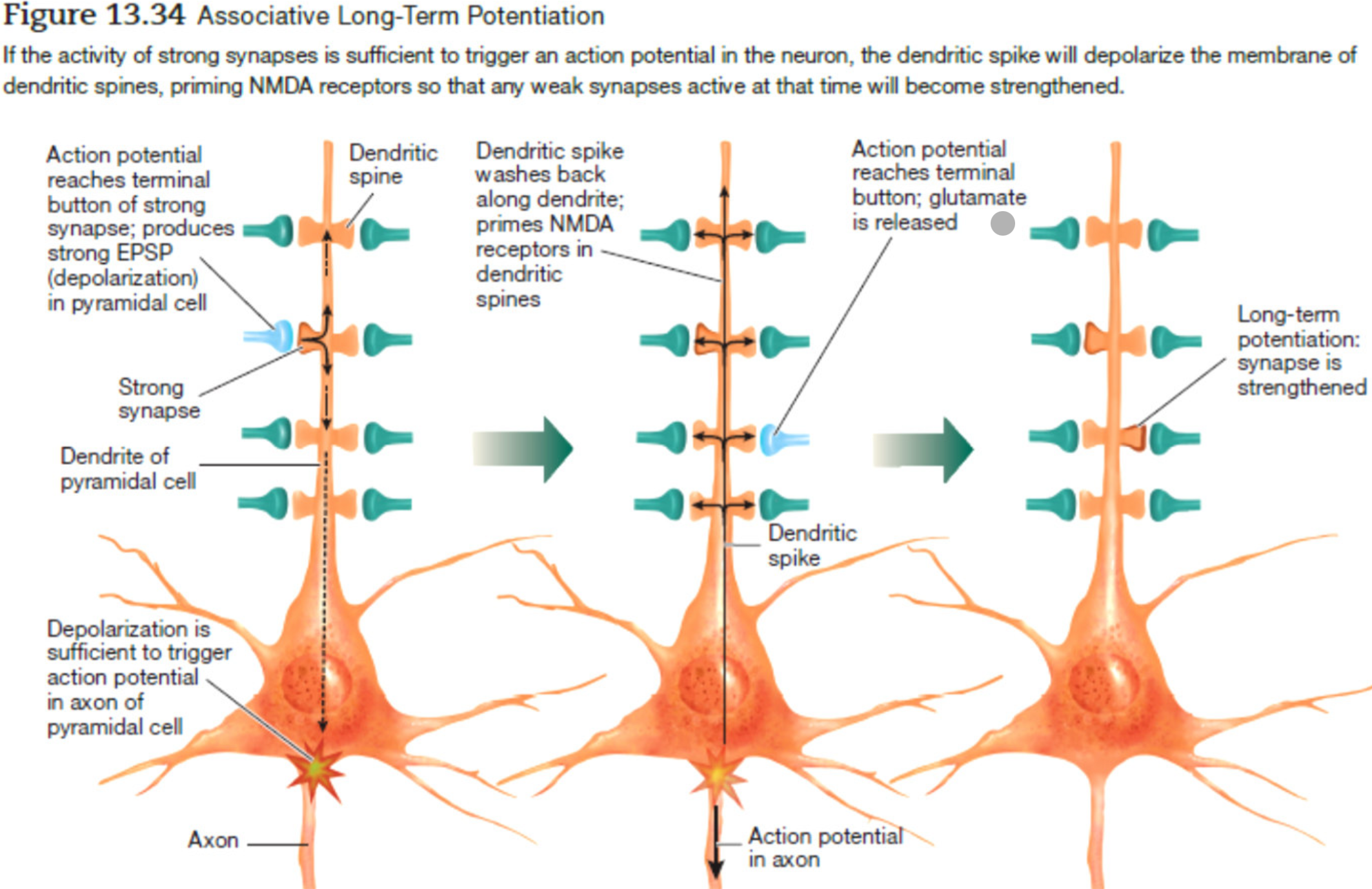
Source: Carlson & Birkett(2022) Figure 13.34, p.450
During action potential (AP) in the axons of CA1 pyramidal cells:
- dendritic spines are also (retrogradely) reached by the AP
- there, further strengthening of the synapse occurs (“Dendritic spikes” [second wave of depolarization] at spines: “primes NMDA receptors in dendritic spines”)
chatbot
Associative LTP refers to a form of synaptic strengthening that occurs when two inputs are activated simultaneously and is thought to be a cellular basis for associative learning (learning that involves understanding how elements are connected). This type of LTP typically involves:
-
Coincidence Detection: It requires the simultaneous activation of weak and strong synaptic inputs to the same neuron. The idea is that the weak input alone would not be sufficient to induce LTP, but when it occurs in conjunction with a strong input, LTP at the weak synapse is facilitated.
-
Mechanism: Associative LTP often depends on NMDA (N-methyl-D-aspartate) receptor activation, which allows calcium ions to enter the neuron only when the neuron is already partially depolarized (a condition met by the presence of a strong stimulus). This calcium influx then triggers intracellular signaling pathways that strengthen the synaptic connection.
-
Learning Correlation: This form of LTP is thought to be crucial for associative learning, where the association between two stimuli or between a behavior and its consequence is learned. It embodies the “Hebbian principle,” often summarized as “cells that fire together, wire together,” indicating that the simultaneous activity of cells leads to pronounced increases in synaptic strength.
Non-Associative LTP
Tetanic Stimulation
- Tetanic stimulation of 10-100Hz
- triggers hundreds to thousands of APs within 1-2 seconds (Action Potential)
Effects of tetanic stimulation:
- The strength of the EPSP (Excitatory Postsynaptic Potential) massively increases, then remains constant.
- Can be induced within seconds, lasts for days to weeks.
- Shows a sensitive consolidation period.
- After tetanic stimulation, stimulation with a weaker stimulus is sufficient.
chatbot
On the other hand, non-associative LTP does not require the simultaneous activation of multiple inputs and can be induced by the repeated activation of a single synapse. It is associated with non-associative learning processes, such as habituation and sensitization. Key aspects include:
-
Single Input Activation: This form of LTP can be induced by the repeated stimulation of a single pathway to a neuron, without the need for concurrent stimulation of another pathway.
-
Mechanism: While non-associative LTP can also involve NMDA receptors, it may rely more on the frequency or pattern of stimulation of a single input rather than the coincidental activation of multiple inputs. The mechanisms can vary depending on the specific neural circuit and type of stimulation.
-
Learning Correlation: Non-associative LTP is related to simpler forms of learning that do not involve making associations between different stimuli. For example, habituation (a decrease in response to a repeated, benign stimulus) and sensitization (an increased response to a stimulus following a noxious or strong stimulus) are forms of non-associative learning that changes in synaptic strength akin to non-associative LTP might support.
In summary, the key difference between associative and non-associative LTP lies in the requirement for simultaneous activation of multiple inputs for induction (associative) versus the ability to be induced by repeated activation of a single input (non-associative). These differences reflect the underlying cellular mechanisms of various types of learning and memory processes.
How does LTP increase Signaling?
chatbot
Long-Term Potentiation (LTP) is a process by which synaptic connections between neurons become stronger with frequent activation. LTP is considered one of the major cellular mechanisms that underlies learning and memory. The process happens primarily at synapses with NMDA (N-methyl-D-aspartate) receptors, although other receptors and mechanisms also play roles. Here’s a simplified overview of how LTP occurs on a molecular level:
-
Initial Stimulus: The process begins when a presynaptic neuron fires rapidly, releasing the neurotransmitter glutamate into the synaptic cleft.
-
Activation of NMDA Receptors: Under normal resting conditions, NMDA receptors on the postsynaptic neuron are blocked by magnesium ions (Mg2+). The rapid firing of the presynaptic neuron leads to a strong depolarization of the postsynaptic membrane. This depolarization expels the Mg2+ ions from the NMDA receptors, allowing calcium ions (Ca2+) to enter the postsynaptic neuron when glutamate is bound to the receptor.
-
Calcium’s Role: The influx of Ca2+ is a critical step in LTP. Calcium activates several signaling pathways within the postsynaptic neuron. These include the activation of protein kinases like CaMKII (Calcium/Calmodulin-dependent protein kinase II) and the mitogen-activated protein kinase (MAPK) pathway.
-
Changes in Synaptic Strength: The activated kinases then bring about changes that increase the synaptic strength. This can happen through various mechanisms, including:
- Increasing the sensitivity of existing AMPA (α-amino-3-hydroxy-5-methyl-4-isoxazolepropionic acid) receptors to glutamate.
- Inserting more AMPA receptors into the postsynaptic membrane.
- Structural changes to the synapse, such as the growth of new dendritic spines, which provide more surface area for synaptic connections.
-
Gene Expression and Protein Synthesis: Some forms of LTP also involve changes in gene expression and protein synthesis, leading to the growth of new synapses and the reinforcement of existing ones. This is part of the transition from early-phase LTP (lasting minutes to a few hours) to late-phase LTP (lasting hours to days or longer), which is believed to be crucial for the formation of long-term memories.
-
Retrograde Signaling: In some cases, the postsynaptic neuron may also release signaling molecules that travel back across the synapse to the presynaptic neuron, further enhancing its ability to release neurotransmitters.
In summary, LTP involves a complex interplay of neurotransmitters, receptors, intracellular signaling pathways, and gene expression, leading to the strengthening of synaptic connections. This process is fundamental to synaptic plasticity, the ability of the brain to reorganize itself in response to experience.
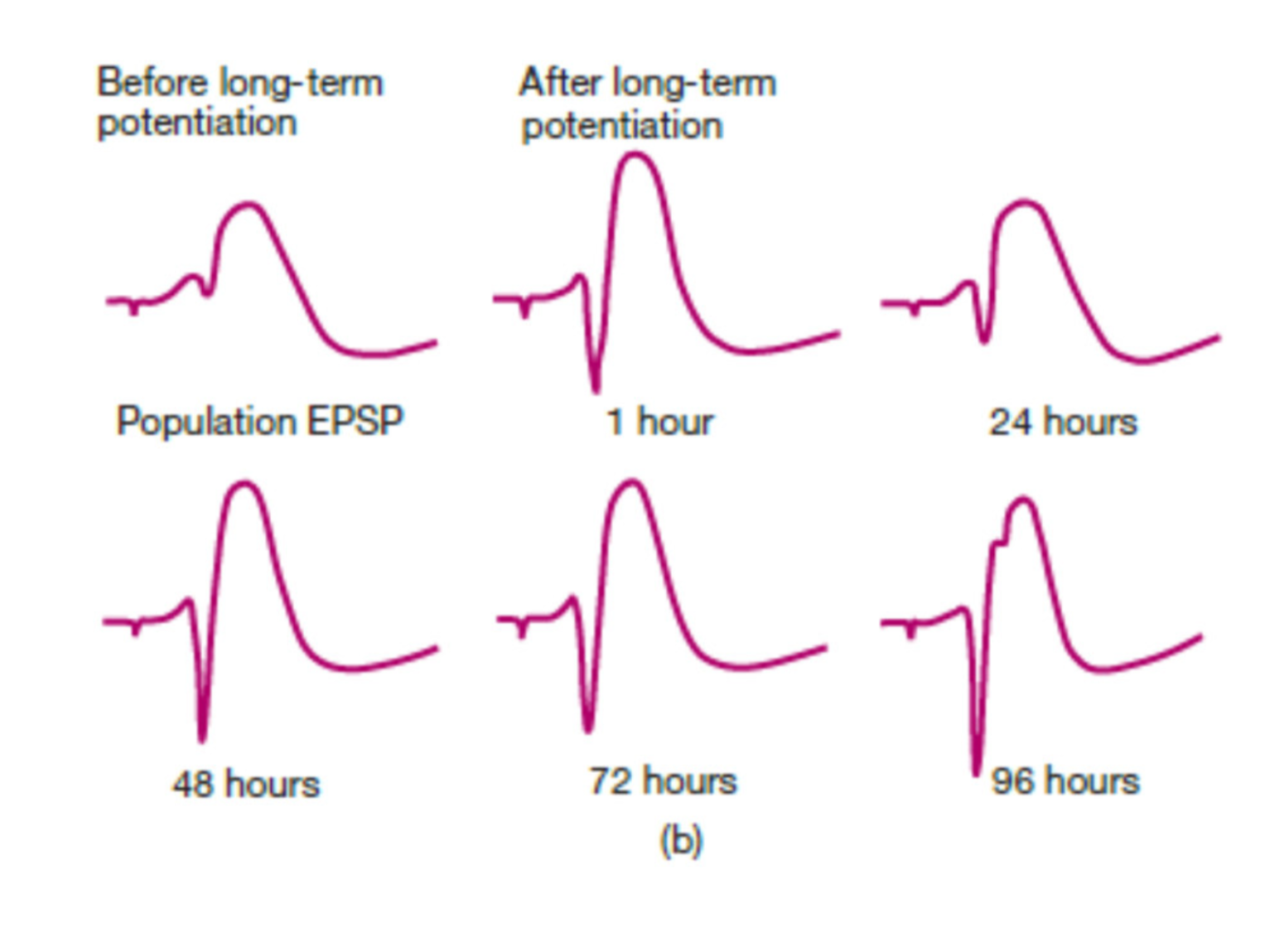
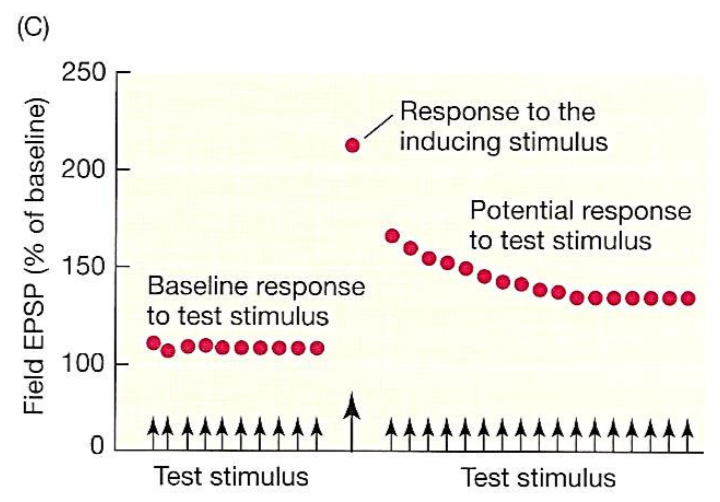
Source: Rudy (2014), Fig. 2.14, p.36
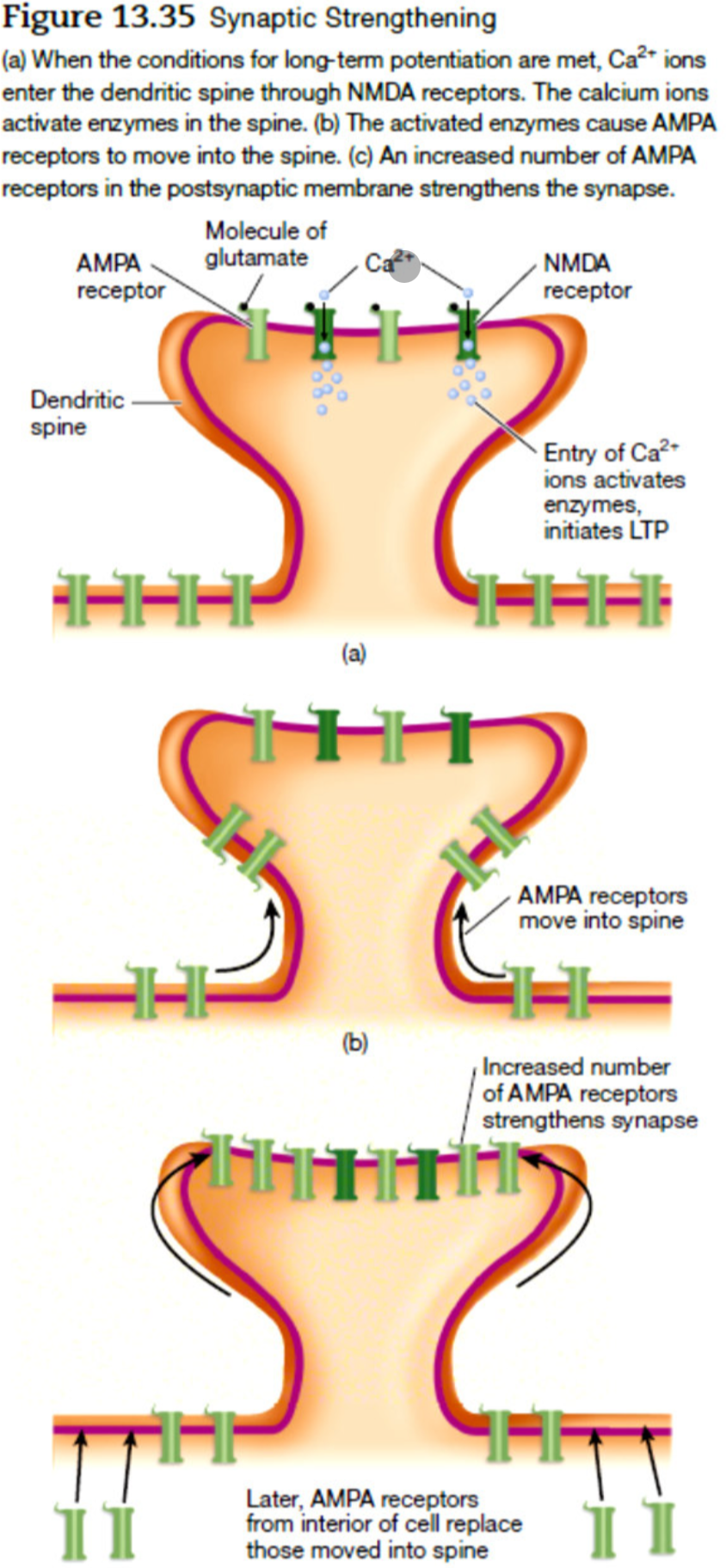
Synaptic Strengthening
#chatbot
Long-term potentiation (LTP) is a process in which synaptic transmission between two neurons is enhanced through repeated stimulation. This mechanism plays a crucial role in learning and memory formation. The NMDA receptor (N-Methyl-D-Aspartate receptor) is key to the induction of long-term potentiation in the hippocampus and other brain regions. Here are the key processes of long-term potentiation at the NMDA receptor:
-
Pre-activation of the synapse: For LTP to occur at the NMDA receptor, the postsynaptic cell must already be slightly depolarized. This happens through previous activity at the synapse or by activating neighboring synapses.
-
Glutamate release: With sufficient stimulation of the presynaptic neuron, the neurotransmitter glutamate is released into the synaptic cleft.
-
Binding to receptors: Glutamate binds to both AMPA and NMDA receptors on the postsynaptic membrane. Binding to AMPA receptors leads to a rapid depolarization of the postsynaptic cell, further depolarizing the membrane.
-
Removal of the magnesium block: Under normal resting conditions, a magnesium ion (Mg2+) blocks the ion channel of the NMDA receptor. Depolarization of the postsynaptic membrane by AMPA receptor activity removes this Mg2+ block, making the NMDA channel permeable to ions.
-
Calcium influx: After the removal of the Mg2+ block, calcium (Ca2+) can flow through the NMDA receptor into the postsynaptic cell. This Ca2+ influx is crucial for activating intracellular signaling pathways that lead to long-term potentiation.
-
Activation of signaling pathways: The influx of Ca2+ activates various signaling pathways within the cell, including the activation of protein kinases such as CaMKII (Calcium/Calmodulin-dependent protein kinase II). These enzymes promote the phosphorylation and thus the activation of additional AMPA receptors and their incorporation into the postsynaptic membrane, increasing synaptic efficiency.
-
Structural changes: In the long term, the signaling pathways induced by LTP lead to structural changes at the synapse, including the growth of new dendritic spines and the strengthening of existing synaptic connections. These structural changes contribute to the long-term storage of information.
In summary, long-term potentiation at the NMDA receptor is a complex process characterized by the sequential activation of various molecular and cellular mechanisms that ultimately enhance synaptic transmission and contribute to the formation of long-term memory.
More AMPA receptors are formed
- Initially, AMPA receptors are incorporated into the postsynaptic membrane:
- Then, distant AMPA receptors from non-synaptic regions of the dendrite migrate into the spines, and later, AMPA receptors from the interior of the cell move to the exterior (see Carlson & Birkett, 2017, Fig. 13.34)
- Then, also a signal to the presynapse
With the release of glutamate now
(a) more AMPA receptors are present in the postsynapse
→ stronger EPSP in synaptic spines
→ Synapse strengthened
(b) plus “retrograde messengers” back to the presynapse
(using nitrogen (NO), a gaseous transmitter)
→ more glutamate released in the presynaptic neuron
→ LTP favoured
neurochemical cascade during the introduction of LTP
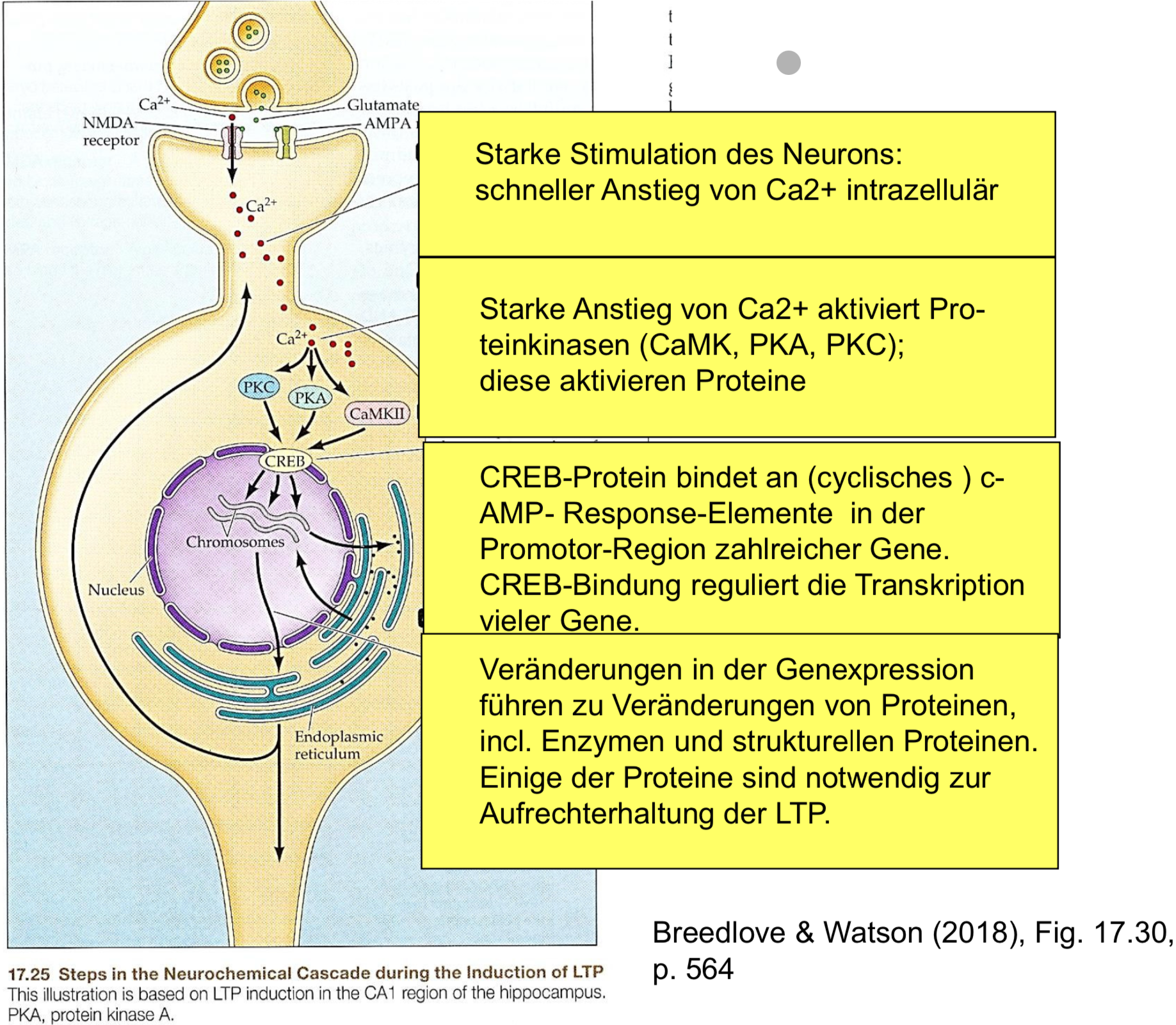
- Starke Stimulation des Neurons: schneller Anstieg von Ca2+ intrazelulär
- Starke Anstieg von Ca2+ aktiviert Proteinkinasen(CaMK, PKA, PKC); diese aktivieren Proteine
- CREB-Protein bindet an (cyclisches) c-AMP-Response-Elemente in der Promotor-Region zahlreicher Gene. CREB-Bindung reguliert die Transkription vieler Gene.
- Veränderungen in der Genexpression führen zu Veränderungen von Proteinen, incl. Enzymen und strukturellen Proteinen. Einige der Proteine sind notwendig zur Aufrechterhaltung der LTP.
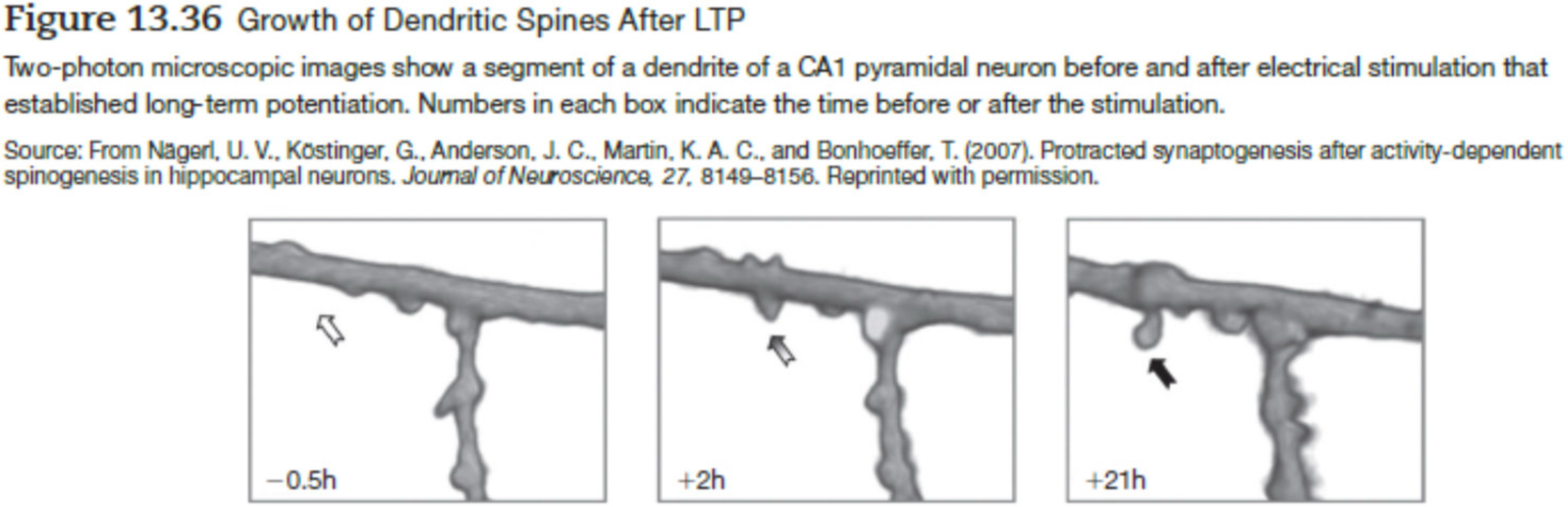
Morphological change os Dedritic spines
Source: Carlson & Birkett(2022), Fig. 13.35, p. 452
Through LTP, the spines enlarge from thin to “mushroom-shaped” spines (so-called “mushroom spines”).
- Nägerl et al. (2007):
Axons form new spines after 15-19 hours, creating synaptic connections with ends of nearby neurons.
How is LTP prevented?
Early and long-lasting LTP
Early LTP
lasts several hours and includes
- Depolarization of the presynaptic membrane
- Presynaptic release of glutamate
- Postsynaptic activation of ligand- and voltage-gated NMDA receptors
- Entry of calcium ions into the postsynapse and activation of CaM-KII (and other calcium-dependent enzymes)
- Migration of AMPA receptors into the postsynaptic membrane
- Postsynaptically: NO synthase increases the formation of NO, which then moves retrogradely to the presynapse and there increases the release of glutamate
Long-Lasting LTP (independent of AMPA)
requires protein synthesis*, lasts longer
Which proteins are required?
- PKM-zeta (enzyme)
whose gene is constantly active, but translation
of PKM-zeta is prevented by Pin1
It promotes the transport of AMPA receptors in
the membrane of the postsynapse.
Thus, the transition from E-LTP to L-LTP - PKM-zeta synthesis must be maintained permanently
Classical Conditioning (in general)
After several CS-US pairings (associative LTP), structural changes also occur: associative LTP
- Protein molecules in the synapse of the sensory neuron travel along the axon to the cell nucleus.
- There, genes are activated that stimulate the growth of the synapse.
→ A “memory” for the synaptic contact is formed.
Indicators for the importance of LTP for memory consolidation
Correlative Evidence
- The timeline of LTP bears a strong resemblance to the timeline of memory formation.
Somatic Intervention or Genetic Manipulation - Knockout of one copy of the CaMKII gene: Animals could form short-term memory but no long-term memory.
- With overexpression of the NMDA receptor: improved LTP, “smart mice.”
Behavioral LTP - Training on a memory task can induce LTP.
- Particularly also in fear conditioning: potentiation in the Amygdala; conversely, induction of an LTD - Long-Term Depression regarding the auditory input into the amygdala after fear conditioning with auditory CS led to a weakening of the conditioned fear response.
see also
Tags: neurobiology science
Superlink: 051 ☣Neurobiology 050 🧠Neuroscience
Classical Conditioning
CREB
Quellen
[[Behave#Chapter 5 Days to Months Before#AHA versus actually remembering]]
Erstellt: 11-05-22 16:46