Microtubules
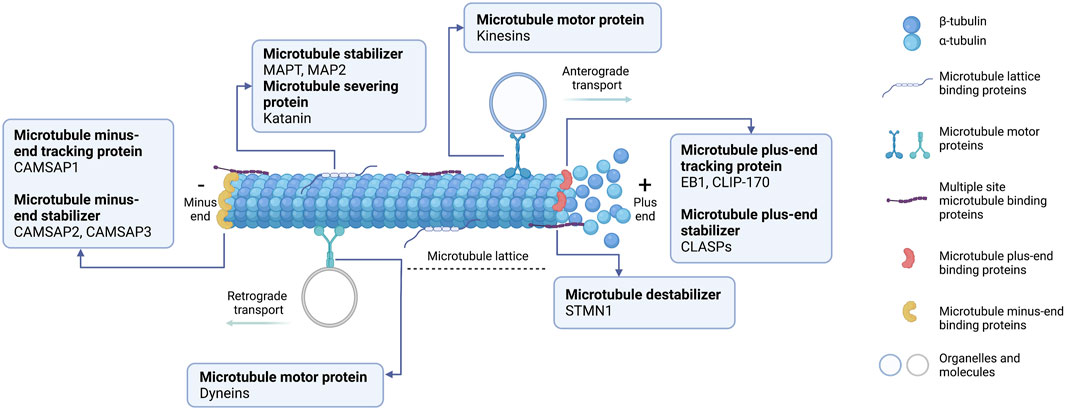
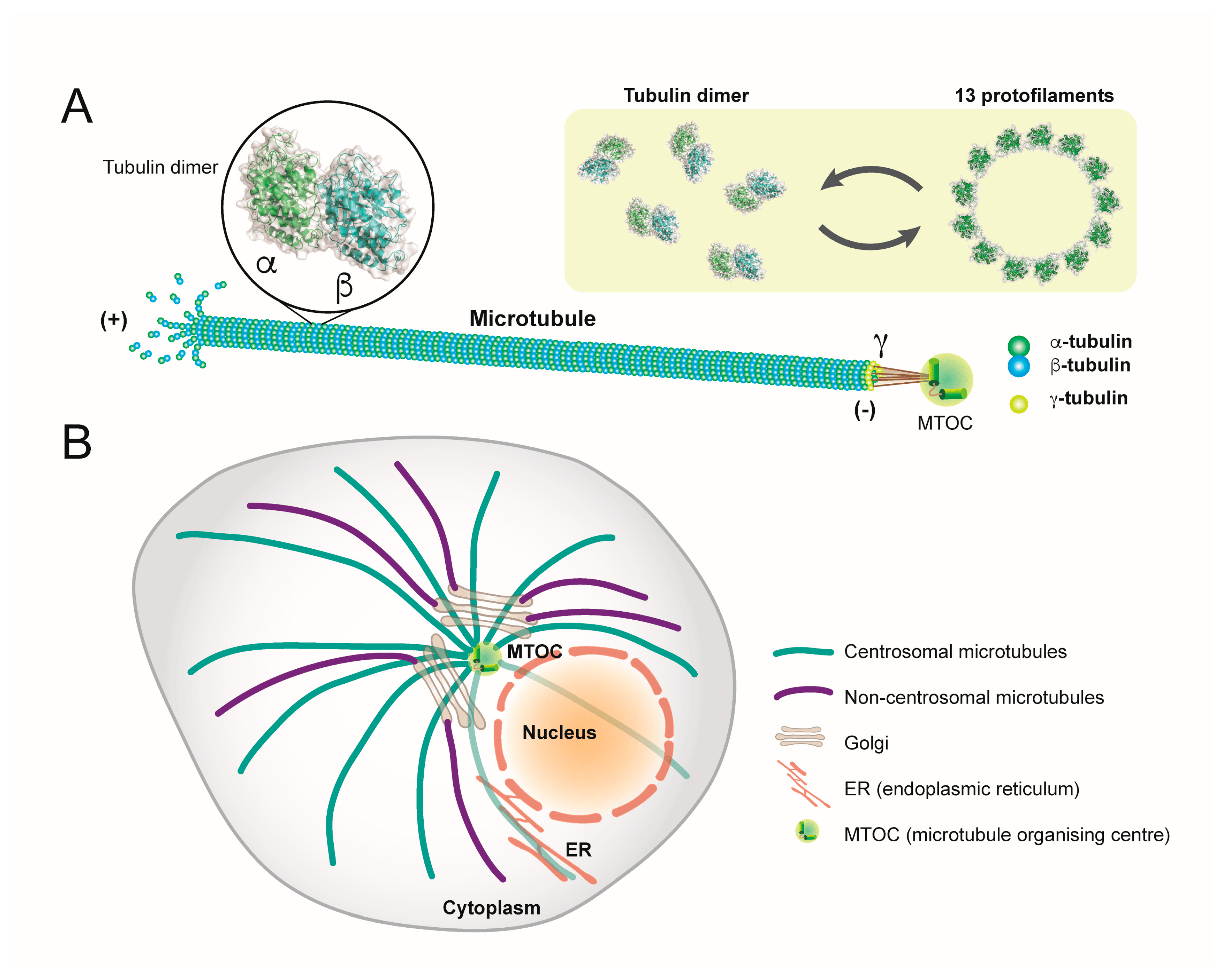
Microtubules are a crucial component of the cytoskeleton in neural cells, playing a vital role in maintaining cell structure and facilitating intracellular transport. Here is a structured overview of microtubules:
Structure
- Composition: Microtubules are composed of the protein tubulin, which forms dimers. These dimers are organized into 13 protofilaments that arrange themselves into a hollow cylindrical tube.
- Diameter: Approximately 20 nm.
- Shape: Long, unbranched hollow tubes.
Function
- Intracellular Transport: Microtubules serve as tracks for the transport of materials within the cell. They are essential for both slow and fast axonal transport.
- Slow Axonal Transport: Transports cytoskeletal proteins at a velocity of 1-6 mm per day, supporting nerve fiber growth during development and regeneration.
- Fast Axonal Transport: Transports larger particles like vesicles and mitochondria at a velocity of 100-400 mm per day. This transport is guided by microtubules and involves motor proteins such as kinesin (anterograde transport) and dynein (retrograde transport).
- Structural Support: Microtubules provide structural stability to the highly branched cellular architecture of neurons, resisting deformation while allowing for flexibility and reorganization in response to external forces or internal stimuli.
Associated Proteins
- Motor Proteins: Kinesin and dynein are motor proteins that facilitate the movement of cargo along microtubules. Kinesin is responsible for anterograde transport, moving materials from the cell body to nerve endings, while dynein handles retrograde transport.
- Microtubule-Associated Proteins (MAPs): These proteins, such as kinesin and dynein, bind to specific parts of the microtubules to assist in their assembly, disassembly, and functional differentiation.
- Tau Proteins: Tau proteins bind to microtubules, stabilizing them and promoting tubulin self-assembly. They are crucial for maintaining the structural integrity of neurons. In pathological conditions, such as Alzheimer’s disease, tau proteins can become hyperphosphorylated and aggregate, leading to the destabilization of microtubules and disruption of intracellular transport. This aggregation can cause alterations in neuronal morphology and impair neural network interactions.
Energy Source
- ATP Utilization: The movement of motor proteins along microtubules is powered by ATP. For example, the kinesin motor Protein uses Adenosine Triphosphate (ATP) to move in an eight nm step along the microtubule surface, following a hand-over-hand walking model.
Microtubules are integral to the function and structure of neural cells, facilitating essential processes such as intracellular transport and maintaining cellular integrity.
see also
Tags: neurobiology science
Superlink: 051 ☣Neurobiology 050 🧠Neuroscience
Cytoskeletons
Neurofilaments
Microfilaments
Source
Created: 11-02-25 15:01