Neuron Cell
- eine Nervenzelle ist eine bestimmte Art einer Cell
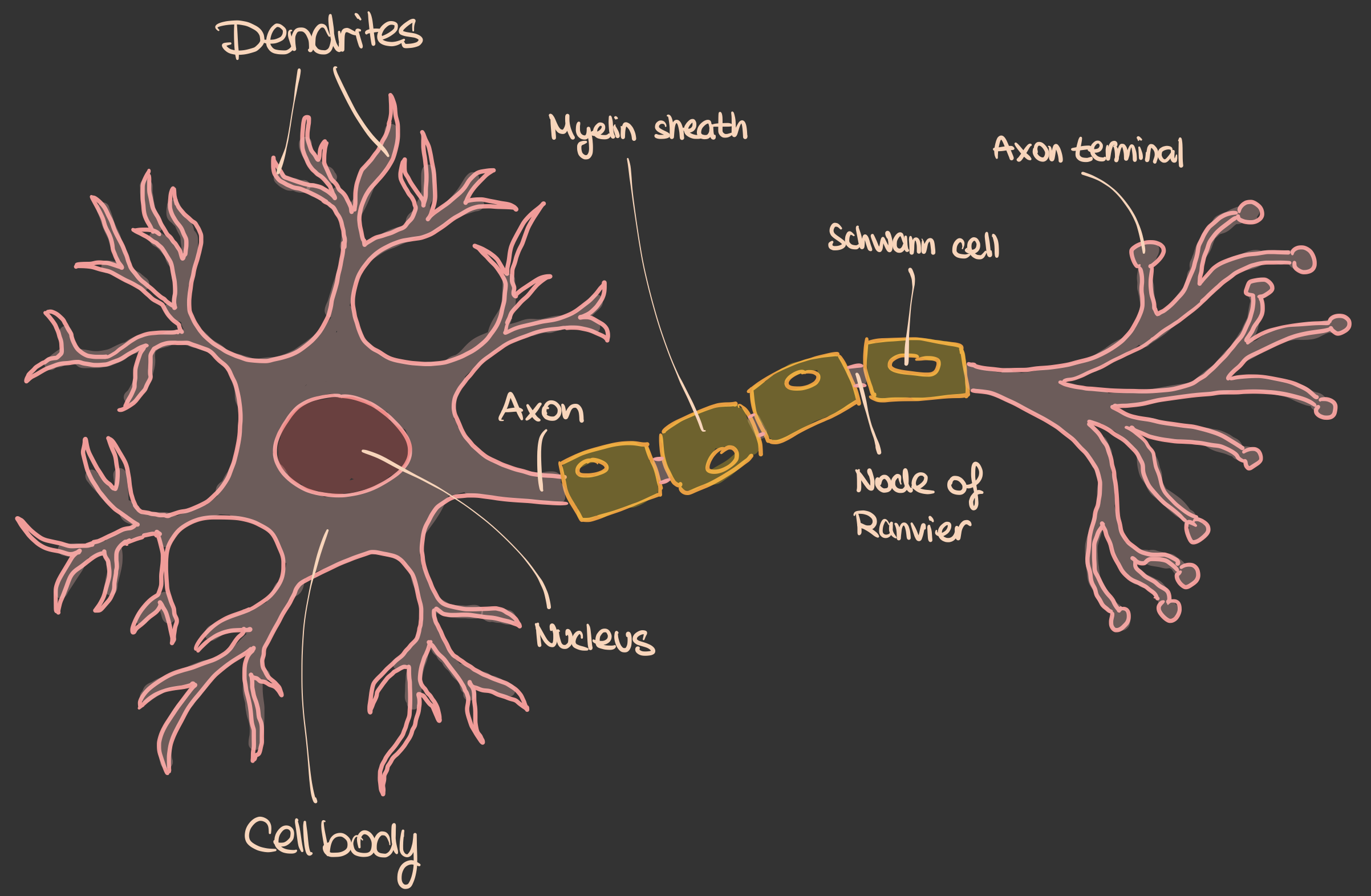
neurons and glia:
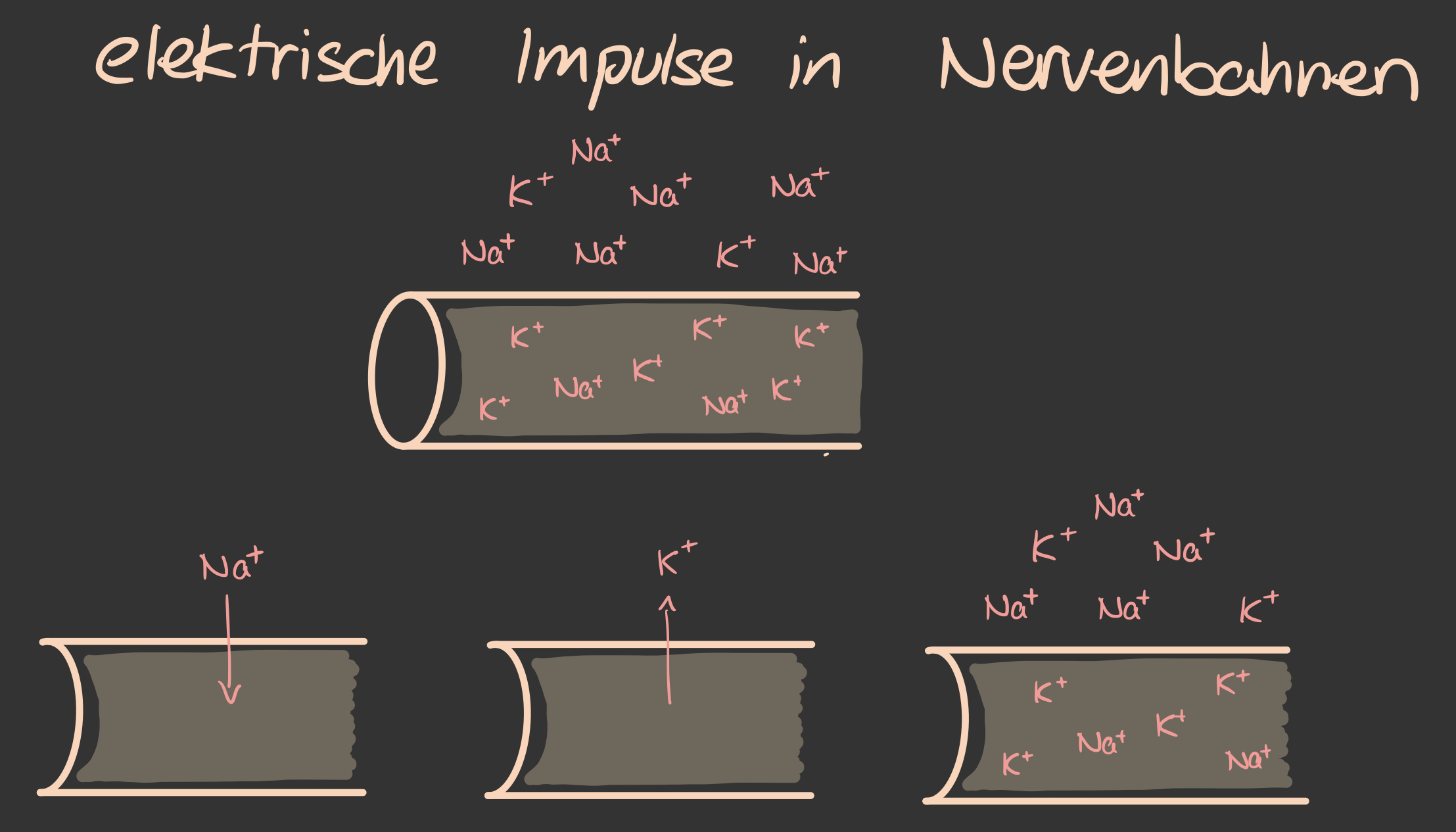
Wie ein Signal geschickt wird
In dem Axon (Nervenstrang) befinden sich Sodium (Na+) und Potassium (K+), wobei Potassium in der Anzahl überwiegt.
Außerhalb überwiegt Sodium.
An den Receptor sitzen Chemikalien, die auf äußere Reize reagieren und dadurch einen elektrischen Puls abgeben.
Dieser elektrische Puls wird dadurch weitergegeben, dass zuerst Na+-Ionen in das Axon eintreten und anschließend K+-Ionen austreten.
Somit wird das Axon an der Stelle, wo die Na+-Ionen austreten, kurzzeitig positiv und das Signal kann weitergegeben werden.
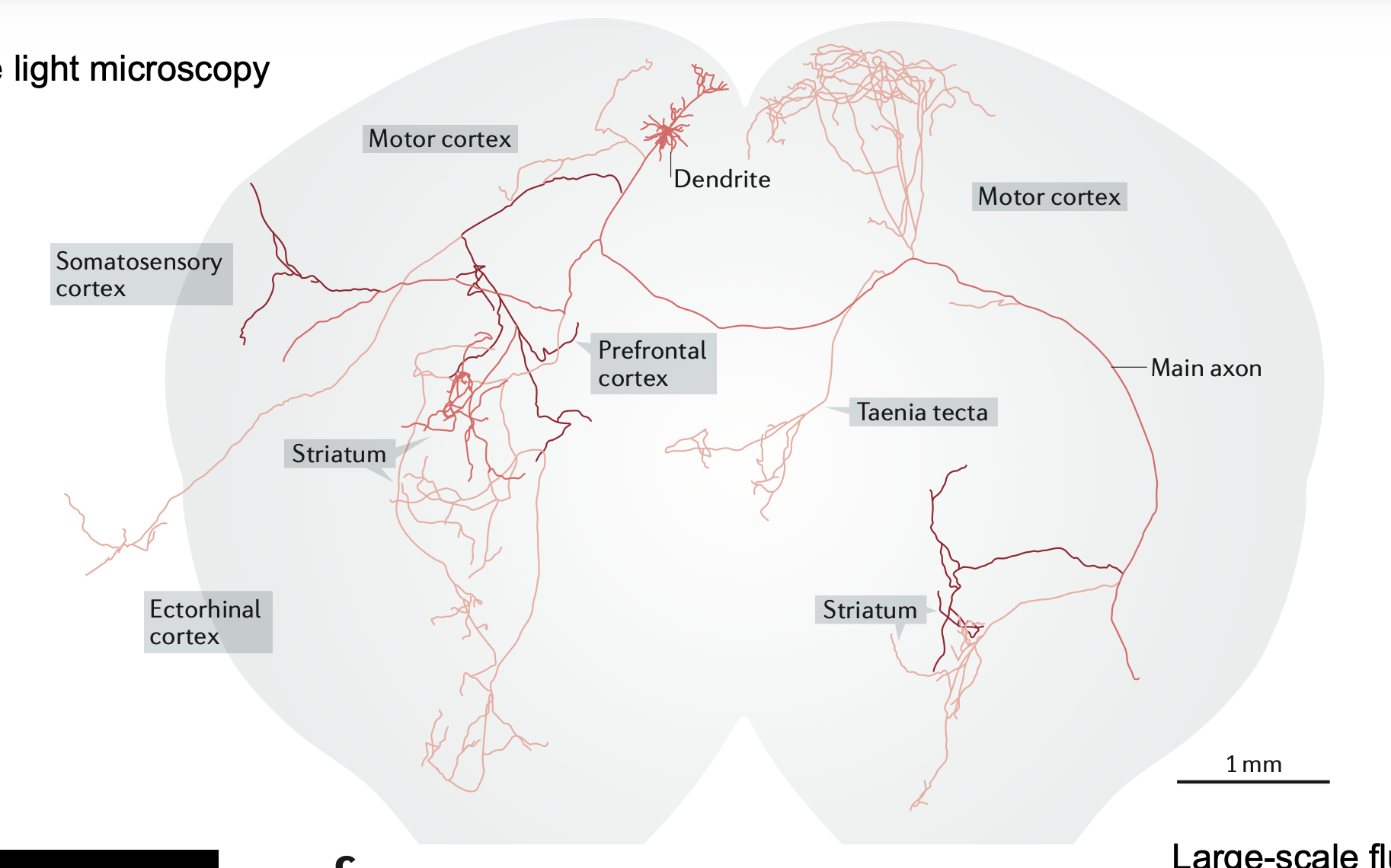
The hard problem
	##### Das führt zum "hard problem":

	Wie werden aus elektischen Impulsen Erinnerungen geschaffen? Wir schafft es das Gehirn, nur aus diesen Signalen ein bleibende Erinnerung im Gehirn zu generieren. Diese Frage ist bis jetzt (2021) unbeantwortet.
⇒ See How Memories are created
ein Schmerz
Ein Schmerz fühlt sich stärker an, wenn viel Nervenbahnen aktiviert werden. Die elektrischen Impulse verbünden sich und verstärken somit das Signal.
Je schneller das Signal, desto stärker war der Reiz (Schmerz).
Ein Schmerz, bei dem zwischen den Signalen längere Intervalle liegen, fühlt sich nicht so stark an.
Funktionsweise bei Hormonen
Generell kann die Menge an Hormonen im Umlauf durch folgende drei Faktoren geändert werden:
Synapse: Es kann weniger Dopamin in die Synapse gelangen, um von dort weitertransportiert zu werden. Das kann durch eine verringerte Produktion des Hormons liegen oder durch das Fehlen von Botenstoffen, die in der Synapse sitzen und das Hormon weitertragen.
Zudem ist die Anzahl der Synapsen maßgeblich für die Verbreitung des Hormons. Gibt es weniger Synapsen, können auch nur weniger Hormone durch den Körper gelangen.
Receptor: Der Empfänger kann gestört sein. Es könnten weniger Rezeptoren vorhanden sein, die die Hormone in Empfang nehmen.
Oder aber die Leistungsfähigkeit der Rezeptoren kann gedrosselt sein, wenn es nicht genügend Stoffe gibt, die die Hormone und Botenstoffe in Empfang nehmen.
-
Eine arbeitsmüde neuron cell hat kaum noch Energie. Das aktiviert einen bestimmten transcription factor, der sich wiederum an den promoter bindet und diesen anregt, das nachfolgende Gen zur Glucose-Produktion
In Folge dessen werden mehr Glucose-transporter-Protein hergestellt und in die Zellmembran geschickt. Somit kann die Zelle leichter herumschwirrende Glucose aufnehmen
Quelle:
Transclude of Behave#s-210
Leaky Integrate-and-fire model
A neuron is surrounded by a cell membrane, which is a rather good insulator. If a short current pulse 𝐼(𝑡) is injected into the neuron, the additional electrical charge 𝑞=∫𝐼(𝑡′)𝑑𝑡′ has to go somewhere: it will charge the cell membrane (Fig. 1.6A). The cell membrane therefore acts like a capacitor of capacity 𝐶. Because the insulator is not perfect, the charge will, over time, slowly leak through the cell membrane. The cell membrane can therefore be characterized by a finite leak resistance 𝑅.
How do neurons get their energy?
chatbot
Neurons primarily get their energy through the process of cellular respiration, which occurs in the mitochondria. The main source of this energy is glucose, although neurons can also utilize lactate under certain conditions.
- Glucose Uptake and Glycolysis: Neurons uptake glucose from the bloodstream through glucose transporters (mainly GLUT3, but also GLUT1). Once inside the neuron, glucose undergoes glycolysis in the cytoplasm, producing pyruvate, ATP (adenosine triphosphate), and NADH (nicotinamide adenine dinucleotide).
- Mitochondrial Oxidative Phosphorylation: Pyruvate from glycolysis is transported into the mitochondria, where it enters the Krebs cycle (or citric acid cycle). The Krebs cycle produces more NADH and FADH2 (flavin adenine dinucleotide), which are then used in the electron transport chain (ETC). The ETC generates a proton gradient across the mitochondrial membrane, driving the synthesis of ATP through ATP synthase.
- ATP Utilization: The Adenosine Triphosphate (ATP) produced is then used by the neuron to fuel various cellular processes, including maintaining the resting membrane potential, propagating action potentials, and neurotransmitter release.
- Alternative Energy Sources: In conditions where glucose is scarce, neurons can also metabolize lactate. Astrocytes, a type of glial cell, can convert glucose to lactate via anaerobic glycolysis and then shuttle the lactate to neurons. This lactate is then converted back to pyruvate and enters the mitochondrial oxidative phosphorylation pathway.
The efficient and continuous supply of energy is crucial for neurons due to their high metabolic demands and the critical functions they perform in neurotransmission and synaptic plasticity.
References:
- Magistretti, P. J., & Allaman, I. (2015). A cellular perspective on brain energy metabolism and functional imaging. Neuron, 86(4), 883-901.
- Harris, J. J., Jolivet, R., & Attwell, D. (2012). Synaptic energy use and supply. Neuron, 75(5), 762-777.
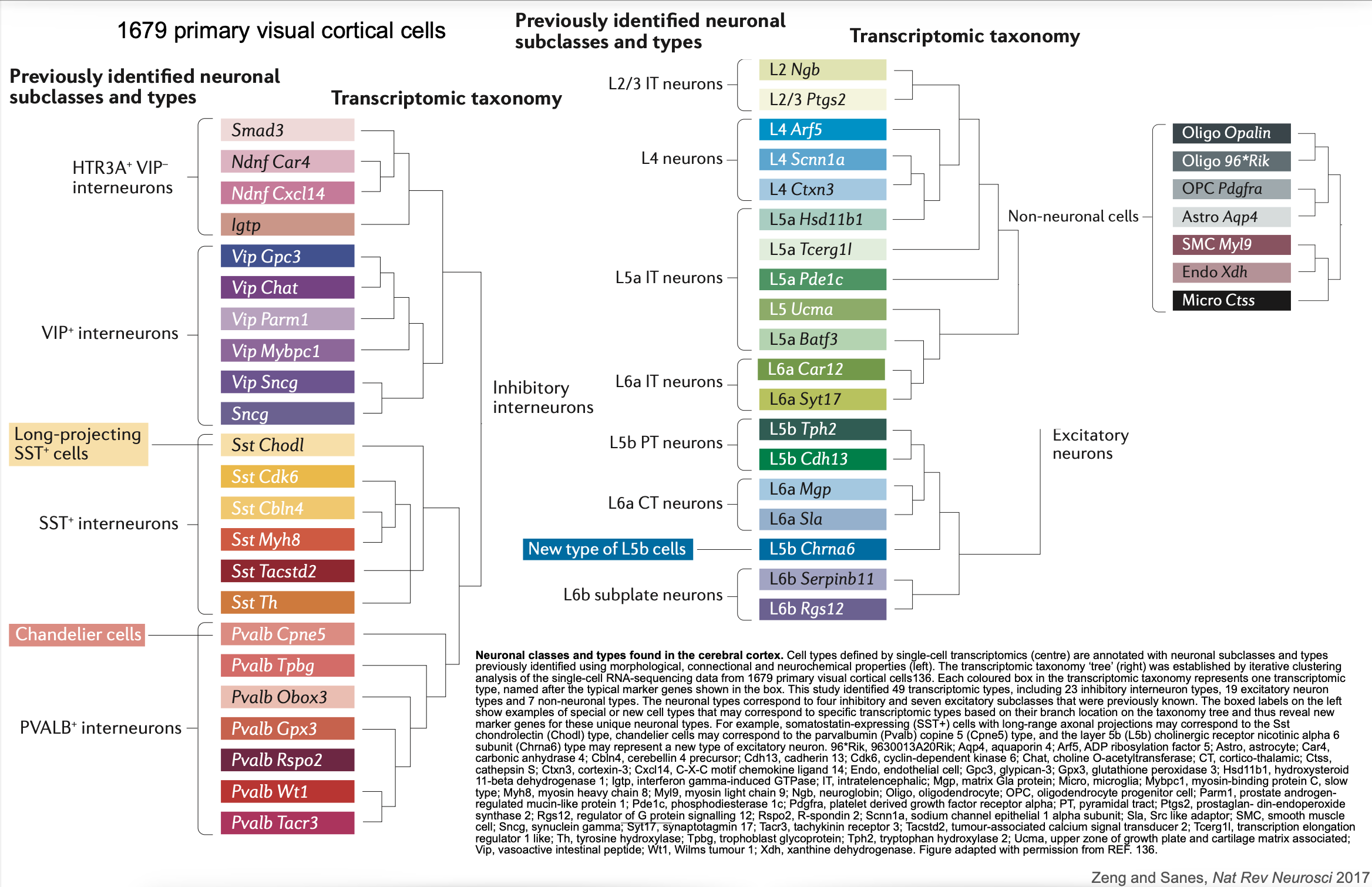
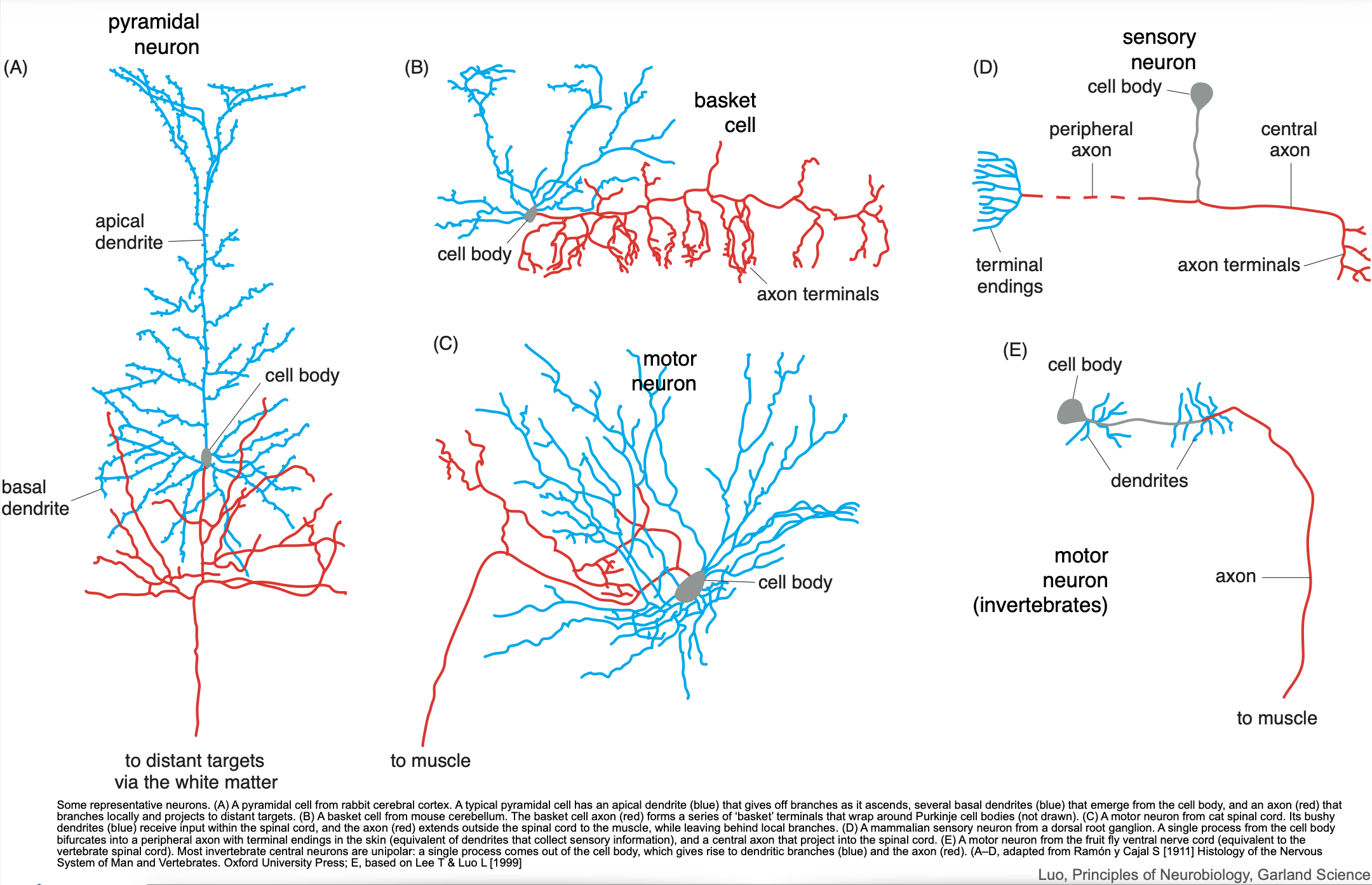
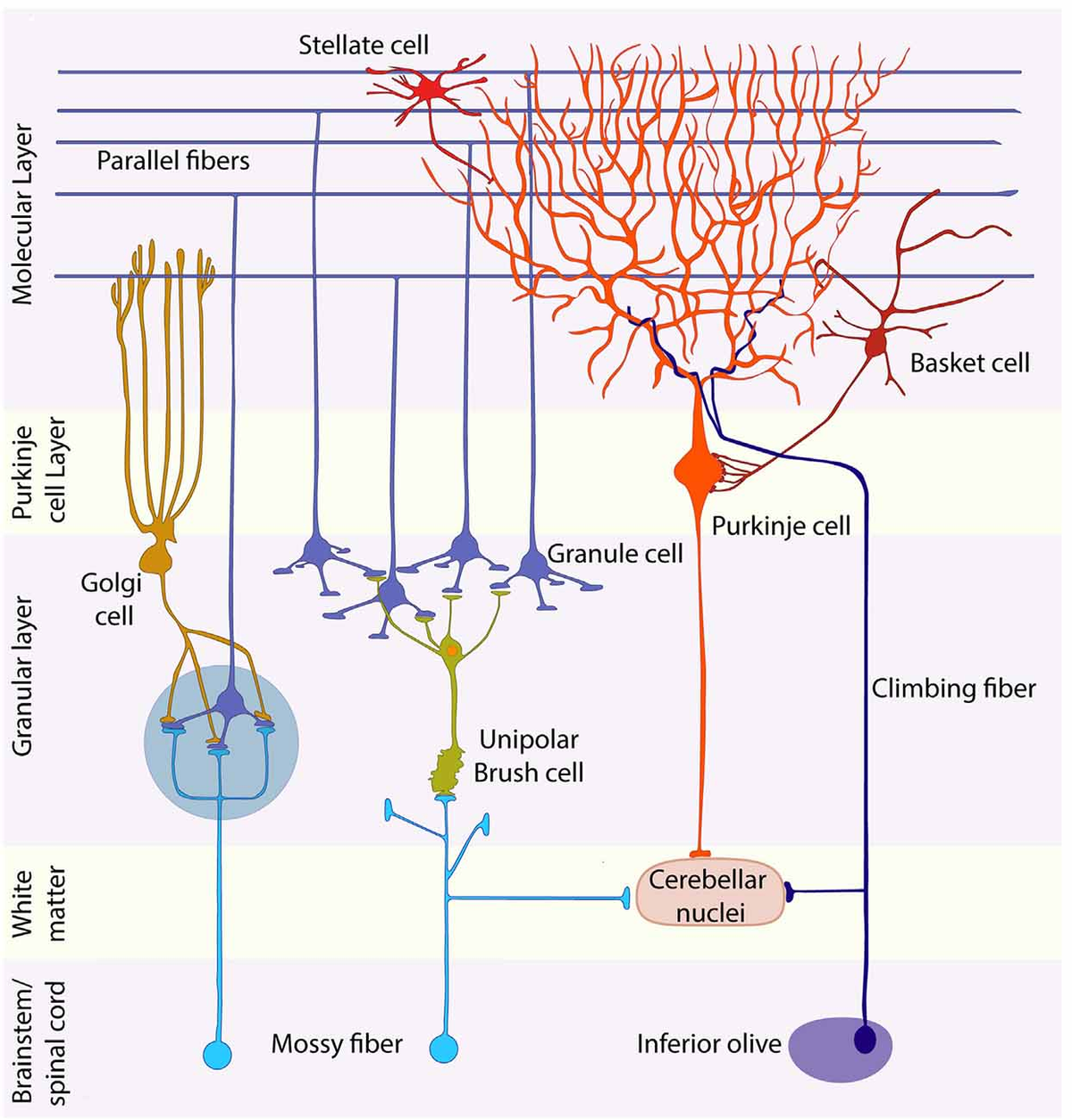
Different types of neuron cells
tags: neurobiology science
see also
Links:
Neurotransmitter
050 🧠Neuroscience
051 ☣Neurobiology
Neurotransmission