bipolar cells
chatbot
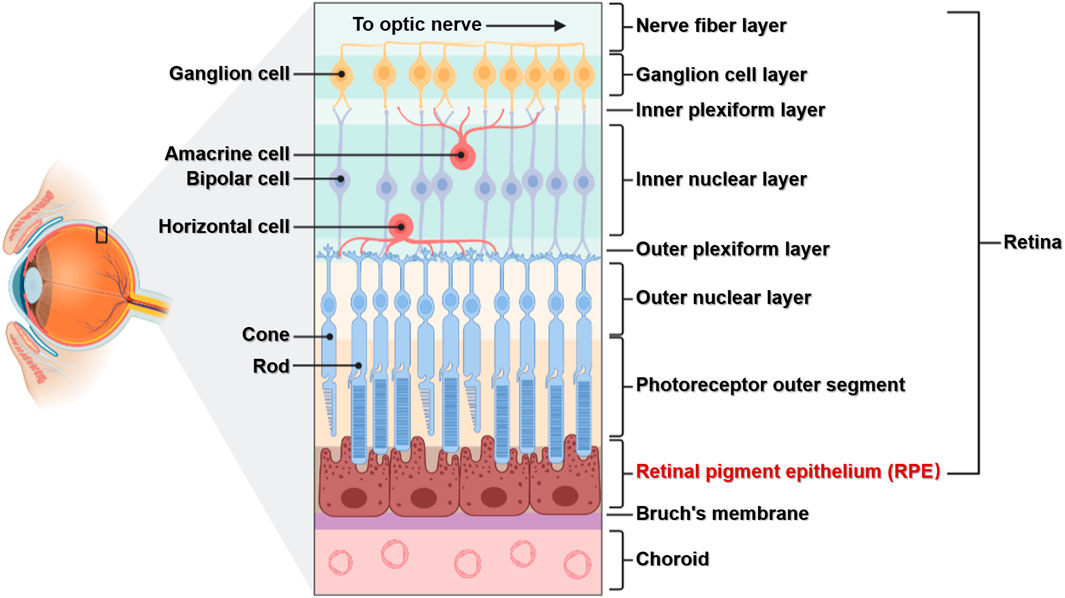
Bipolar cells serve as critical intermediaries in the visual processing pathway within the Retina of the Eye. They are positioned between photoreceptors (rods and cones) and retinal ganglion cells. The primary function of bipolar cells is to transmit signals from photoreceptors to ganglion cells, which then send visual information to the brain via the optic nerve. Here are the key roles and characteristics of bipolar cells:
- Signal Transmission: They receive synaptic inputs from photoreceptors and, in turn, make synaptic connections with ganglion cells. This places them centrally in the pathway that processes visual signals.
- Integration of Visual Signals: Bipolar cells integrate signals from multiple photoreceptors, which allows for the preliminary processing of visual information, such as brightness and contrast, before it reaches the brain.
- Types: There are two main types of bipolar cells, ON bipolar cells and OFF bipolar cells, which respond differently to light. ON bipolar cells are depolarized (activated) when light intensity increases, while OFF bipolar cells are depolarized when light intensity decreases. This dichotomy allows for the processing of contrast and changes in light intensity.
- Role in Visual Acuity and Color Processing: Different bipolar cells are connected to different types of photoreceptors. Some are connected to rods, which are more sensitive to light and are important for night vision, while others are connected to cones, which are responsible for color vision and visual acuity under bright light conditions.
Overall, bipolar cells are essential for the initial stages of visual processing, enabling the perception of light, color, and contrast, which are fundamental for forming visual images.
see also
Tags: neurobiology science
Superlink: 051 ☣Neurobiology 050 🧠Neuroscience
Retina
Eye
retinal ganglion cells
structure of the retina.jpg
034 💪🦵Physiology
Source
Created: 16-09-24 14:30